Why Is My Toilet Fill Valve Whistling? Causes and Fixes
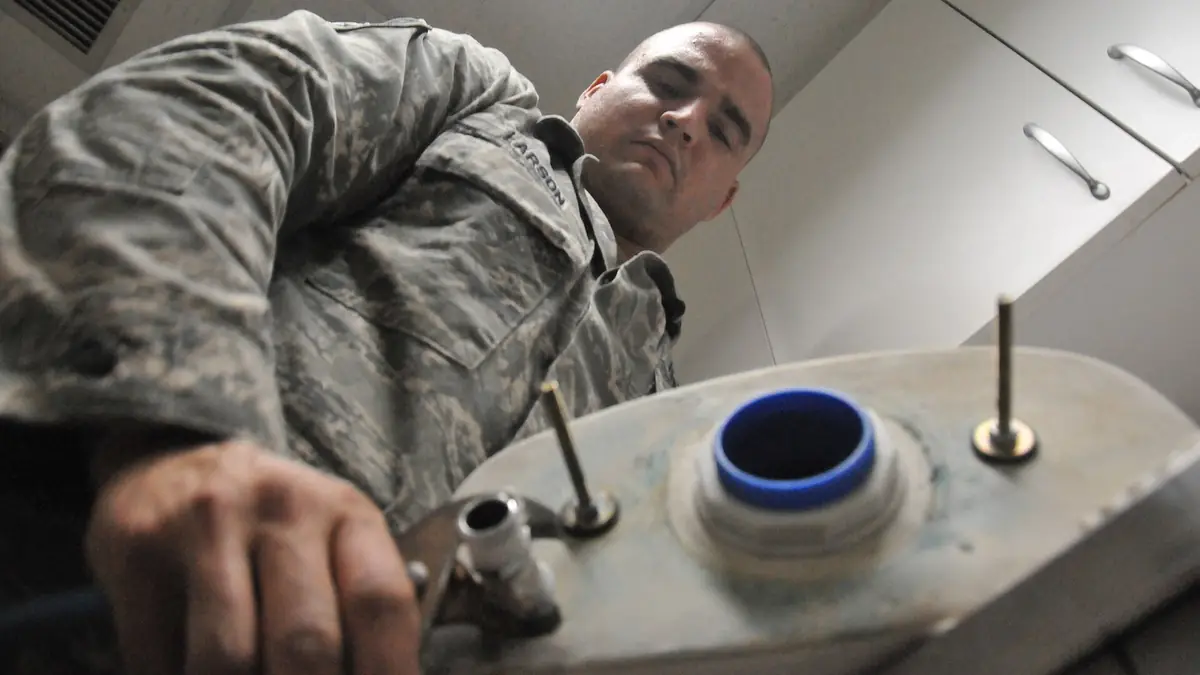
A toilet that whistles or squeals while it refills is almost always the fill valve. Korky, a toilet parts maker, says the sound happens when water is forced through a restricted passage inside the valve, usually from a restricted supply line, high water pressure, mineral or sediment buildup, a partly stuck float or diaphragm, or worn rubber parts (Korky). The fix is usually quick: open the supply valve fully, and if the noise stays, replace the fill valve.

✓ Checked by a licensed plumber Kevin Orr, Texas Master Plumber License M-47441 (look it up)
Last reviewed
In this guide
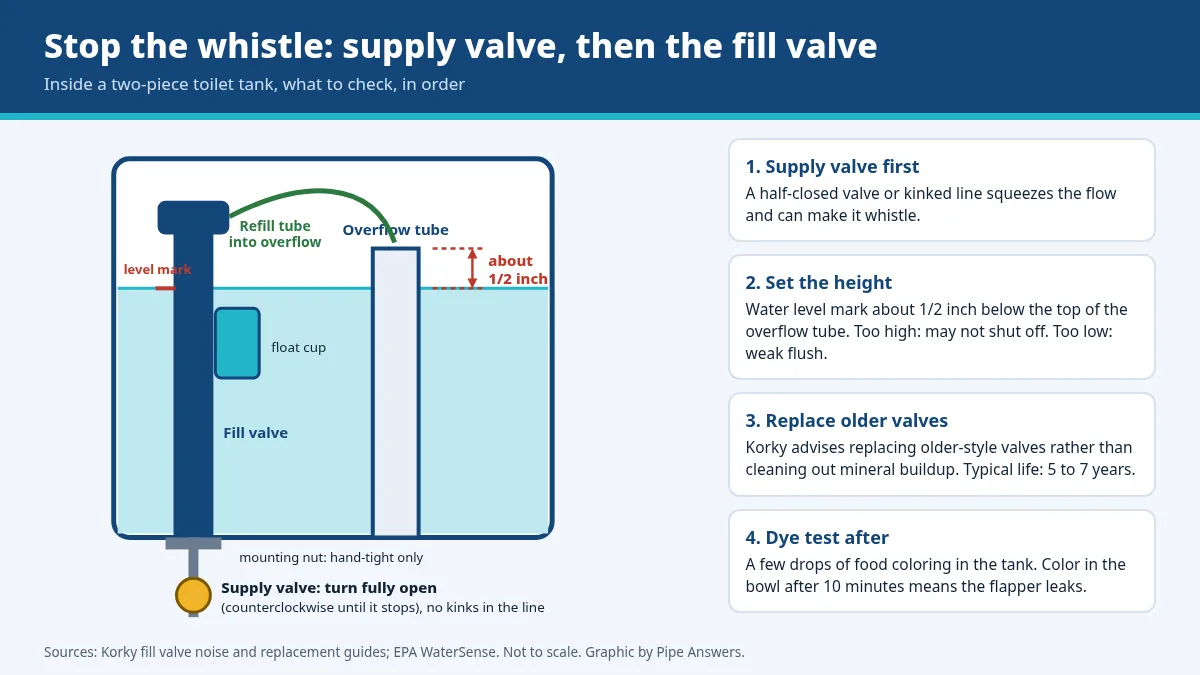 Diagram: what to check in the tank, in order. Made by our team from the Korky and EPA WaterSense sources cited below. Not to scale.
What different toilet noises mean
| Noise | Likely cause | Usual fix |
|---|---|---|
| Whistling or squealing while filling | Restricted passage in the fill valve | Open supply valve fully, then replace the fill valve |
| Hissing that doesn't stop | Water leaking into the bowl, valve not shutting off, or water level too high | Check flapper, lower the water level |
| Low hum or "foghorn" | Loose or weak diaphragm fluttering | Check float height, replace the fill valve |
| Bang when the fill stops | Water hammer from a valve closing too fast | Replace the fill valve; plumber if other fixtures bang |
Source: Korky.
Step 1: Check the shutoff valve and supply line
Korky's first step is to confirm the supply valve behind the toilet is turned completely open and the supply line has no kinks (Korky). A half-closed valve can make the water squeeze through and whistle. Turn it counterclockwise until it stops, flush, and listen.
Step 2: Decide whether to clean or replace
Some modern fill valves can be opened and rinsed out. For older-style valves, Korky says it does not recommend servicing them or trying to remove mineral buildup, and that replacing the valve is better (Korky). Korky also notes fill valves typically last 5 to 7 years depending on your water (Korky).
Step 3: Replace the fill valve
Korky's replacement steps, in short (Korky):
- Turn off the water, flush, and hold the handle down to drain the tank. Sponge out what's left.
- Disconnect the supply line under the tank, remove the mounting nut, and lift out the old valve.
- Set the new valve's height so its water level mark sits about 1/2 inch below the top of the overflow tube.
- Put the valve in the tank hole, install the mounting nut beveled side up, and hand-tighten only.
- Attach the refill tube so it points into the overflow tube, reconnect the supply line and turn the water on.
Setting the height matters. Korky warns that a valve set too high may not shut off and can run constantly or overflow, and one set too low gives weak flushes (Korky).
After the fix: check for a silent leak
A new fill valve will cycle on and off if the flapper is leaking. EPA WaterSense suggests putting a few drops of food coloring in the tank and waiting 10 minutes; color in the bowl means a leak, usually fixed with a new flapper (EPA WaterSense). If your toilet refills on its own every few minutes, see why a toilet runs every few minutes and how to fix a phantom flush.
If the tank is slow to fill as well as noisy, check the supply side too. Our guide on why a toilet fills so slowly and how to speed it up goes through the supply-line bucket test.
When to call a plumber
Korky says to call a plumber if replacing the fill valve doesn't stop banging, so they can check the water pressure safely, and that a water hammer arrestor may be needed if other fixtures bang too (Korky). The same goes for whistling that comes from pipes in the wall rather than the tank.
Frequently asked questions
Why does my toilet whistle when it fills?
Korky says a high-pitched squeal or whistle happens when water is forced through a restricted passage inside the fill valve, often from mineral buildup, worn rubber parts, high water pressure or a restricted supply line.
Can I fix a whistling fill valve without replacing it?
Sometimes. Open the supply valve fully and straighten the supply line first. If the valve is an older style, Korky recommends replacing it rather than trying to clean it.
How long do toilet fill valves last?
Korky says fill valves typically last 5 to 7 years, depending on your water.
Is a whistling toilet wasting water?
Whistling during the refill alone doesn't waste water. A hiss that continues after the tank is full does: that usually means water is leaking into the bowl.
Smell gas? Leave the building without switching anything on or off, then call your gas utility or 911 from outside.
Know your shutoff. Find your home’s main water shutoff before you need it. Most fixtures also have their own small valve.
Sources
- How to Fix Loud or Broken Fill Valve, Korky
- How to Replace Toilet Fill Valve, Korky
- How to find and fix a toilet leak, Portland Water Bureau
- Home Maintenance: toilets, U.S. EPA WaterSense
Spotted an error? See our corrections policy or email contact@pipeanswers.com.

Pipe Answers Editorial Team
Our editors build each guide from the sources listed above and check every claim and number against them before publishing. How the team works
Kevin Orr
Expert Reviewer, Plumbing
Texas Master Plumber License, M-47441 · Verify license
Kevin Orr is a Texas Master Plumber, a U.S. Army veteran and the owner of a plumbing company. In his view, good plumbing is more than fixing pipes. It means showing up when you say you will, explaining what needs to…
Related guides
-
 Toilets
Why Does My Toilet Run Every Few Minutes? (Phantom Flush Fix)
A toilet that refills by itself every few minutes is leaking tank water into the bowl, often past a worn flapper. Confirm it with a dye test, then fix it.
-
 Toilets
Why Does My Toilet Water Level Drop by Itself?
A toilet bowl that loses water on its own usually has a partial clog siphoning it, a blocked vent, a fill valve that isn't refilling the bowl, or a hairline crack. How to check each.
-
 Winterizing
No Water? How to Tell if Your Pipes Are Frozen or the Water Is Off
Neighbors have water but your faucets give nothing or a trickle in freezing weather? A pipe is probably frozen. How to check and how to thaw it safely.
-
 Drains & Clogs
Why Are Both Sides of My Kitchen Sink Draining Slowly?
When both bowls of a double kitchen sink drain slowly, the clog is usually past the point where the two drains join, in the trap or the pipe in the wall. How to find it and clear it.