Why Does My Toilet Run Every Few Minutes? (Phantom Flush Fix)
A toilet that runs for a few seconds every few minutes, without anyone touching it, is leaking water from the tank into the bowl. When the tank level drops far enough, the fill valve switches on to top it up. The usual cause is a worn, warped or misaligned flapper, and a new flapper usually fixes it (Korky; Kohler).

✓ Checked by a licensed plumber Kevin Orr, Texas Master Plumber License M-47441 (look it up)
Last reviewed
In this guide
This is sometimes called a "phantom flush" or "ghost flush". It is worth fixing soon. EPA WaterSense says a worn flapper can make a toilet flush on its own or silently leak thousands of gallons a year (EPA WaterSense).
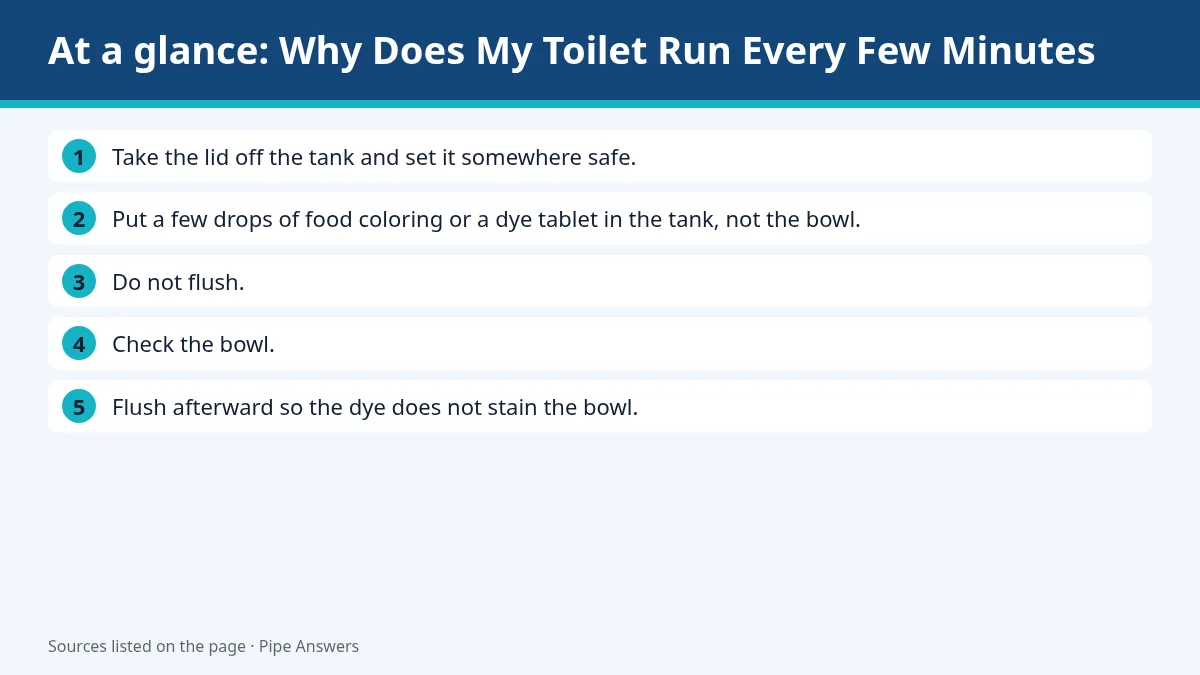 Graphic: summary of this guide, made by our team from the cited sources.
Confirm it in 15 minutes: the dye test
- Take the lid off the tank and set it somewhere safe. Tank lids are heavy and break easily.
- Put a few drops of food coloring or a dye tablet in the tank, not the bowl.
- Do not flush. Wait.
- Check the bowl. EPA WaterSense says that if any color shows up in the bowl after 10 minutes, you have a leak (EPA WaterSense). Portland's water bureau says to wait at least 15 minutes (Portland Water Bureau).
- Flush afterward so the dye does not stain the bowl.
Color in the bowl means water is getting past the flapper or the flush valve. No color, but the toilet still refills by itself? Go to "Water going down the overflow tube" below.
Find which part is leaking: the pencil-mark test
Korky's test tells you whether it is the flapper or the flush valve itself (Korky):
- Flush, let the tank refill, and mark the water level on the inside of the tank with a pencil.
- Turn off the supply valve behind the toilet and wait at least 25 minutes.
- If the level drops below the mark, something in the tank is leaking.
- Leave the water off for a couple of hours. If the level stops at the flapper or flush seal, replace the flapper or seal. If it drops to a point on the overflow tube or the bottom of the tank, the flush valve needs replacing.
The causes, in the order to check them
1. The chain is too short, too long or snagging
A chain with no slack holds the flapper slightly open. A chain that is too long can fold under the flapper. Kohler says the chain should have roughly one to two links of slack at most (Kohler). Also check that the handle arm is not rubbing the tank lid or catching on anything.
2. A worn, warped or dirty flapper
Rubber flappers stiffen and warp with age and chlorine. Portland's water bureau says that if you gently rub the flapper and get streaks on your fingers, you should replace it right away (Portland Water Bureau). The NYC Department of Environmental Protection adds that in-tank cleaning tablets can corrode the flapper and other rubber parts (NYC DEP). EPA WaterSense recommends replacing the flapper at least once every five years (EPA WaterSense).
Buying tip from EPA WaterSense: take the old flapper, or a photo of it, to the store, and note its width and whether it has a float that may also need replacing.
3. A rough or damaged flush valve seat
The flapper seals against a ring at the bottom of the tank. Grit and mineral buildup can nick it so even a new flapper cannot seal. NYC DEP lists grit and sediment damage to the flush valve as a cause of this kind of leak. Gently clean the ring with a soft scrub pad. If it is cracked or pitted, the flush valve needs to be replaced.
4. Water going down the overflow tube
If the dye test was clean but the toilet keeps refilling, look at the overflow tube (the open pipe in the middle of the tank). If water trickles into it, the tank is filling too high, or the fill valve is not shutting off. Portland says the correct water level is about 1/2 to 1 inch below the top of the overflow tube, and explains how to adjust the float on both float-ball and vertical-float fill valves (Portland Water Bureau). Kohler lists overfilling into the overflow as one cause of occasional running.
If adjusting the float does not stop it, the fill valve is worn or clogged. Korky says adjusting, cleaning or replacing the fill valve fixes a toilet that keeps running after the tank is full (Korky). A fill valve that sticks open matters: NYC DEP says water can flow through an open fill valve at three to five gallons per minute, up to 4,000 gallons a day.
Only runs at night?
If the toilet behaves during the day but you hear it refill overnight, check the water level first thing in the morning. Santa Barbara's water department says many toilets leak overnight when water pressure rises, pushing the tank level above the overflow tube (City of Santa Barbara). Lower the float a little more than seems necessary and check again the next morning.
A "universal" flapper that isn't
If you already replaced the flapper and the toilet still wastes water, watch a flush with the lid off. Santa Barbara says the flapper should close after a few seconds with about 2 inches of water still in the tank; if it stays open longer, refill water runs straight down the drain, a sign of a mismatched flapper (City of Santa Barbara). Buy the flapper made for your toilet's brand and model (the model number is usually stamped inside the tank).
Replacing a flapper: what "done" looks like
Most flappers clip onto two pegs on the sides of the overflow tube, or slide over the tube with a ring.
- Turn off the supply valve behind the toilet and flush to empty the tank.
- Unhook the chain from the handle arm and unclip the old flapper.
- Clean the flush valve seat.
- Fit the new flapper and attach the chain with about one to two links of slack (Kohler).
- Turn the water back on, let the tank fill, and flush a few times to make sure it closes every time.
- Repeat the dye test. If no color reaches the bowl, the fix worked.
Toilets without a tank
Some homes and many apartment buildings have tankless toilets with a flush valve on a pipe from the wall. NYC DEP says that if water keeps moving in the bowl after a flush, the valve is leaking, and that phantom flushes on these toilets can come from pressure changes in the building and should be checked by a licensed plumber (NYC DEP).
When to call a plumber
- The supply valve behind the toilet will not shut off, or it leaks when you turn it.
- The flush valve needs replacing and you are not comfortable removing the tank from the bowl.
- The toilet still runs after a new flapper and fill valve adjustment.
- Water is leaking onto the floor rather than into the bowl.
Frequently asked questions
Is a toilet that runs every few minutes wasting a lot of water?
It can. EPA WaterSense says an old or worn flapper can silently leak thousands of gallons a year, and the NYC Department of Environmental Protection says water can flow through a stuck-open fill valve at three to five gallons per minute.
Why does my toilet run for a few seconds by itself?
Water is slowly leaking from the tank into the bowl. When the tank level drops far enough, the fill valve turns on to top it up. A worn or misaligned flapper is the most common cause.
How often should a toilet flapper be replaced?
EPA WaterSense recommends replacing it at least once every five years, because the rubber wears out.
Can in-tank cleaning tablets cause a running toilet?
Yes. The NYC Department of Environmental Protection says in-tank cleaners can corrode the flapper and other rubber parts.
Smell gas? Leave the building without switching anything on or off, then call your gas utility or 911 from outside.
Know your shutoff. Find your home’s main water shutoff before you need it. Most fixtures also have their own small valve.
Sources
- Check Your Toilet, City of Santa Barbara Water Resources
- Fix a Leak Week: toilet leaks, U.S. EPA WaterSense
- Home Maintenance: toilets, U.S. EPA WaterSense
- How to find and fix a toilet leak, Portland Water Bureau
- Toilet Leak Detection, NYC Department of Environmental Protection
- Toilet Occasionally Leaking or Running, Kohler Assist
- How to Fix a Running Toilet, Korky
Spotted an error? See our corrections policy or email contact@pipeanswers.com.

Pipe Answers Editorial Team
Our editors build each guide from the sources listed above and check every claim and number against them before publishing. How the team works
Kevin Orr
Expert Reviewer, Plumbing
Texas Master Plumber License, M-47441 · Verify license
Kevin Orr is a Texas Master Plumber, a U.S. Army veteran and the owner of a plumbing company. In his view, good plumbing is more than fixing pipes. It means showing up when you say you will, explaining what needs to…
Related guides
-
 Winterizing
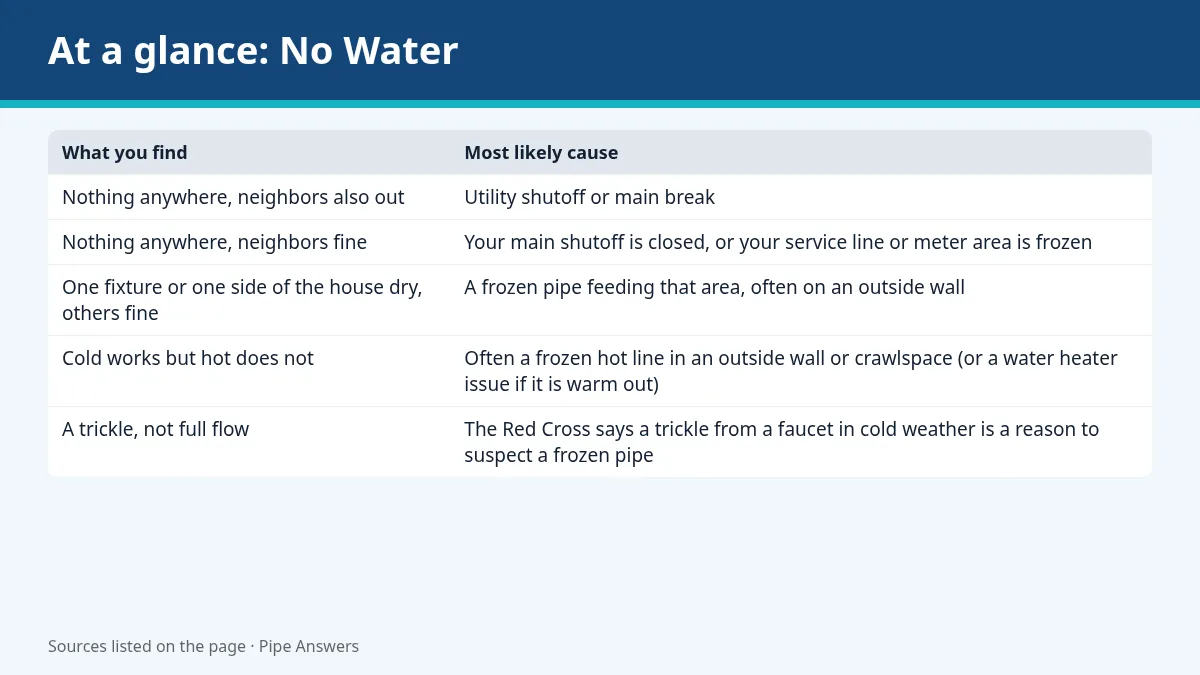
 No Water? How to Tell if Your Pipes Are Frozen or the Water Is Off
Neighbors have water but your faucets give nothing or a trickle in freezing weather? A pipe is probably frozen. How to check and how to thaw it safely.
-
 Water Pressure
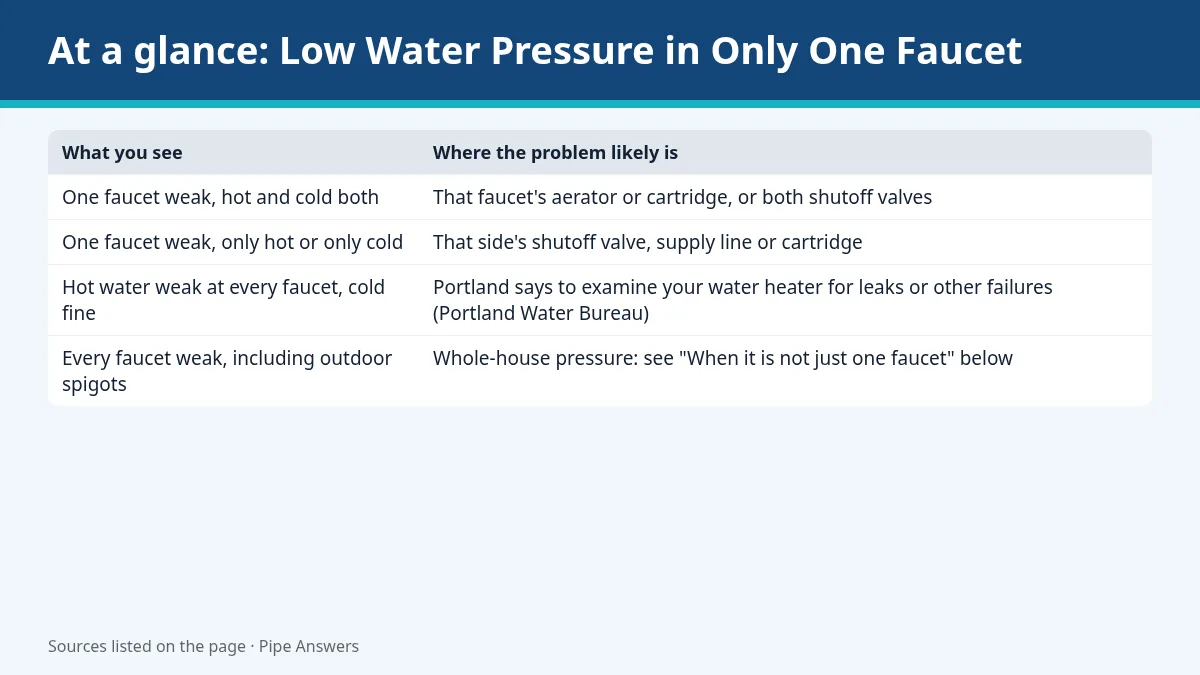
 Low Water Pressure in Only One Faucet? Check These 4 Things
If only one faucet is weak, the problem is in that faucet or its supply, not your home's pressure. Check the aerator, shutoff valves, then the cartridge.
-
 Water Heaters
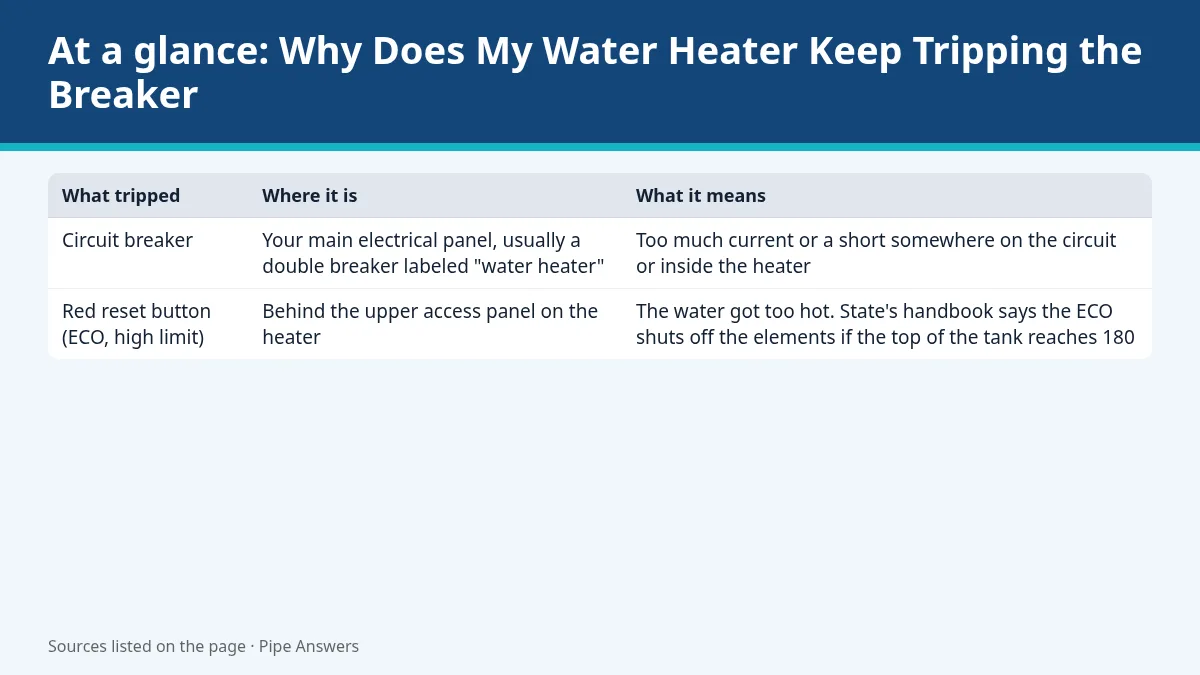
 Why Does My Water Heater Keep Tripping the Breaker? Causes and What to Do
An electric water heater that keeps tripping its breaker usually has a shorted heating element, a wiring fault or a failing breaker. What to check safely.
-
 Drains & Clogs
 Why Does My Drain Keep Clogging? How to Find the Real Cause
A drain that keeps clogging usually was never fully cleared, or the clog is past the plunger's reach. How to tell a fixture clog from a main line problem.