No Water? How to Tell if Your Pipes Are Frozen or the Water Is Off
If it is below freezing, your neighbors still have water, and your faucets give nothing or only a trickle, a pipe in your house or your service line is probably frozen. If the whole street is out, or the cold is not that severe, the water is more likely shut off by the utility. The checks below sort it out in a few minutes.

✓ Checked by a licensed plumber Kevin Orr, Texas Master Plumber License M-47441 (look it up)
Last reviewed
In this guide
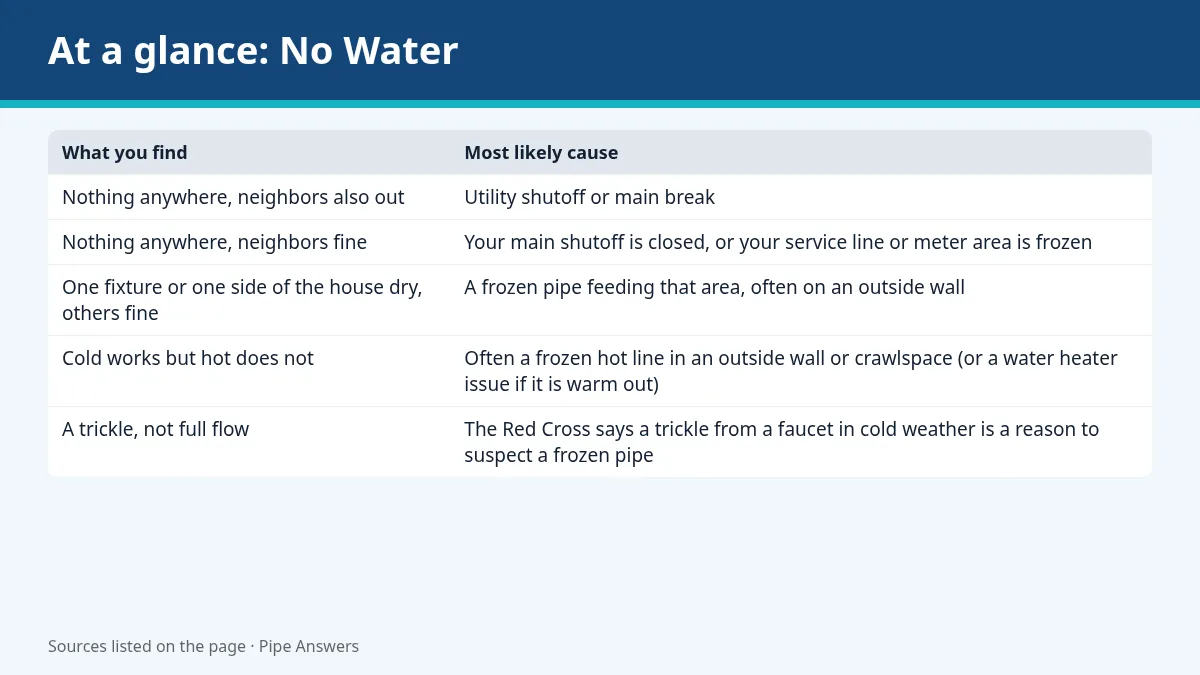 Graphic: summary of this guide, made by our team from the cited sources.
Quick check: frozen pipe or water shutoff?
- Ask a neighbor or check your water utility's outage page. If others on your street have no water either, the problem is likely in the public supply, not your pipes. EPCOR adds that if no fixture runs and there is no known main break in your area, a frozen service line is likely.
- Open every faucet and flush each toilet. EPCOR suggests this to see which fixtures still run. Then read the pattern:
| What you find | Most likely cause |
|---|---|
| Nothing anywhere, neighbors also out | Utility shutoff or main break |
| Nothing anywhere, neighbors fine | Your main shutoff is closed, or your service line or meter area is frozen |
| One fixture or one side of the house dry, others fine | A frozen pipe feeding that area, often on an outside wall |
| Cold works but hot does not | Often a frozen hot line in an outside wall or crawlspace (or a water heater issue if it is warm out) |
| A trickle, not full flow | The Red Cross says a trickle from a faucet in cold weather is a reason to suspect a frozen pipe |
- Check your main shutoff valve. Make sure nobody closed it. It is usually where the water line enters the house, often in a basement, crawlspace or garage, as Seattle Public Utilities describes.
- Look and feel along exposed pipes. EPCOR says frost on a pipe or fixture is a good sign it is frozen. Under sinks on outside walls, in unheated basements, crawlspaces and garages are the usual places.
Where pipes freeze first
The Red Cross lists the pipes that freeze most often:
- Pipes exposed to severe cold, such as outdoor hose bibs, swimming pool supply lines and sprinkler lines.
- Supply pipes in unheated spaces like basements, crawlspaces, attics, garages and kitchen cabinets.
- Pipes that run along exterior walls with little or no insulation.
The same page and Seattle Public Utilities also name the spot where the water service enters the house through the foundation.
How to thaw a frozen pipe safely
These steps follow the Red Cross and Seattle Public Utilities:
- Know where your main shutoff is before you start, in case the pipe has split.
- Open the faucet the frozen pipe feeds. As ice melts, running water helps melt the rest.
- Apply gentle heat to the frozen section: an electric heating pad, a hair dryer, or towels soaked in hot water. Start near the faucet and work back toward the frozen spot.
- Never use an open flame. No torch, propane or kerosene heater, or charcoal stove. Seattle Public Utilities warns a blowtorch can make the water in the pipe boil and the pipe explode, and that open flames bring fire and carbon monoxide risks (SPU).
- Keep electric heaters away from water. SPU says not to use electrical devices if there is standing water.
- Keep heating until full pressure returns. The City of Toronto says thawing can take between one and six hours depending on the outside temperature and how much of the pipe is frozen.
- Check every other faucet. The Red Cross notes that if one pipe freezes, others may too.
Call a licensed plumber if you cannot find the frozen section, cannot reach it, or cannot thaw it, as both the Red Cross and SPU advise.
After the water comes back: check for a split pipe
Water expands when it freezes, which is why frozen pipes crack (Red Cross). The leak often appears only after the ice melts.
- Look and listen along the thawed pipe for drips or spraying.
- Do the meter test from EPA WaterSense: turn off every faucet and water-using appliance, read the meter, wait, and read it again. If the meter changes at all, you probably have a leak.
- If a pipe bursts, close the main shutoff right away and call a plumber (SPU).
Preventing the next freeze
From the Red Cross:
- Let cold water drip from faucets served by exposed pipes when it is very cold. Moving water, even a trickle, helps keep a pipe from freezing.
- Open kitchen and bathroom cabinet doors so warmer room air reaches the pipes.
- Keep the thermostat at the same temperature day and night during a cold snap.
- If you travel, leave the heat on and set it no lower than 55°F.
- Drain and shut off outdoor hose bibs, pool and sprinkler supply lines before cold weather, following the manufacturer's or installer's directions.
Insulating exposed pipes in crawlspaces, attics and garages is the longer-term fix.
Frequently asked questions
Will frozen pipes thaw on their own?
They can once temperatures rise, but a pipe that froze may have cracked, and the leak only shows when the ice melts. Thawing it under watch, with a faucet open, lets you spot a leak right away.
How long does it take to thaw a frozen pipe?
The City of Toronto says thawing can take between one and six hours, depending on the outside temperature and how much of the pipe is frozen.
Should I run hot or cold water to keep pipes from freezing?
The Red Cross advises letting cold water drip from faucets served by exposed pipes when it is very cold outside.
Can I use a torch or heat gun on a frozen pipe?
Do not use a torch or any open flame. Seattle Public Utilities warns a blowtorch can make the water in the pipe boil and the pipe explode, and open flames are a fire and carbon monoxide risk.
Smell gas? Leave the building without switching anything on or off, then call your gas utility or 911 from outside.
Know your shutoff. Find your home’s main water shutoff before you need it. Most fixtures also have their own small valve.
Sources
- Preventing and Thawing Frozen Pipes, American Red Cross
- Frozen Pipes in Winter Weather, Seattle Public Utilities
- Prevent or Thaw Frozen Pipes, City of Toronto
- Prevent Frozen Pipes, EPCOR
- Fix a Leak Week: checking for leaks, U.S. EPA WaterSense
Spotted an error? See our corrections policy or email contact@pipeanswers.com.

Pipe Answers Editorial Team
Our editors build each guide from the sources listed above and check every claim and number against them before publishing. How the team works
Kevin Orr
Expert Reviewer, Plumbing
Texas Master Plumber License, M-47441 · Verify license
Kevin Orr is a Texas Master Plumber, a U.S. Army veteran and the owner of a plumbing company. In his view, good plumbing is more than fixing pipes. It means showing up when you say you will, explaining what needs to…
Related guides
-
 Water Pressure
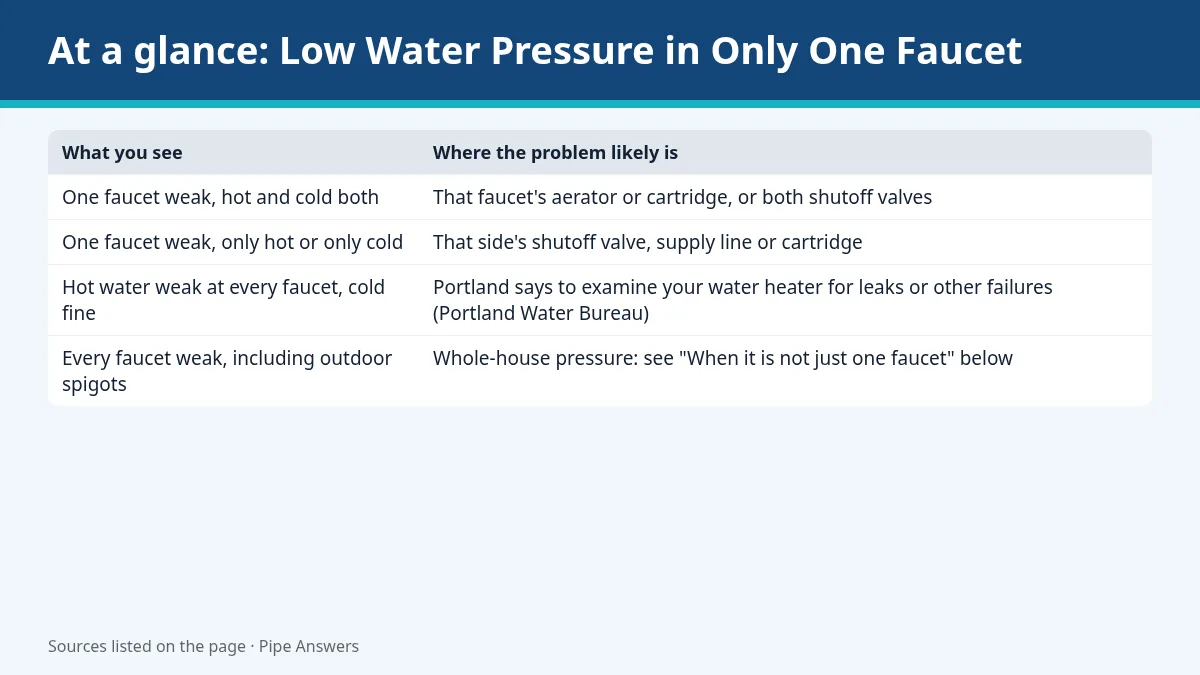
 Low Water Pressure in Only One Faucet? Check These 4 Things
If only one faucet is weak, the problem is in that faucet or its supply, not your home's pressure. Check the aerator, shutoff valves, then the cartridge.
-
 Toilets
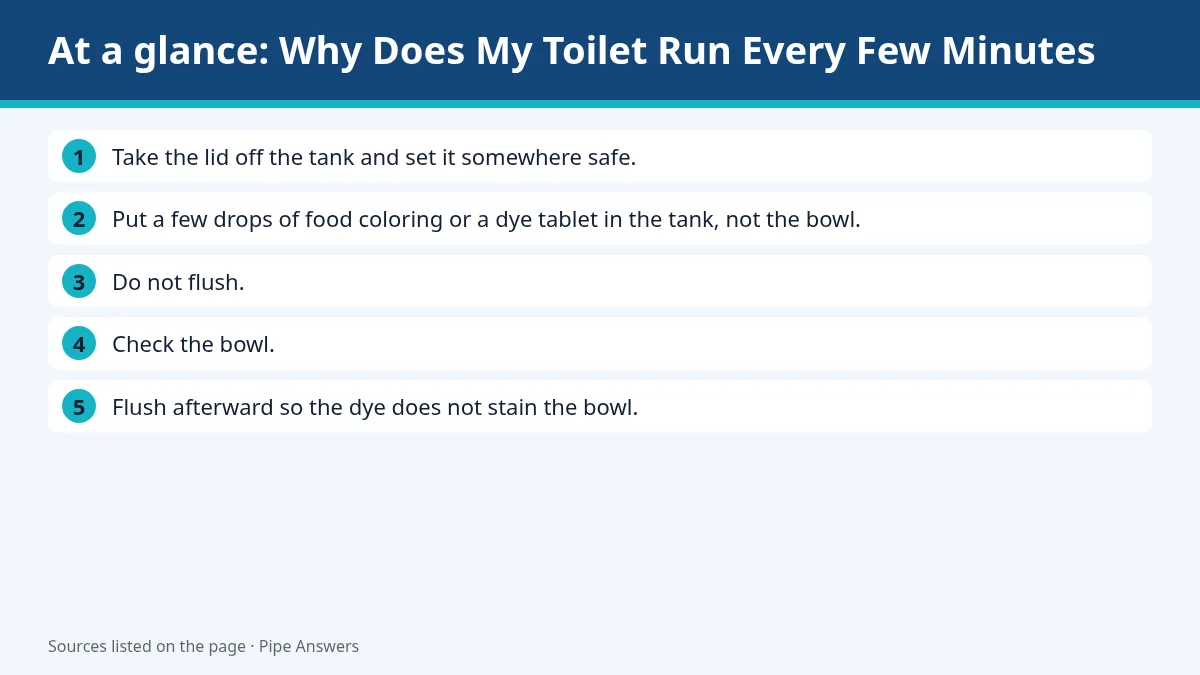
 Why Does My Toilet Run Every Few Minutes? (Phantom Flush Fix)
A toilet that refills by itself every few minutes is leaking tank water into the bowl, often past a worn flapper. Confirm it with a dye test, then fix it.
-
 Water Heaters
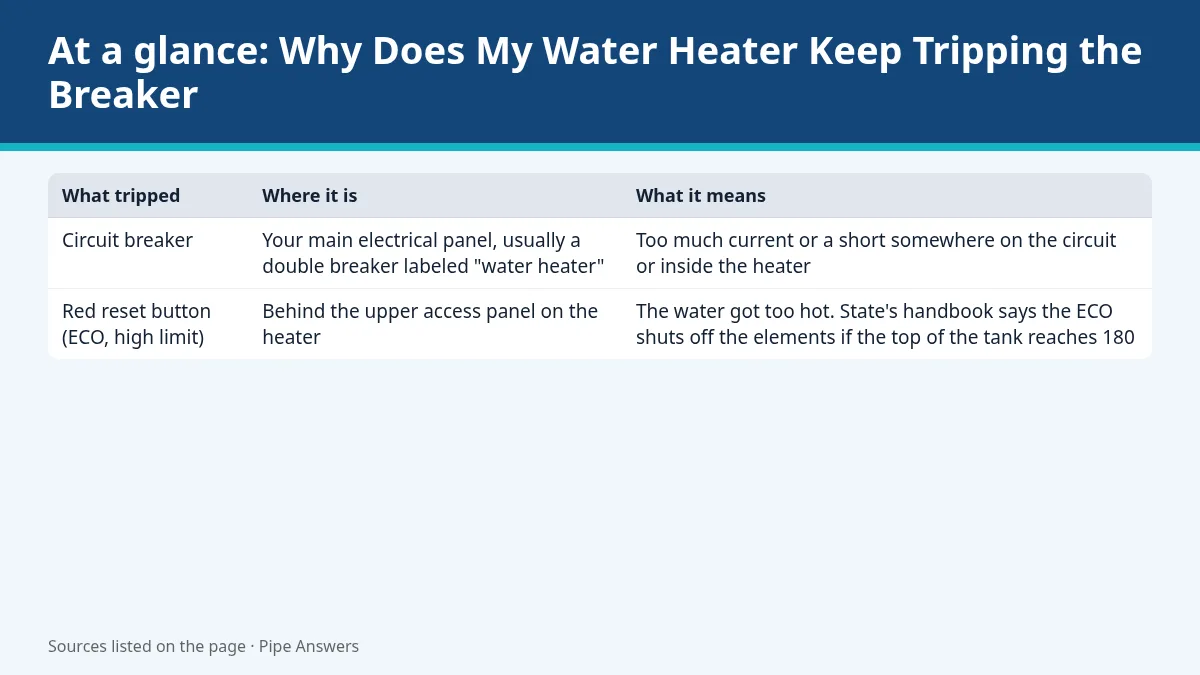
 Why Does My Water Heater Keep Tripping the Breaker? Causes and What to Do
An electric water heater that keeps tripping its breaker usually has a shorted heating element, a wiring fault or a failing breaker. What to check safely.
-
 Drains & Clogs
 Why Does My Drain Keep Clogging? How to Find the Real Cause
A drain that keeps clogging usually was never fully cleared, or the clog is past the plunger's reach. How to tell a fixture clog from a main line problem.