Low Water Pressure in Only One Faucet? Check These 4 Things
If only one faucet has low pressure and the rest of the house is fine, the problem is in that faucet or the pipes right under it, not your home's water supply. Moen lists debris in the aerator or the cartridge as typical causes and recommends checking that the supply lines from the shutoff valves give the faucet full pressure (Moen). Start with the aerator: it takes a few minutes and needs no parts.

✓ Checked by a licensed plumber Kevin Orr, Texas Master Plumber License M-47441 (look it up)
Last reviewed
In this guide
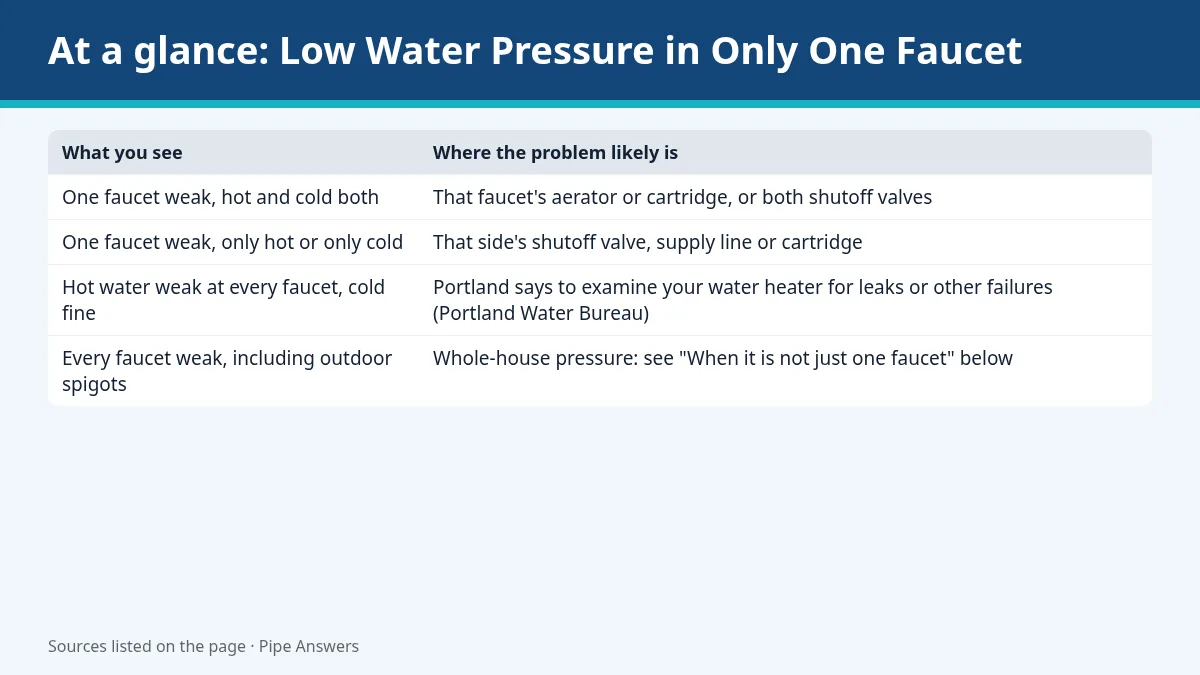 Graphic: summary of this guide, made by our team from the cited sources.
First, make sure it really is just one faucet
Portland Water Bureau says to check every faucet, inside and outside, and to compare hot and cold water (Portland Water Bureau). What you find tells you where to look:
| What you see | Where the problem likely is |
|---|---|
| One faucet weak, hot and cold both | That faucet's aerator or cartridge, or both shutoff valves |
| One faucet weak, only hot or only cold | That side's shutoff valve, supply line or cartridge |
| Hot water weak at every faucet, cold fine | Portland says to examine your water heater for leaks or other failures (Portland Water Bureau) |
| Every faucet weak, including outdoor spigots | Whole-house pressure: see "When it is not just one faucet" below |
The 4 checks, in order
1. Clean the aerator
The aerator is the small screen at the tip of the spout. Sediment and mineral bits collect there. For both kitchen and bathroom faucets, Moen says to remove the aerator and rinse off any debris. Close the sink drain first so small parts cannot fall in. Unscrew the aerator by hand or with pliers wrapped in a cloth, rinse the screen, and run the faucet for a few seconds without it.
If the flow is strong without the aerator, the aerator was the problem. Clean it or replace it.
2. Check the pull-down or side sprayer
On pull-down and pull-out kitchen faucets, Moen says to check the hose and its screen. If the flow is low even from the hose, the cartridge likely needs to be replaced (Moen). GROHE's test for pull-down faucets is quick: unthread the spray head from the hose (clip the hose so it can't slide back into the spout) and run the water. If the flow improves with the head off, the head is the problem; GROHE suggests cleaning the aerator or soaking the spray head in a 50/50 mix of water and white vinegar (GROHE). On faucets with a separate side sprayer, Moen lists a stuck diverter as a possible cause (Moen).
3. Open the shutoff valves under the sink
Look under the sink for the two small valves where the supply lines start. They are sometimes left partly closed after a repair. Moen recommends checking that the supply lines from the shutoff valves give the faucet full pressure from both hot and cold. Turn each valve fully counterclockwise. Do not force a valve that is stuck. Old valves can start to leak when moved.
4. Clean or replace the cartridge
If the aerator and valves are fine, the cartridge inside the faucet body may have debris in it. Moen says the cartridge (one for single-handle faucets, two for two-handle faucets) would need to be replaced and the valve body flushed and cleaned (Moen). Turn off both shutoff valves before taking the handle off, and take the old cartridge to the store to match it.
Cartridge or supply line? The cartridge-out test
If a new or clean cartridge didn't help, this test tells you whether to keep working on the faucet or look under the sink. GROHE describes it: with the supply turned off, remove the cartridge, then slowly turn the water back on at the side that was weak. Strong flow with the cartridge out means the cartridge was the restriction. Still weak with the cartridge out means the supply line is collapsed or blocked (GROHE). Hold a towel over the faucet body and open the valve only a little; water comes straight up.
| Result with cartridge removed | What it means | Next step |
|---|---|---|
| Strong flow | Cartridge was blocking flow | Install a matching new cartridge |
| Still weak | Supply line or shutoff valve | Replace the braided supply line or call a plumber for the valve |
Did the faucet just get a new aerator?
Some low flow is by design. EPA WaterSense says a bathroom aerator or faucet rated at 1.5 gallons per minute can cut a sink's flow by 30 percent or more from the standard 2.2 gallons per minute (EPA WaterSense). If the flow is steady but lower than you are used to, that may be the rating, not a clog.
When it is not just one faucet
If every fixture is weak, look at the whole house. EPA WaterSense says fixtures work best when incoming water pressure is between 45 and 60 psi, and that pressure much lower than 45 psi may mean a leak in the home (EPA WaterSense). Portland Water Bureau says plumbing code requires a pressure reducing valve if your home receives higher than 80 psi (Portland Water Bureau). A licensed plumber can test pressure and check the main shutoff and pressure reducing valve.
When to call a plumber
- The shutoff valve under the sink will not turn, or it leaks when you move it.
- A new cartridge and a clean aerator did not bring the flow back.
- The weak flow also shows up at a nearby fixture, which points to the pipe, not the faucet.
- You see water under the sink or stains on the cabinet floor.
Frequently asked questions
Why is only one faucet in my house low on pressure?
If every other faucet is fine, your home's water pressure is not the problem. The cause is in that faucet or the pipes right under it, most often a clogged aerator, debris in the cartridge, or a shutoff valve that is not fully open.
What should normal household water pressure be?
EPA WaterSense says fixtures work best when the home's incoming water pressure is between 45 and 60 psi.
Why is only the hot water weak at one faucet?
If hot is weak at just one faucet, check that faucet's hot shutoff valve and its cartridge. If hot is weak at every faucet while cold is normal, Portland Water Bureau says to examine your water heater for leaks or other failures.
Can a new faucet aerator lower water flow?
Yes, by design. EPA WaterSense says a bathroom aerator rated at 1.5 gallons per minute can reduce a sink's flow by 30 percent or more from the standard 2.2 gallons per minute.
Smell gas? Leave the building without switching anything on or off, then call your gas utility or 911 from outside.
Know your shutoff. Find your home’s main water shutoff before you need it. Most fixtures also have their own small valve.
Sources
- How do I improve low water pressure for a pull-down kitchen faucet? GROHE support
- Low water flow from spout, both hot and cold water on sink faucets, Moen
- Water pressure and flow, Portland Water Bureau
- Home Maintenance: service pressure, U.S. EPA WaterSense
- Bathroom Sink Faucets, U.S. EPA WaterSense
Spotted an error? See our corrections policy or email contact@pipeanswers.com.

Pipe Answers Editorial Team
Our editors build each guide from the sources listed above and check every claim and number against them before publishing. How the team works
Kevin Orr
Expert Reviewer, Plumbing
Texas Master Plumber License, M-47441 · Verify license
Kevin Orr is a Texas Master Plumber, a U.S. Army veteran and the owner of a plumbing company. In his view, good plumbing is more than fixing pipes. It means showing up when you say you will, explaining what needs to…
Related guides
-
 Winterizing
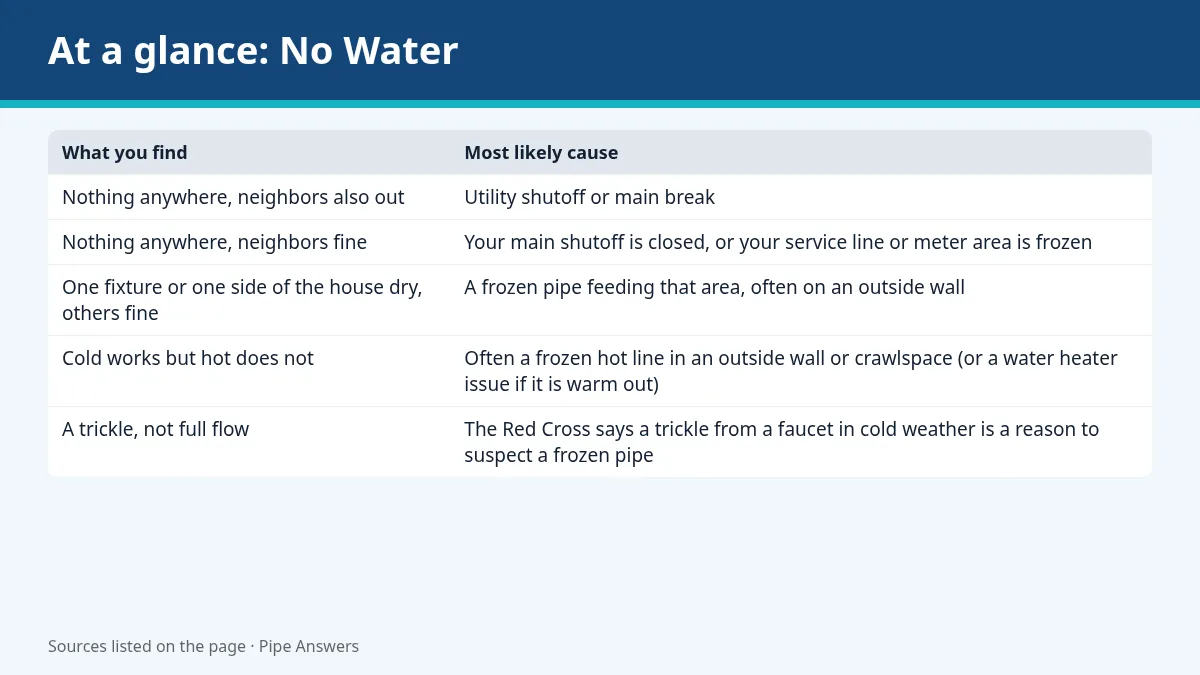
 No Water? How to Tell if Your Pipes Are Frozen or the Water Is Off
Neighbors have water but your faucets give nothing or a trickle in freezing weather? A pipe is probably frozen. How to check and how to thaw it safely.
-
 Toilets
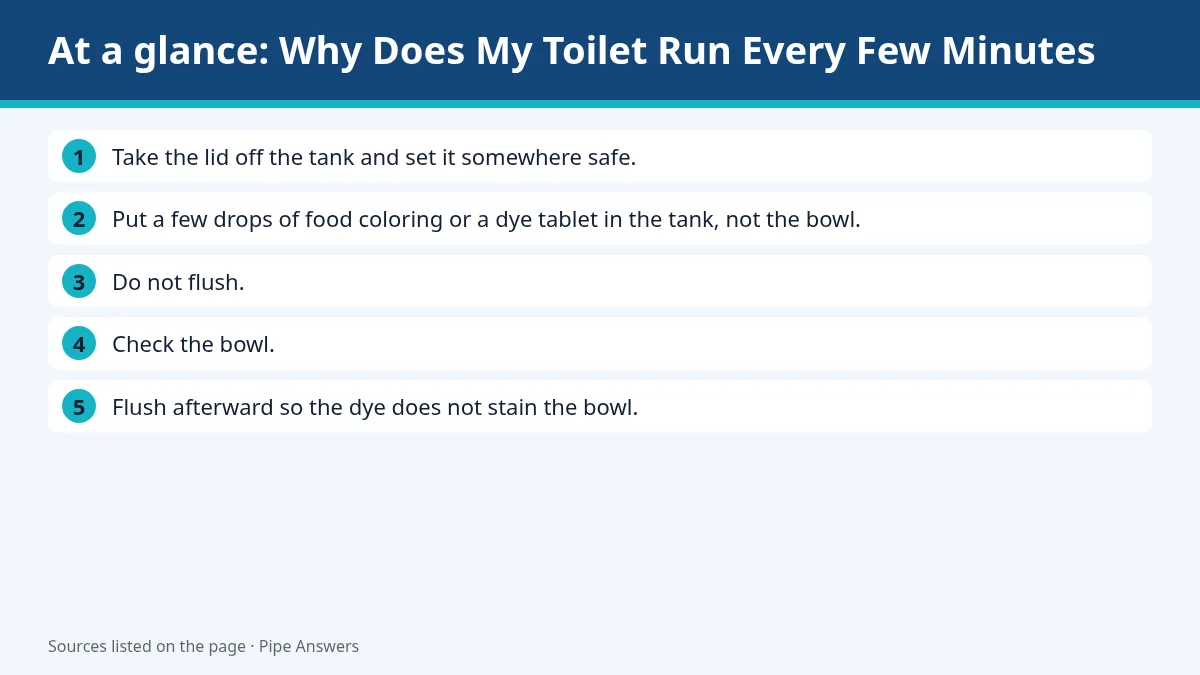
 Why Does My Toilet Run Every Few Minutes? (Phantom Flush Fix)
A toilet that refills by itself every few minutes is leaking tank water into the bowl, often past a worn flapper. Confirm it with a dye test, then fix it.
-
 Water Heaters
 Why Does My Water Heater Keep Tripping the Breaker? Causes and What to Do
An electric water heater that keeps tripping its breaker usually has a shorted heating element, a wiring fault or a failing breaker. What to check safely.
-
 Drains & Clogs
 Why Does My Drain Keep Clogging? How to Find the Real Cause
A drain that keeps clogging usually was never fully cleared, or the clog is past the plunger's reach. How to tell a fixture clog from a main line problem.