Why Does My Toilet Fill So Slowly? How to Speed It Up
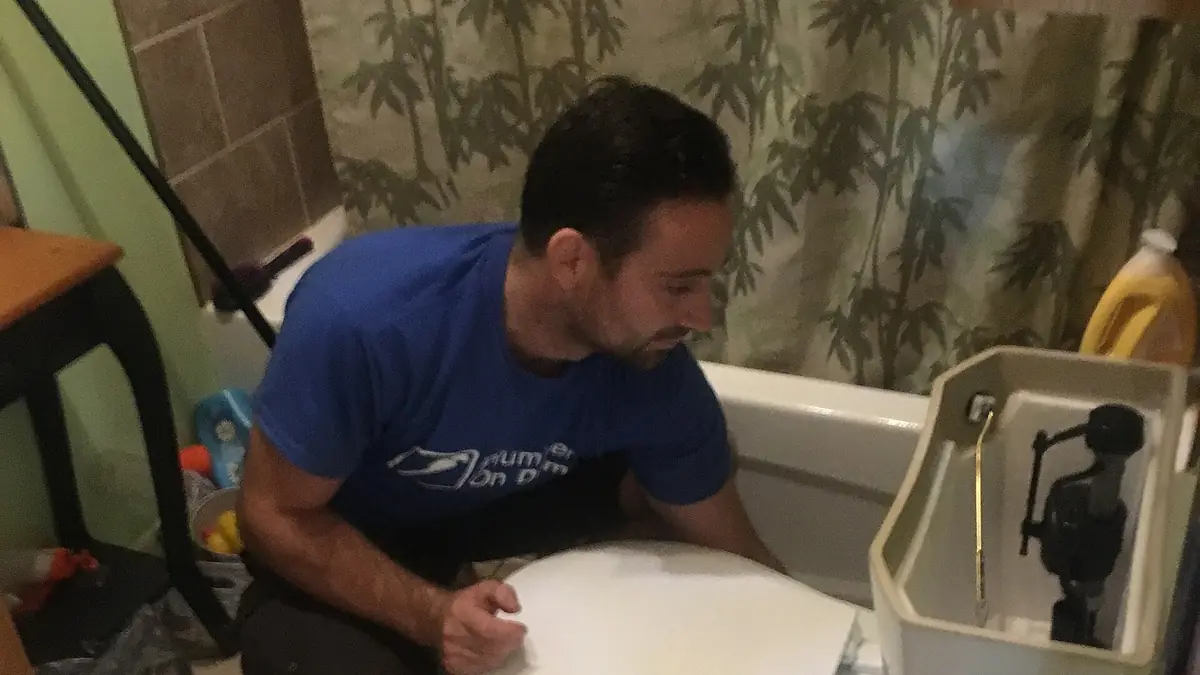
A toilet tank that takes a long time to refill has a restriction between the wall and the tank. Korky lists the usual causes: a shutoff valve behind the toilet that isn't fully open, a kinked or blocked supply line, or sediment and mineral buildup inside the fill valve (Korky). Work from the wall to the tank and you will find it in a few minutes.

✓ Checked by a licensed plumber Kevin Orr, Texas Master Plumber License M-47441 (look it up)
Last reviewed
In this guide
- Step by step
- 1. Open the shutoff valve all the way
- 2. Check the supply line
- 3. Do the bucket test
- 4. Clean or replace the fill valve
- How to flush debris out of a Fluidmaster 400A valve
- How to service a Korky valve
- Replacing the fill valve
- When the whole house is the problem
- A tank that never quite finishes filling
- Slow tank, or low bowl?
- Frequently asked questions
- Sources
First, check whether it's just the toilet. If every faucet in the house is weak, the problem is the home's water pressure, not the toilet; the Portland Water Bureau's guide to water pressure and flow covers that (Portland Water Bureau).
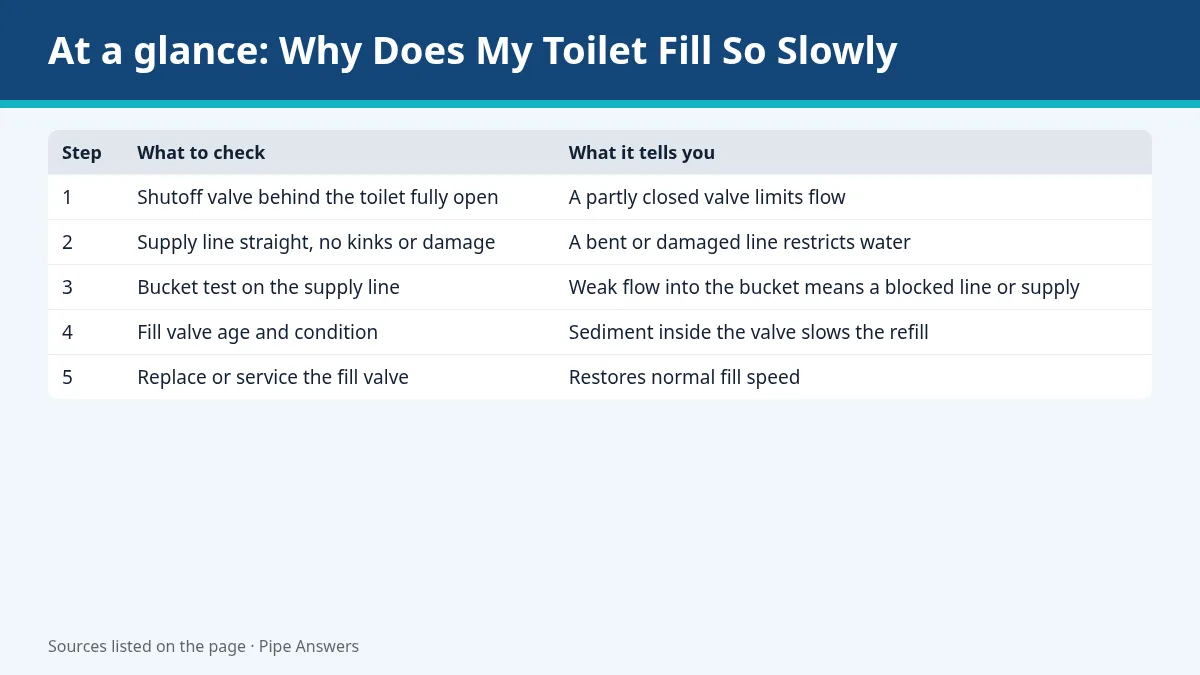 Graphic: summary of this guide, made by our team from the cited sources.
Step by step
| Step | What to check | What it tells you |
|---|---|---|
| 1 | Shutoff valve behind the toilet fully open | A partly closed valve limits flow |
| 2 | Supply line straight, no kinks or damage | A bent or damaged line restricts water |
| 3 | Bucket test on the supply line | Weak flow into the bucket means a blocked line or supply |
| 4 | Fill valve age and condition | Sediment inside the valve slows the refill |
| 5 | Replace or service the fill valve | Restores normal fill speed |
Source: Korky.
1. Open the shutoff valve all the way
Turn the oval handle on the pipe behind the toilet counterclockwise until it stops. Old multi-turn valves are sometimes left half closed after a repair, or get stiff. If the handle won't turn or the valve drips when you turn it, don't force it; that's a job for a plumber.
2. Check the supply line
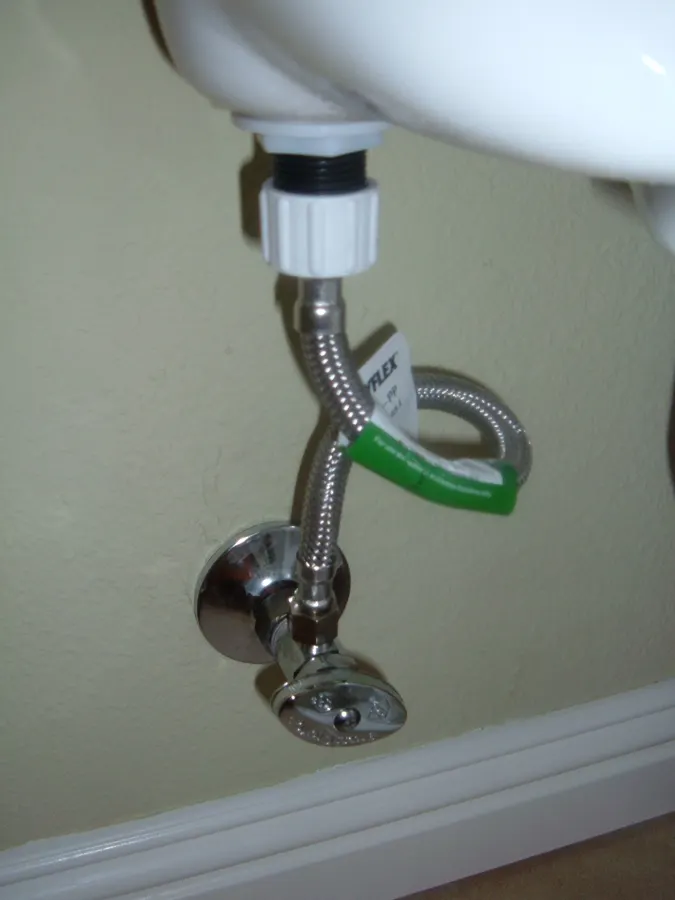
Korky says to straighten a kinked line and replace one that is bent or damaged (Korky). Braided stainless lines can kink behind the toilet when it's pushed against the wall.
3. Do the bucket test
If you have a flexible supply line, Korky describes this test: shut off the water, disconnect the line from the bottom of the fill valve, point it into a bucket, and slowly turn the water back on. Little or no flow means a blockage in the line or the incoming supply, and Korky recommends calling a licensed plumber at that point (Korky). Strong flow means the fill valve is the bottleneck.
4. Clean or replace the fill valve
If the supply is fine, Korky says the fill valve is likely restricting flow, and that a valve that is damaged, not serviceable or more than 5 years old is best replaced (Korky). American Standard also lists a fill valve clogged with debris as a cause and says it can be flushed out or replaced (American Standard). A new fill valve also usually fixes a whistling toilet fill valve, since the cause is often the same restriction.
How to flush debris out of a Fluidmaster 400A valve
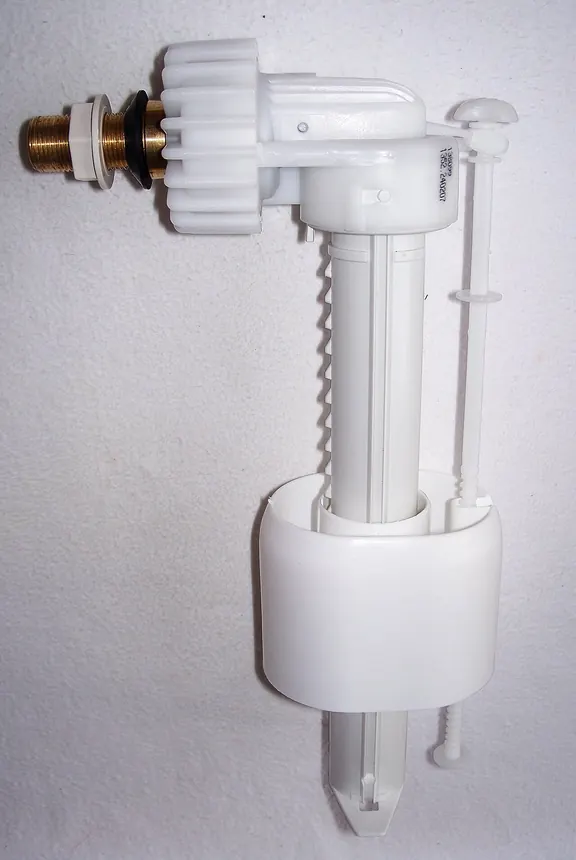
The Fluidmaster 400A is the tall valve with a float cup that slides up and down the shaft. Fluidmaster says debris in the valve body, supply line or shutoff valve is the most common reason it slows down, and recommends flushing it out before replacing anything (Fluidmaster). Their steps:
- Turn off the water and flush to empty the tank.
- Lift the float cup all the way up with one hand and hold the gray shaft so it doesn't turn.
- With the other hand, turn the cap and lever counterclockwise 1/8 of a turn and lift them off.
- Check the rubber seal under the cap for grit.
- Hold a cup upside down over the open valve and turn the water on full for 10 to 15 seconds to blow debris out.
- Put the cap back with its arm next to the refill tube, press down and turn clockwise to lock.
If that doesn't fix it, Fluidmaster sells a replacement seal (242) and a replacement cap assembly (385) (Fluidmaster).
How to service a Korky valve
Korky valves can be taken apart and cleaned. Korky's steps (Korky):
- Turn off the water and flush.
- Pull the refill tube off the valve cover and lift off the cover.
- Pinch the float arms together to remove the float (the piece with an "X" on top).
- Turn the cap 1/8 of a turn to the left while holding the valve body still. Rinse the cap in warm water.
- Pull the supply tube straight out, remove the white strainer at its bottom, and rinse it.
- Reassemble in reverse order and check that the float moves freely.
Replacing the fill valve
If the valve is more than 5 years old, damaged or not serviceable, Korky says replacing it is the best long-term fix (Korky). Fluidmaster says valves in use 7 years or more can start to wear out (Fluidmaster). The job takes basic tools:
- Turn off the water, flush while holding the handle down, and sponge out what's left (Korky).
- Disconnect the supply line and unscrew the nut under the tank to remove the old valve.
- Set the new valve's height so its water level mark sits about 1/2 inch below the top of the overflow tube (Korky).
- Put it in the tank hole at about a 45-degree angle from the back of the tank, so the refill tube has a straight path to the overflow tube (Korky).
- Thread on the mounting nut with the beveled side up and hand-tighten only (Korky).
- Reconnect the supply line, clip the refill tube to the overflow tube, turn the water on and check for drips.
When the whole house is the problem
If every faucet is weak, the toilet is not the issue. The Portland Water Bureau explains the difference between pressure and flow. Pressure is the force pushing the water, in pounds per square inch (psi). Flow is how much comes out, in gallons per minute. You can have normal pressure but low flow from clogged screens or corroded pipes (Portland Water Bureau).
Their checks (Portland Water Bureau):
- Only some fixtures are slow: clean aerators and check that all valves in the house are fully open.
- Everything is slow, including outside spigots: check your pressure reducing valve (PRV) or whole-house filter. Older galvanized pipes can restrict flow from corrosion.
- Measure it: Portland suggests an inexpensive pressure gauge from a hardware store to check pressure in real time. It keeps most homes between 40 and 80 psi.
Portland notes that plumbing code requires a PRV if your home gets more than 80 psi (Portland Water Bureau).
A tank that never quite finishes filling
If the valve keeps running and the tank never seems to fill, water may be leaking out as fast as it comes in. Korky says a constant hiss usually means water is escaping into the bowl, often past a worn flapper, which forces the fill valve to stay on (Korky). Do a dye test: put food coloring in the tank, don't flush, and check the bowl after at least 15 minutes. Color in the bowl means a flapper leak (Portland Water Bureau).
Slow tank, or low bowl?
Some people describe a toilet as "filling slowly" when the tank fills fine but the bowl stays low. That's a different problem: Korky says to check that the refill tube is attached and pointing into the overflow tube, and that any bowl refill dial on the valve is open (Korky). See why a toilet bowl water level drops for the other causes.
Frequently asked questions
How long should a toilet take to refill?
Manufacturers don't publish one number for all toilets, but a tank that takes several minutes when it used to take under a minute has a restriction somewhere.
Can a supply valve cause a slow-filling toilet?
Yes. Korky's first check is to make sure the shutoff valve behind the toilet is fully open and the supply line isn't kinked or blocked.
How do I clean a fill valve?
Serviceable valves, such as Korky models, have a cap you can remove and rinse with warm water to clear debris. Older valves that aren't serviceable are better replaced.
Why does only my toilet fill slowly?
If sinks and the shower run normally, the restriction is at the toilet: the stop valve, supply line or fill valve. If everything is slow, the issue is the home's water pressure.
Smell gas? Leave the building without switching anything on or off, then call your gas utility or 911 from outside.
Know your shutoff. Find your home’s main water shutoff before you need it. Most fixtures also have their own small valve.
Sources
- How to Fix a Slow-Filling Toilet Tank, Korky
- How to Fix a Toilet Bowl That Won't Refill After Flushing, Korky
- How do I adjust the water level in the toilet bowl if it is low?, American Standard
- Water pressure and flow, Portland Water Bureau
- Toilet Tank Won't Fill Up or Is Slow to Fill, Fluidmaster
- How to Replace a Toilet Fill Valve, Korky
- Loud or Broken Fill Valve, Korky
- Fix a Toilet Leak, Portland Water Bureau
Spotted an error? See our corrections policy or email contact@pipeanswers.com.

Pipe Answers Editorial Team
Our editors build each guide from the sources listed above and check every claim and number against them before publishing. How the team works
Kevin Orr
Expert Reviewer, Plumbing
Texas Master Plumber License, M-47441 · Verify license
Kevin Orr is a Texas Master Plumber, a U.S. Army veteran and the owner of a plumbing company. In his view, good plumbing is more than fixing pipes. It means showing up when you say you will, explaining what needs to…
Related guides
-
 Toilets
Why Is My Toilet Fill Valve Whistling? Causes and Fixes
A whistling or squealing toilet is usually water forced through a worn or clogged fill valve. Check the supply valve first, then replace the fill valve. What each toilet noise means.
-
 Toilets
Why Does My Toilet Run Every Few Minutes? (Phantom Flush Fix)
A toilet that refills by itself every few minutes is leaking tank water into the bowl, often past a worn flapper. Confirm it with a dye test, then fix it.
-
 Toilets
Why Does My Toilet Water Level Drop by Itself?
A toilet bowl that loses water on its own usually has a partial clog siphoning it, a blocked vent, a fill valve that isn't refilling the bowl, or a hairline crack. How to check each.
-
 Drains & Clogs
Why Does My Washing Machine Drain Into My Kitchen Sink?
Washer water coming up in the kitchen sink means the two share a drain that is clogged past where they join. Why it happens, what to check, when to call a plumber.