Why Does My Washing Machine Drain Into My Kitchen Sink?
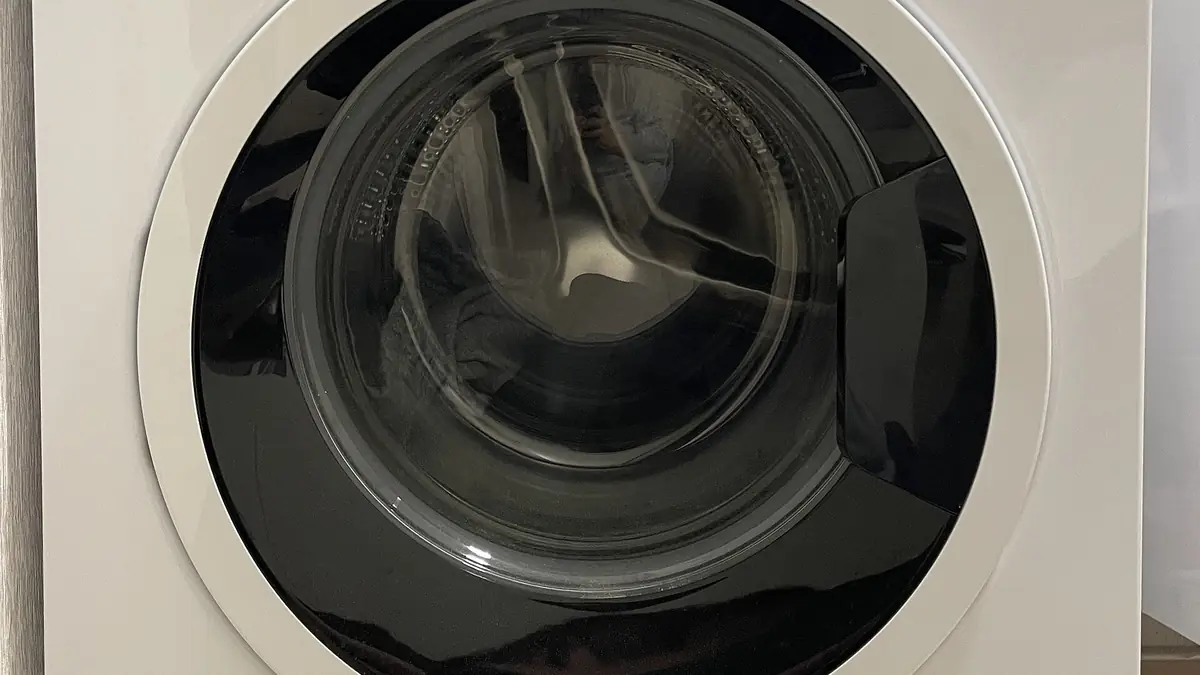
If washing machine water comes up in your kitchen sink, the washer and the sink share a drain line and that line is partly blocked somewhere after the point where they join. When the washer pumps out, the water can't get past the clog fast enough and takes the easiest way out: up through the sink drain. It's common in homes where the laundry is next to or behind the kitchen.

✓ Checked by a licensed plumber Kevin Orr, Texas Master Plumber License M-47441 (look it up)
Last reviewed
In this guide
The washer isn't broken. The drain line needs cleaning. In a line shared with a kitchen, cooking grease is a likely culprit, and washer lint can add to it.
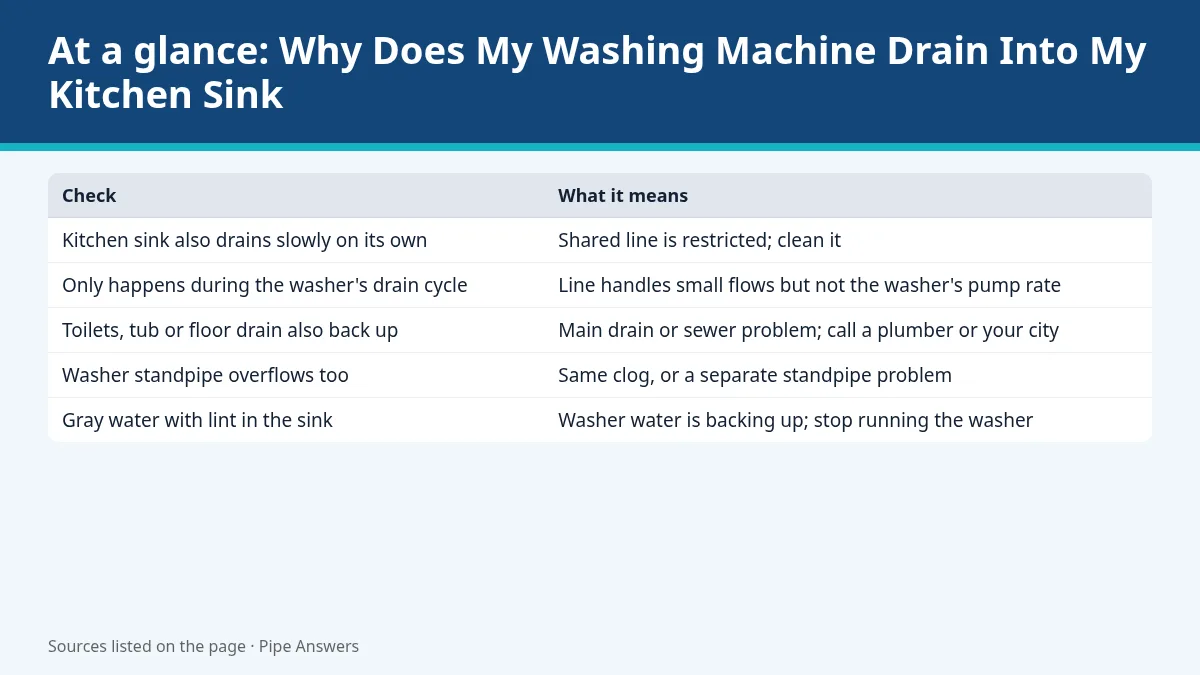 Graphic: summary of this guide, made by our team from the cited sources.
Why the washer is what shows the problem
A sink drains a few gallons at a time. A washer dumps a lot of water fast. GE Appliances says its top-load washer pumps move about 15 to 17 gallons per minute and its front-loaders about 10 (GE Appliances). A line that is half closed with grease handles the sink fine and then overflows when the washer drains.
Seattle Public Utilities explains how the grease part happens: oil and grease rinsed down the drain harden and stick to the pipes, building up over time (Seattle Public Utilities).
What to check
| Check | What it means |
|---|---|
| Kitchen sink also drains slowly on its own | Shared line is restricted; clean it |
| Only happens during the washer's drain cycle | Line handles small flows but not the washer's pump rate |
| Toilets, tub or floor drain also back up | Main drain or sewer problem; call a plumber or your city |
| Washer standpipe overflows too | Same clog, or a separate standpipe problem |
| Gray water with lint in the sink | Washer water is backing up; stop running the washer |
Sources: pump rates from GE Appliances; main-line backups from City of Minneapolis.
How to fix it
- Stop using the washer until the line is clear, or you'll keep flooding the sink.
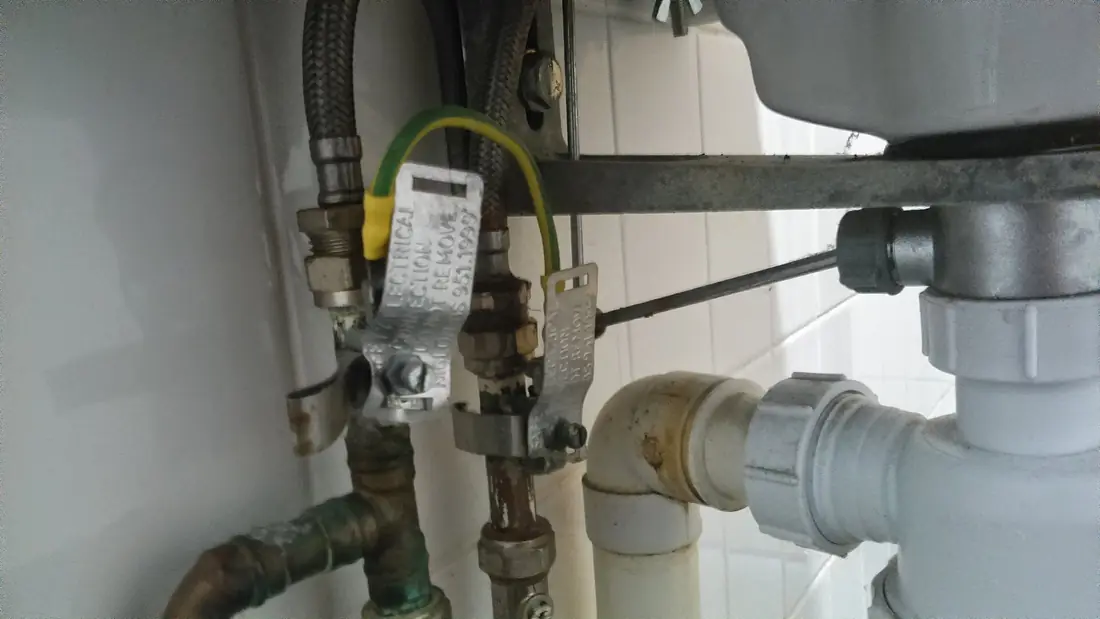
- Clean the kitchen trap and look into the wall pipe. If it is lined with grease, that is your clog.
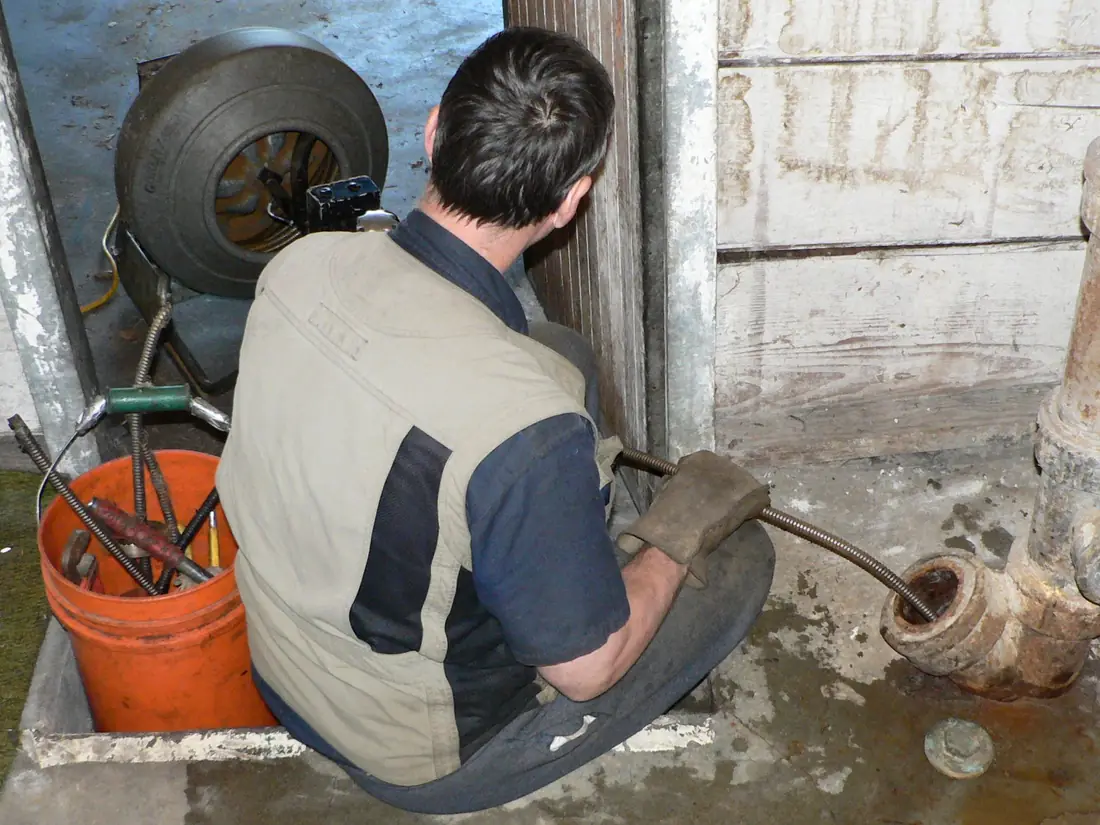
- Snake the shared line. With the kitchen trap off, run a drain auger into the wall pipe. If the washer standpipe is easier to reach, you can work from there. The clog can be several feet in, past the reach of a short hand snake, so use an auger long enough to get past the point where the two drains join.
- Test with a full washer drain. Run a rinse-and-spin cycle with no clothes and watch the sink.
- Add a lint trap to the washer hose to keep lint out of the line.
Our guide Why Are Both Sides of My Kitchen Sink Draining Slowly? covers the trap and auger steps in more detail.
When to call a plumber
Call if the auger doesn't clear it, if the clog is deep in the line, or if other fixtures back up. The City of Minneapolis notes that most sewer backups come from roots growing into a cracked private sewer lateral, and that if the blockage is in your private line you may need a professional drain cleaning service, while a blockage in the city-owned pipe is handled by the city's sewer crews (City of Minneapolis). Rules differ by city, so check with yours.
A plumber can also check whether the drain is sized and vented properly for both fixtures. If the clog keeps coming back, see Why Does My Drain Keep Clogging?
Frequently asked questions
Is it normal for the washer to make the kitchen sink gurgle?
A little gurgle can happen when a lot of water rushes down a shared line. Water actually rising in the sink is not normal; it means the shared drain can't carry the flow.
Can I just run the washer slower?
You can't slow the pump much. GE says its top-load washer pumps run at about 15 to 17 gallons per minute and front-loaders at about 10, so the drain has to handle that rate.
Is this a sewer line problem?
Only if other drains back up too. If the toilets and tub drain normally, the clog is in the branch line shared by the washer and kitchen.
Will a chemical drain cleaner fix it?
Unlikely. The clog is often far down the shared line, past where a product poured into the sink will work well. Clearing it with an auger is the more reliable fix.
Smell gas? Leave the building without switching anything on or off, then call your gas utility or 911 from outside.
Know your shutoff. Find your home’s main water shutoff before you need it. Most fixtures also have their own small valve.
Sources
- Washer: Drain Hose Information, GE Appliances
- Washer: Drain Height, GE Appliances
- Fats, Oils, and Grease Clog Pipes, Seattle Public Utilities
- Sewer Problems in the Home, City of Minneapolis
Spotted an error? See our corrections policy or email contact@pipeanswers.com.

Pipe Answers Editorial Team
Our editors build each guide from the sources listed above and check every claim and number against them before publishing. How the team works
Kevin Orr
Expert Reviewer, Plumbing
Texas Master Plumber License, M-47441 · Verify license
Kevin Orr is a Texas Master Plumber, a U.S. Army veteran and the owner of a plumbing company. In his view, good plumbing is more than fixing pipes. It means showing up when you say you will, explaining what needs to…
Related guides
-
 Drains & Clogs
Why Are Both Sides of My Kitchen Sink Draining Slowly?
When both bowls of a double kitchen sink drain slowly, the clog is usually past the point where the two drains join, in the trap or the pipe in the wall. How to find it and clear it.
-
 Drains & Clogs
Why Does My Drain Keep Clogging? How to Find the Real Cause
A drain that keeps clogging usually was never fully cleared, or the clog is past the plunger's reach. How to tell a fixture clog from a main line problem.
-
 Toilets
Why Is My Toilet Fill Valve Whistling? Causes and Fixes
A whistling or squealing toilet is usually water forced through a worn or clogged fill valve. Check the supply valve first, then replace the fill valve. What each toilet noise means.
-
 Winterizing
No Water? How to Tell if Your Pipes Are Frozen or the Water Is Off
Neighbors have water but your faucets give nothing or a trickle in freezing weather? A pipe is probably frozen. How to check and how to thaw it safely.