Why Are Both Sides of My Kitchen Sink Draining Slowly?
When both sides of a double kitchen sink drain slowly, the clog is almost always past the point where the two bowls join. In most kitchens the two drains meet at a tee, run through one shared P-trap, and go into one pipe in the wall. A blockage in the trap or the wall pipe slows both bowls at once. Grease and food scraps are the usual cause; Seattle Public Utilities says cooking grease hardens and sticks to pipes, building up over time (Seattle Public Utilities).
Expert review in progress A licensed plumber has not reviewed this guide yet. When that review is done, the reviewer’s name, license and the review date will appear here.
In this guide
Start by checking whether other drains in the house are slow. If only the kitchen is slow, it is a kitchen branch problem you can usually clear yourself.
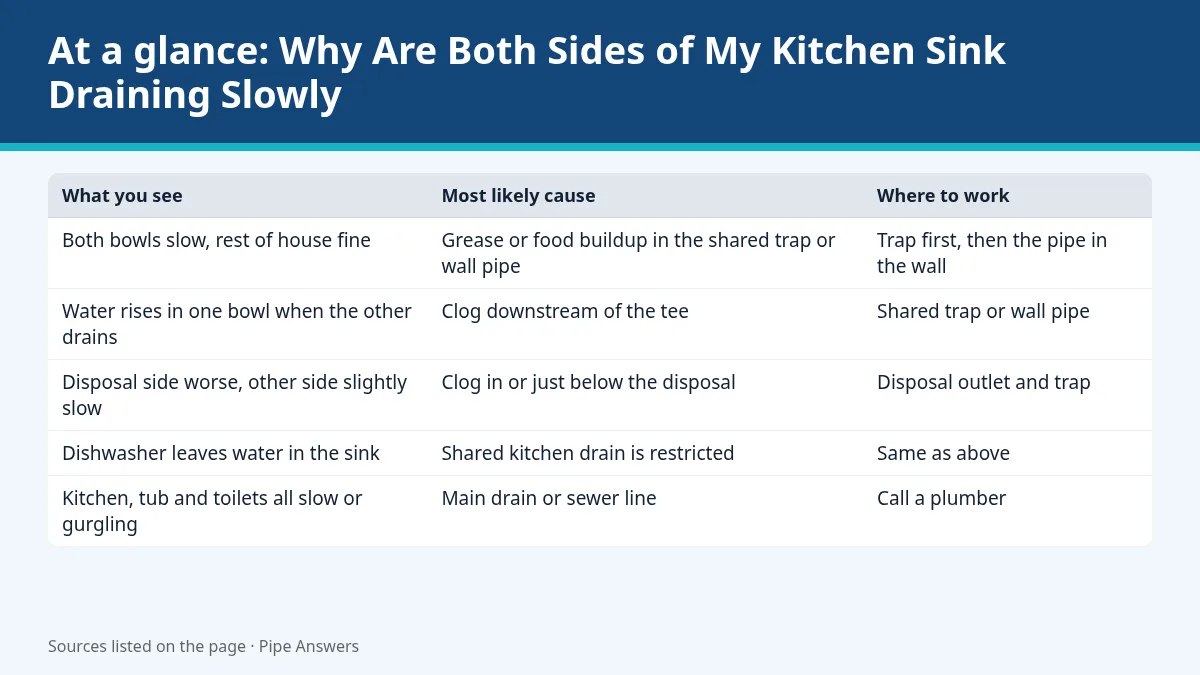 Graphic: summary of this guide, made by our team from the cited sources.
What each symptom points to
| What you see | Most likely cause | Where to work |
|---|---|---|
| Both bowls slow, rest of house fine | Grease or food buildup in the shared trap or wall pipe | Trap first, then the pipe in the wall |
| Water rises in one bowl when the other drains | Clog downstream of the tee | Shared trap or wall pipe |
| Disposal side worse, other side slightly slow | Clog in or just below the disposal | Disposal outlet and trap |
| Dishwasher leaves water in the sink | Shared kitchen drain is restricted | Same as above |
| Kitchen, tub and toilets all slow or gurgling | Main drain or sewer line | Call a plumber |
Step 1: Plunge correctly
Use a flat cup plunger, not a toilet plunger. Korky's instructions for sinks are to plug the second drain on a double-basin sink with a wet rag or stopper, cover any dishwasher air gap with a wet rag, and make sure there is enough water to cover the plunger cup (Korky). Then plunge steadily for about 10 to 15 seconds and check the drain; repeat a few times if needed.
If one side has a garbage disposal, InSinkErator says to turn the disposal on first and look for a whirlpool in the water. A whirlpool means the disposal is running and the drain line is clogged. To plunge, block the other sink opening, fill the sink with about four inches of water, and plunge over the disposal opening (InSinkErator).
Step 2: Clean the shared trap
If plunging doesn't help, the trap is the next stop. Put a bucket under it, unscrew the two slip nuts by hand or with pliers, and pull the U-shaped trap out. Rinse it in another sink or outside. While it's off, look into the pipe going into the wall with a flashlight. Building codes require a water seal of 2 to 4 inches in each trap (ICC IPC Chapter 10), so a trap full of grease has very little room left for water to pass.
Put the trap back with the washers facing the right way, hand-tighten the nuts and run water to check for drips.
Step 3: Clear the pipe in the wall
If the trap was clean, the clog is in the pipe going into the wall. With the trap off, feed a small hand auger (drain snake) into that pipe and turn it as you push. When you feel resistance, keep turning to break through or hook the clog, then pull it back. Reattach the trap and run hot water for a few minutes. Our guide to why a drain keeps clogging covers what to do when the same line clogs again and again.
About drain cleaners: Poison Control says many contain concentrated acids or alkalis that can cause serious burns, and pouring them into a sink full of standing water raises the risk of splash-back (Poison Control). If you have already poured one in, don't plunge or open the trap; tell the plumber what you used.
How to keep it from coming back
Seattle Public Utilities lists the foods that cause the most trouble: bacon grease and meat drippings, butter and cooking oils, gravy and sauces, dairy, and oils that harden when cool such as olive and coconut oil (Seattle Public Utilities). Let grease cool, wipe pans with a paper towel before washing, and use sink strainers.
For the disposal, InSinkErator recommends running it with a moderate flow of cold water and continuing for a few seconds after grinding, and never pouring grease or fat into it (InSinkErator).
When to call a plumber
Call if the auger won't get through, if other drains in the house are slow or gurgling, or if water backs up into the sink when the washing machine or dishwasher drains. That last one usually means a clog further down a shared drain line; see why a washing machine drains into the kitchen sink.
Frequently asked questions
Why would both sides of a double sink be slow if only one side has the disposal?
Both bowls usually drain into one shared trap and one pipe in the wall. A clog in that shared section slows both sides, no matter which bowl the food went down.
Should I plunge both sides at the same time?
No. Plug the other bowl with a stopper or wet rag and plunge one side. Korky and InSinkErator both say to block the second drain so the pressure goes toward the clog.
Is a slow double sink a sign of a sewer problem?
Only if other drains are slow too. If the toilets, tub and other sinks drain normally, the clog is in the kitchen branch, not the main sewer line.
Can I use chemical drain cleaner on a double sink?
It is risky. Poison Control warns that many drain cleaners contain strong acids or alkalis that can burn skin and eyes, and splash-back is a risk if the sink is full of standing water.
Smell gas? Leave the building without switching anything on or off, then call your gas utility or 911 from outside.
Know your shutoff. Find your home’s main water shutoff before you need it. Most fixtures also have their own small valve.
Sources
- How to Plunge a Sink, Korky
- Fixing a Clogged Garbage Disposal, InSinkErator
- Fats, Oils, and Grease Clog Pipes, Seattle Public Utilities
- International Plumbing Code 2021, Chapter 10: Traps, Interceptors and Separators, International Code Council
- What's in Drain Cleaner?, Poison Control (National Capital Poison Center)
Spotted an error? See our corrections policy or email contact@pipeanswers.com.

Pipe Answers Editorial Team
Our editors build each guide from the sources listed above and check every claim and number against them before publishing. How the team works
Related guides
-
 Drains & Clogs
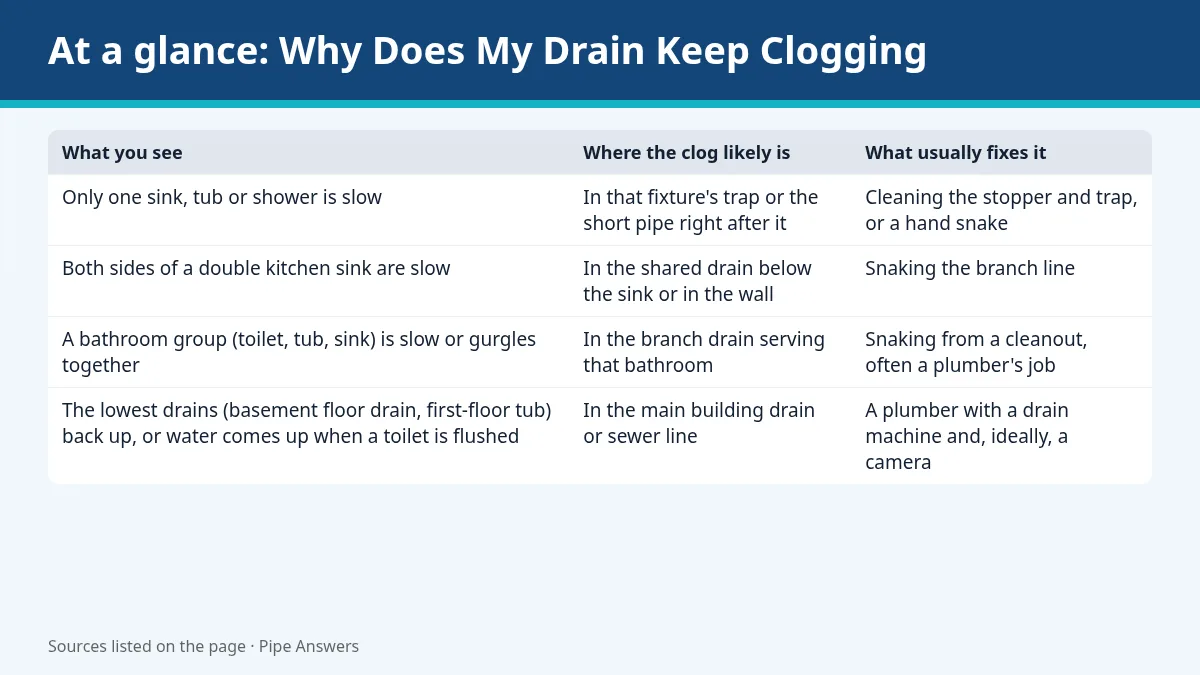
 Why Does My Drain Keep Clogging? How to Find the Real Cause
A drain that keeps clogging usually was never fully cleared, or the clog is past the plunger's reach. How to tell a fixture clog from a main line problem.
-
 Winterizing
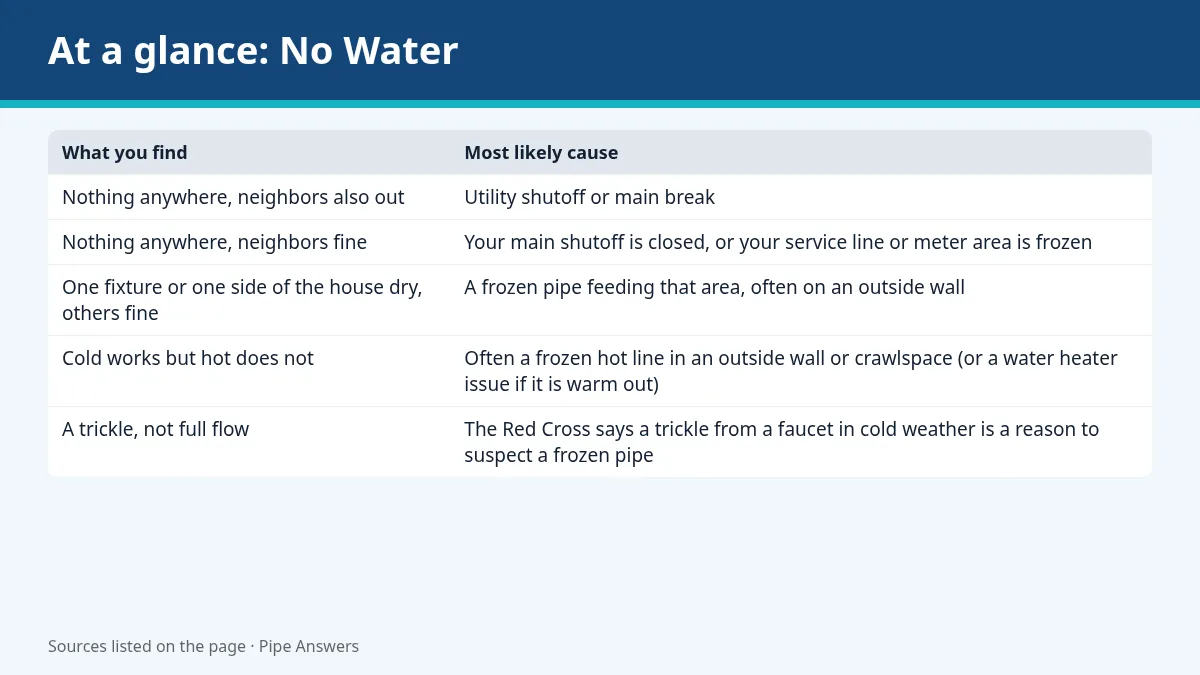
 No Water? How to Tell if Your Pipes Are Frozen or the Water Is Off
Neighbors have water but your faucets give nothing or a trickle in freezing weather? A pipe is probably frozen. How to check and how to thaw it safely.
-
 Water Pressure
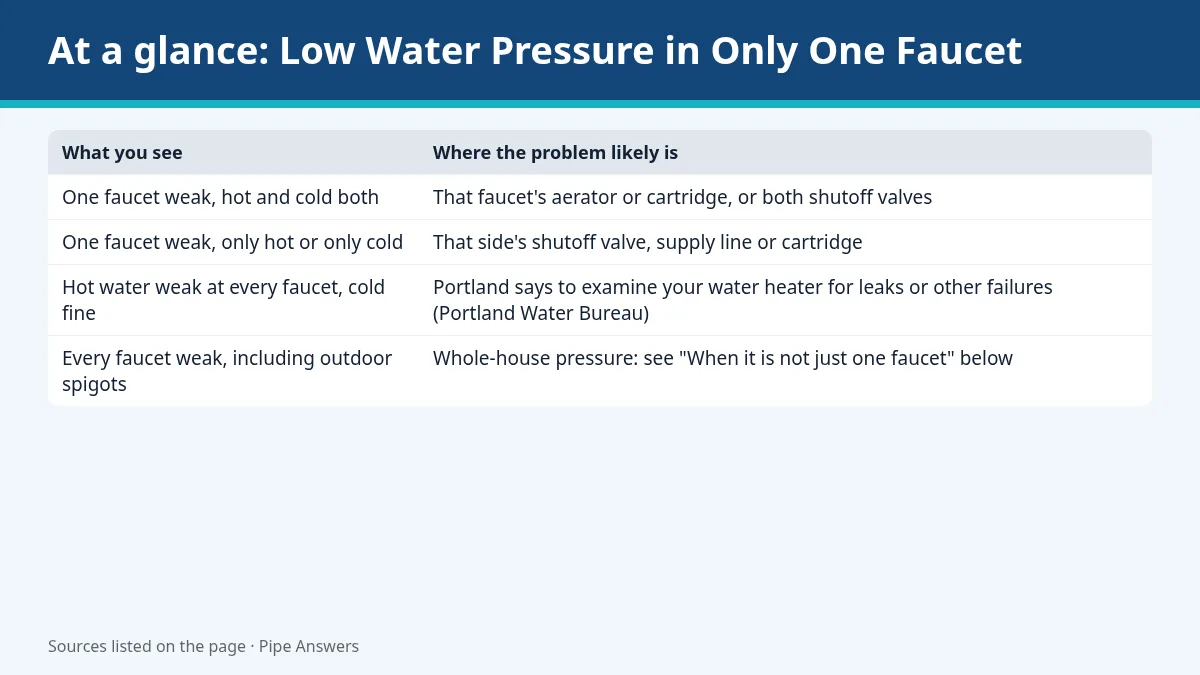
 Low Water Pressure in Only One Faucet? Check These 4 Things
If only one faucet is weak, the problem is in that faucet or its supply, not your home's pressure. Check the aerator, shutoff valves, then the cartridge.
-
 Water Heaters
 Why Does My Shower Turn Cold After 5 Minutes?
Hot water that runs out after a few minutes usually means a failed lower element or dip tube in a tank heater, too much demand, or, with tankless, flow dropping below the burner's minimum. How to narrow it down.