How to Tell If Your AC Condensate Drain Line Is Clogged
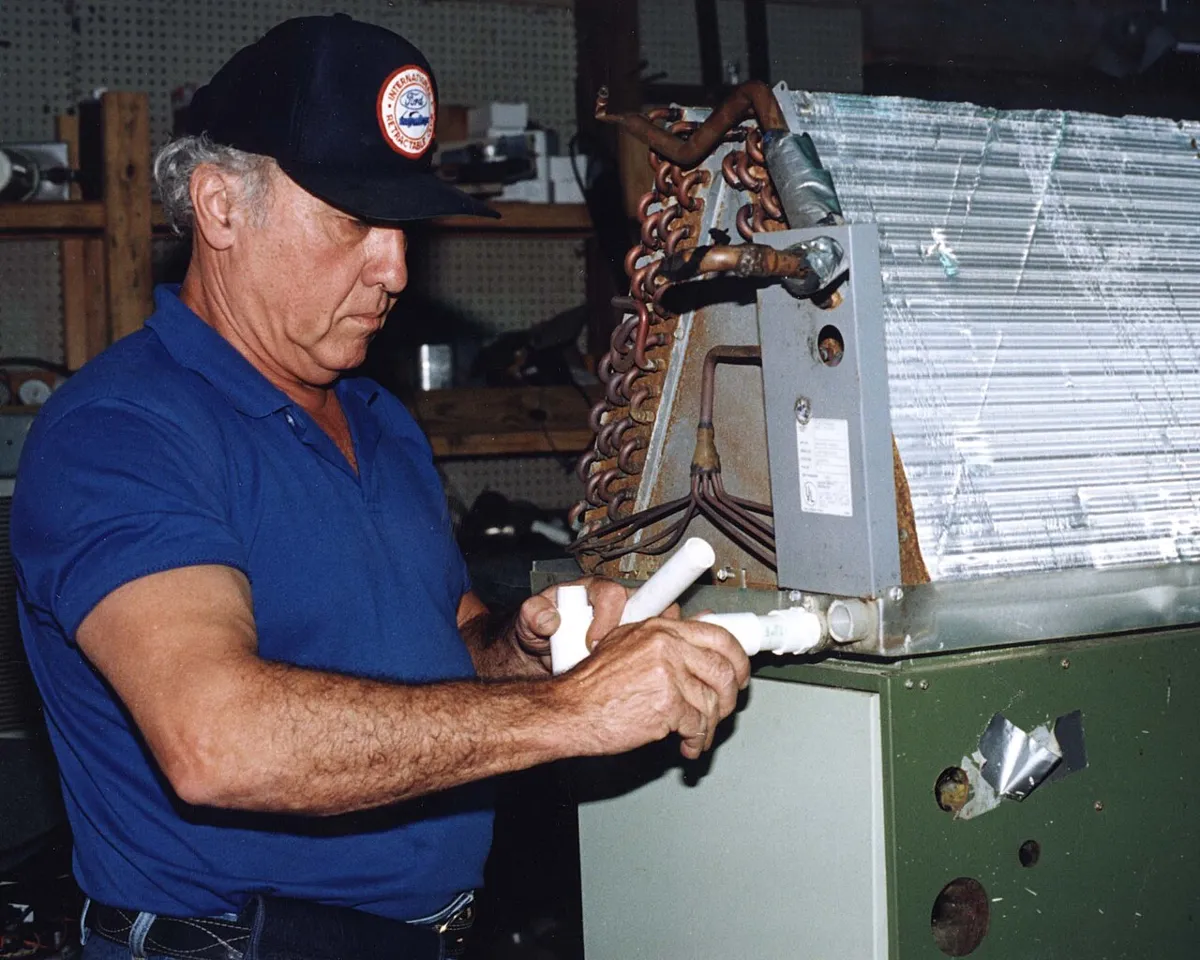
Your AC condensate drain line is probably clogged if the system suddenly shuts off while cooling, there is standing water in the drain pan under the indoor unit, or water is dripping from a pipe above a door or window. Musty smells from the vents and rust on the drain pan are slower clues. Trane says the line can clog with dirt, debris, mold growth or even spider webs (Trane).

✓ Checked by a licensed plumber Kevin Orr, Texas Master Plumber License M-47441 (look it up)
Last reviewed
In this guide
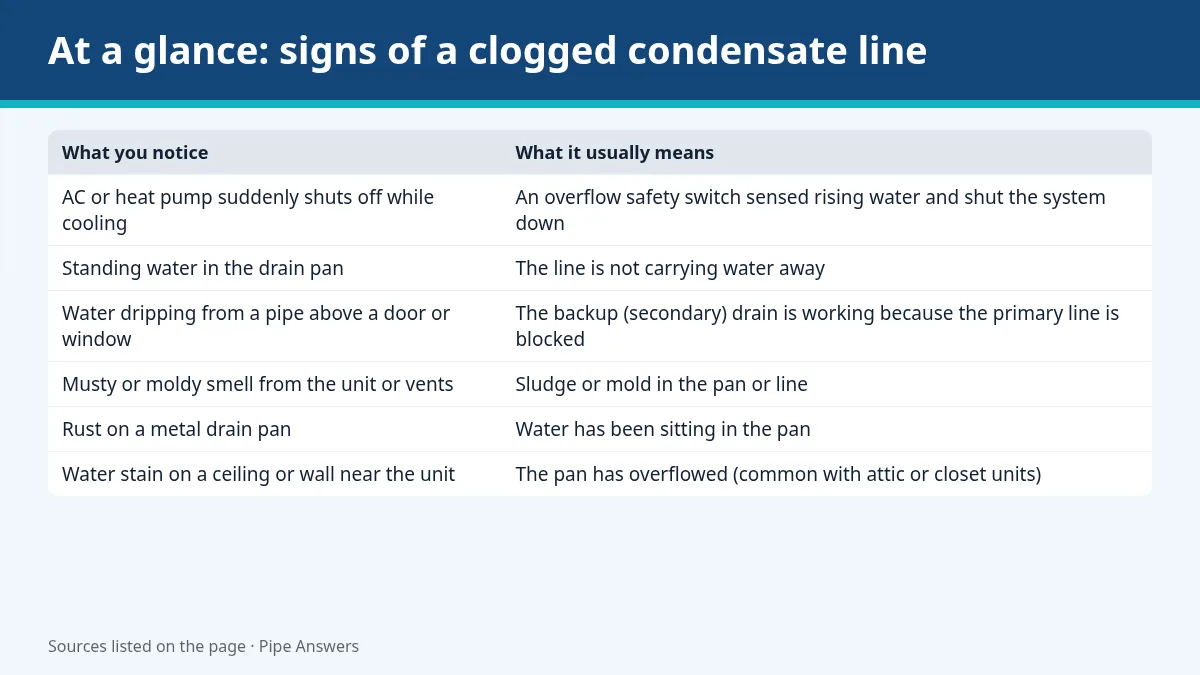 Graphic: summary of this guide, made by our team from the cited sources.
How the condensate drain works
When your air conditioner or heat pump cools, the indoor coil pulls moisture out of the air. That water drips into a drain pan under the coil and runs out through a small drain line, usually PVC, to the outside or to a drain. Trane describes the line as a PVC pipe at the indoor unit that drains to the outside of your home (Trane, clogged drain line). Lennox adds that water dripping from the condensate line outside your home means the system is functioning properly (Lennox).
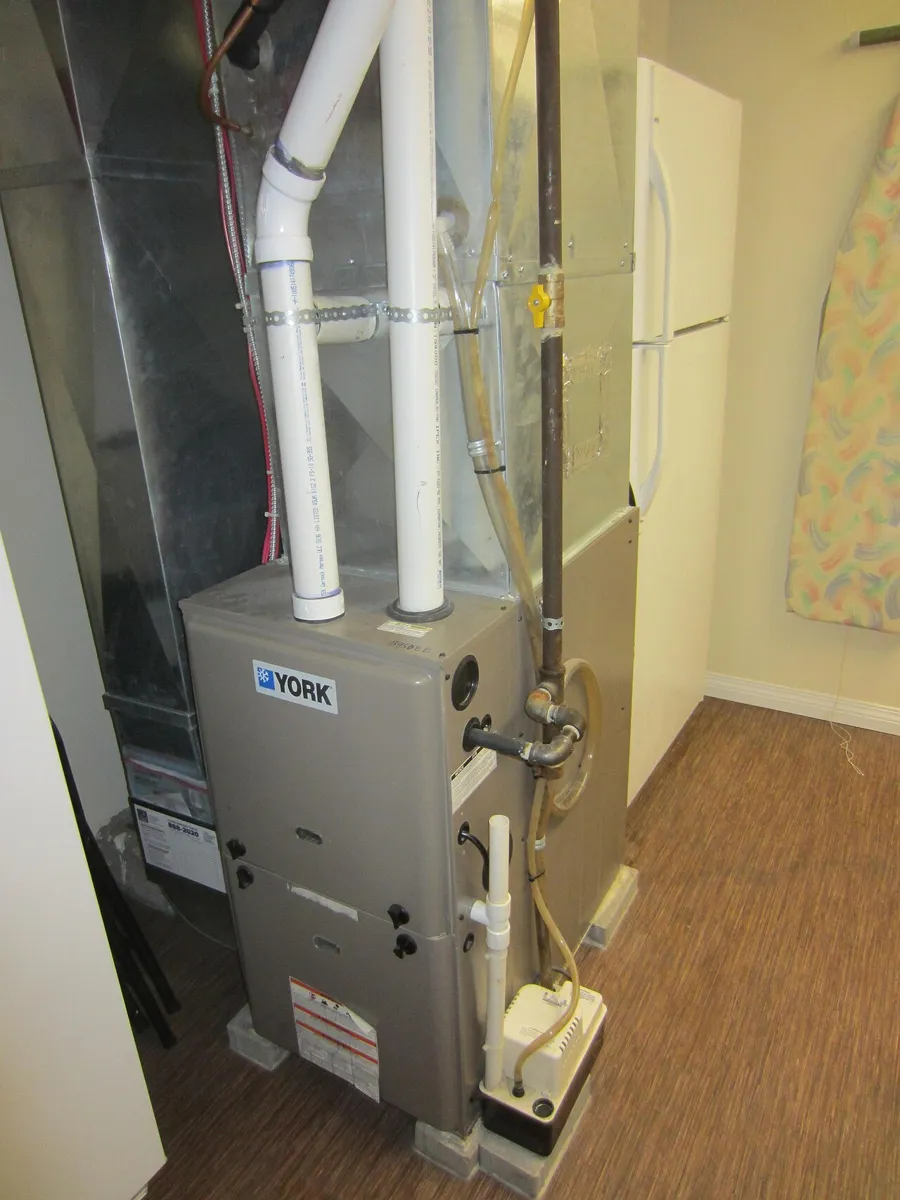
High-efficiency condensing furnaces make condensate too. ENERGY STAR's maintenance checklist tells contractors to check the condensate drain in your central air conditioner, furnace and heat pump, and warns that a plugged drain can cause water damage and affect indoor humidity (ENERGY STAR).
The signs, and what each one means
| What you notice | What it usually means | Source |
|---|---|---|
| AC or heat pump suddenly shuts off while cooling | An overflow safety switch sensed rising water and shut the system down | Trane |
| Standing water in the drain pan | The line is not carrying water away | Lennox |
| Water dripping from a pipe above a door or window | The backup (secondary) drain is working because the primary line is blocked | Lennox, building code |
| Musty or moldy smell from the unit or vents | Sludge or mold in the pan or line | Carrier, Lennox |
| Rust on a metal drain pan | Water has been sitting in the pan | Lennox, BASC |
| Water stain on a ceiling or wall near the unit | The pan has overflowed (common with attic or closet units) | Trane, BASC |
One sign competitors often list is higher energy bills or weaker cooling. Trane says the opposite: when the drain line is clogged, the problem is water leaking and possible water damage, and the efficiency of the system is not affected.
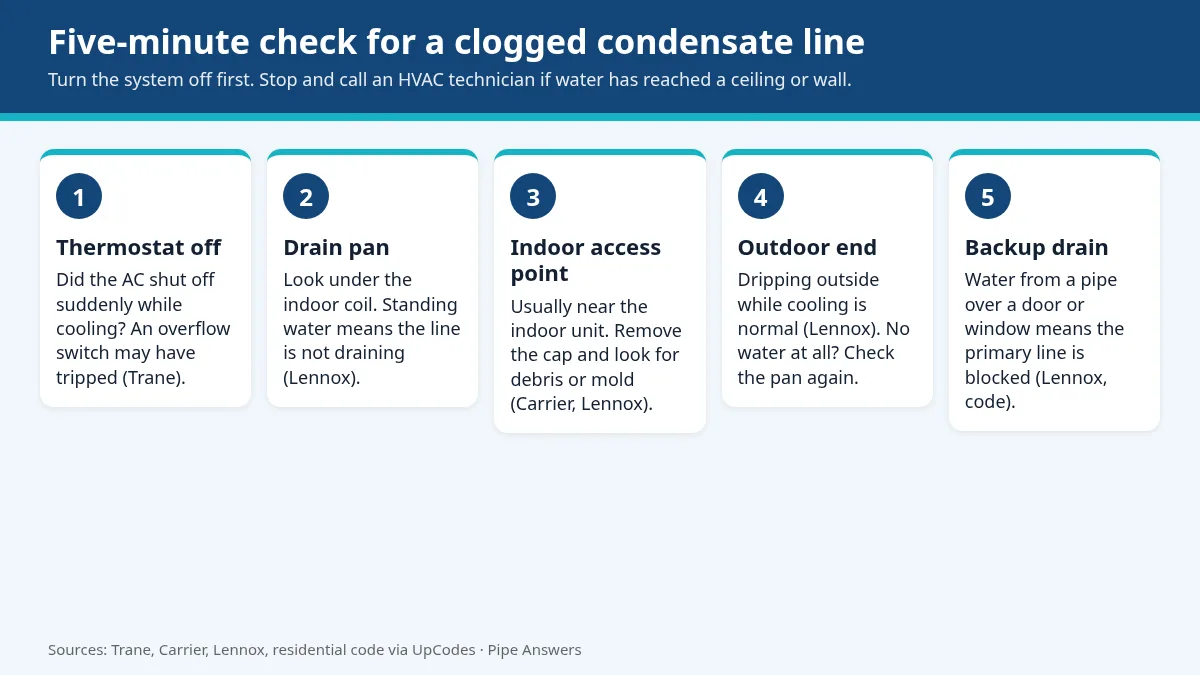 Graphic: made by our team from Trane, Carrier and Lennox guidance.
Why the AC suddenly shuts off
Many systems have a condensate overflow switch. Trane says that if the switch detects a possible overflow, it shuts down the outdoor compressor, the condenser fan and the indoor supply fan. So if your AC suddenly shuts off in the heat of the day, a clogged condensate line or pan may be to blame. Trane describes two types: a float switch that trips when water reaches a set level, and a sensor switch that shuts the system down as soon as it detects a few drops of water.
If your system has no switch, Trane says it will keep running with a clogged line until the pan fills and spills over, which can damage ceilings or drywall depending on where the unit is.
What that pipe over your window is for
Building codes expect clogs. Residential codes based on the International Residential Code require a backup wherever an overflow from a cooling coil would damage the building: either an auxiliary drain pan or overflow line that discharges to a conspicuous point to alert you if the primary drain stops, or a water-level detection device that shuts the equipment off (residential code text via UpCodes). Lennox says the secondary drain line usually drains above a door or window, and the Building America Solution Center notes that some installers run it over a window so it is more noticeable when it drips.
Carrier quotes a Texas HVAC contractor who explains that attic units are often piped to an emergency drain that exits near a sidewalk, doorway or another visible area, and that water coming from that drain is usually a sign of a problem (Carrier).
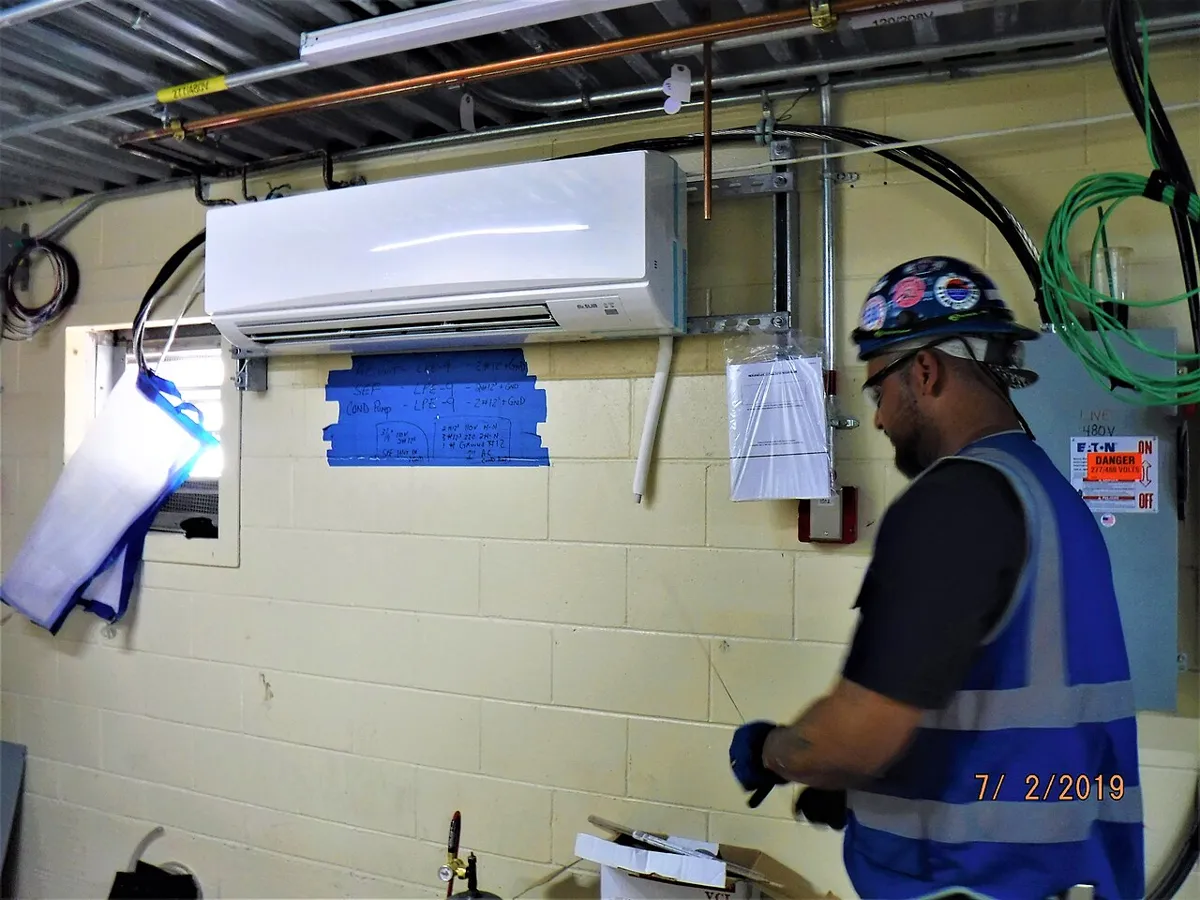
A five-minute check
- Turn the system off at the thermostat. Lennox and Carrier both start with turning the AC off for safety, since you are working near water and electricity.
- Look in the drain pan. It sits under the indoor coil. Standing water means the line is not draining.
- Find the indoor access point. Carrier says it is usually near the indoor unit. Lennox suggests removing the cap and using a flashlight to look for debris, mold or blockages.
- Check the outdoor end. If the AC has been cooling and you see no water at all where the line exits, check the pan again.
- Look for the backup drain. Water from a pipe above a door or window, or a system shut down by its overflow switch, means the primary line needs clearing.
Clearing a clog yourself
Carrier's quick guide says to turn the unit off, find the access point near the indoor unit and the drain exit outdoors, then use a wet/dry vacuum to suction the clog out from the outdoor exit, or pour a cup of distilled vinegar into the indoor access point to dissolve buildup. Lennox lists similar steps: pull out a clog only if you can do it without pushing it further in, use a wire brush or a wet/dry vacuum, flush with diluted vinegar or an approved cleaner designed for PVC, let it sit for 30 minutes or longer, and clean the drain pan.
Two cautions from the same sources. Carrier notes that vinegar or bleach may not fully prevent blockages, because many clogs are debris or buildup that is not organic. Lennox says a trained HVAC technician will have the proper tools, and Carrier says the job is best handled by a qualified pro who can clear the line without damaging the PVC piping. Check your equipment manual before you put any cleaner in the line.
If water has already leaked, dry it fast. The EPA says to dry water-damaged areas and items within 24 to 48 hours to prevent mold growth (EPA).
How to keep it from clogging again
- Get a yearly check-up. ENERGY STAR recommends annual pre-season check-ups by a contractor, including the condensate drain. Carrier says technicians typically inspect and clear drain debris during an annual tune-up.
- Check the air filter monthly. ENERGY STAR says to inspect, clean or change air filters once a month. Carrier explains that dust and airborne particles the coil collects mix with moisture into a sludge that can travel into the drain line.
- Look at the pan now and then. The Building America Solution Center says clogged lines and overflowing pans in attics, basements and closets can go unnoticed long enough to cause severe water damage, and pans should be checked for standing water, blockages and corrosion (Building America Solution Center).
- Ask about an overflow switch. Trane sells a drain pan overflow switch as an accessory, and the code allows a water-level shutoff as one form of backup protection.
If a sink, tub or floor drain in the house is the one that keeps backing up, that is a separate problem; see our guide on why your drain keeps clogging.
When to call an HVAC technician
Call a pro if the line is still blocked after these steps, the overflow switch keeps tripping, water has reached a ceiling or wall, the pan is cracked or rusted through, or the unit is in an attic you cannot reach safely. Trane says technicians clear the line with a vacuum, wet/dry vacuum, garden hose or a simple snake, and check the drain line and pan for clogs or cracks.
Frequently asked questions
What are the signs of a clogged AC condensate line?
The main ones are an AC that suddenly shuts off while cooling, standing water in the drain pan, water dripping from a pipe above a door or window, musty smells from the unit or vents, and rust on the drain pan (Trane, Carrier, Lennox).
Will a clogged condensate line stop my AC from cooling?
Only if your system has an overflow safety switch. Trane says the switch shuts the system down when water rises in the pan. Without one, the AC keeps running and the pan eventually overflows. Trane also says a clog does not affect the system's efficiency.
Why is water dripping from a pipe above my window?
That is often the secondary, backup condensate drain. Lennox says it usually drains above a door or window, and the code requires backup drains to empty where you will notice them. Water there usually means the primary line is blocked.
Can I pour vinegar down my AC drain line?
Carrier mentions pouring a cup of distilled vinegar into the indoor access point, and Lennox mentions diluted vinegar or a cleaner approved for PVC. Carrier also notes vinegar or bleach may not prevent clogs that are not organic. Check your equipment manual first.
Is condensate dripping outside normal?
Yes. Lennox says dripping from the condensate line outside your home means the system is functioning properly.
Smell gas? Leave the building without switching anything on or off, then call your gas utility or 911 from outside.
Know your shutoff. Find your home’s main water shutoff before you need it. Most fixtures also have their own small valve.
Sources
- Troubleshooting the HVAC Air Handler Overflow Switch, Trane
- AC Condensate Drain Line Clogged? Learn What You Can Do, Trane
- How to Clean AC Drain Line, Carrier
- AC Drain Line Clogged? Here's What to Do, Lennox
- Maintenance Checklist, ENERGY STAR
- IRC M1411.3.1 Auxiliary and Secondary Drain Systems (via UpCodes)
- HVAC Has Corrosion-Resistant Condensate Drain Pan, Building America Solution Center (PNNL, U.S. DOE)
- A Brief Guide to Mold, Moisture and Your Home, U.S. EPA
Spotted an error? See our corrections policy or email contact@pipeanswers.com.

Pipe Answers Editorial Team
Our editors build each guide from the sources listed above and check every claim and number against them before publishing. How the team works
Kevin Orr
Expert Reviewer, Plumbing
Texas Master Plumber License, M-47441 · Verify license
Kevin Orr is a Texas Master Plumber, a U.S. Army veteran and the owner of a plumbing company. In his view, good plumbing is more than fixing pipes. It means showing up when you say you will, explaining what needs to…
Related guides
-
 Drains & Clogs
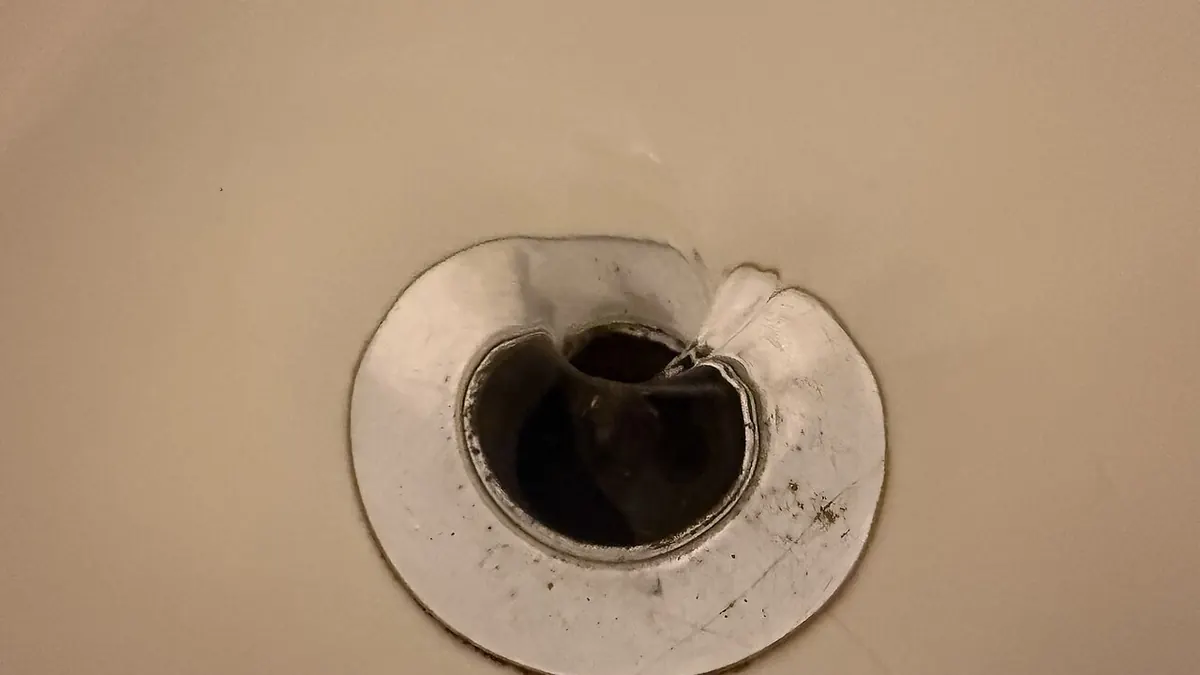
Bathtub Stopper Not Working? Find Your Type and Fix It
Most tub stoppers fail from hair, a loose or worn seal, or linkage set at the wrong length. Identify your stopper type, then adjust or replace it using Kohler, Watco and Danco instructions.
-
 Drains & Clogs
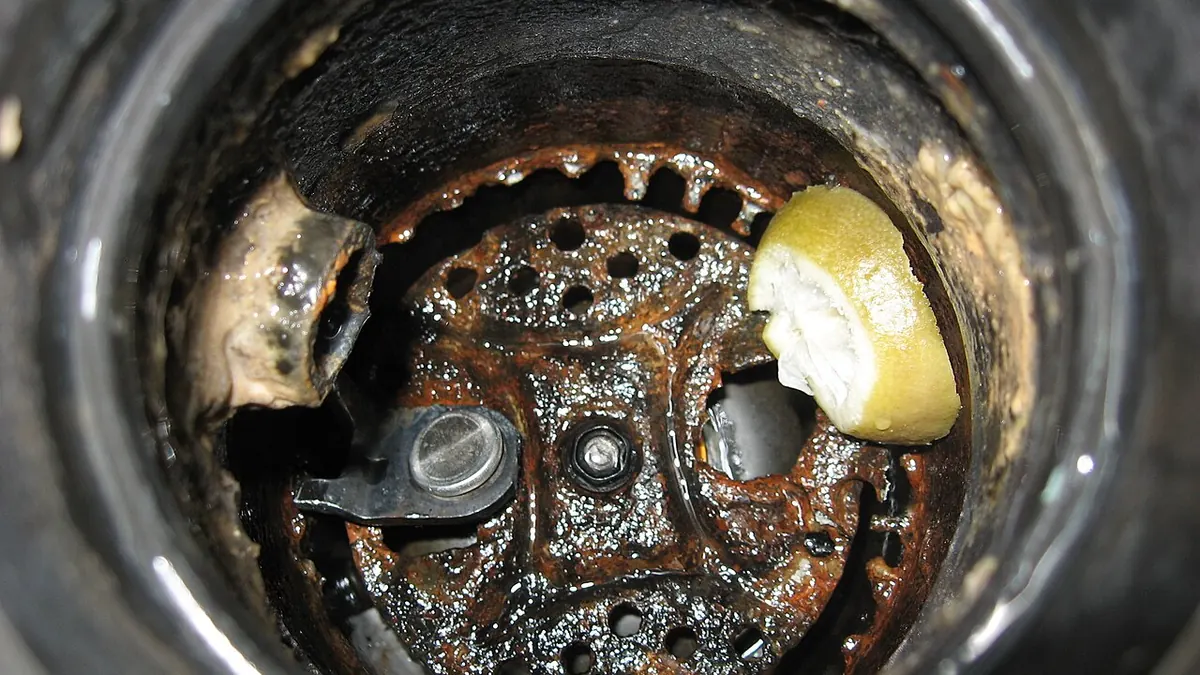
How to Tell If Your Garbage Disposal Is Bad (or Just Jammed)
Humming, tripping, smells and most leaks are fixable. A disposal is bad when it leaks through the body or motor joint, or still won't run after a reset. Tests from InSinkErator, Waste King and Moen.
-
 Drains & Clogs
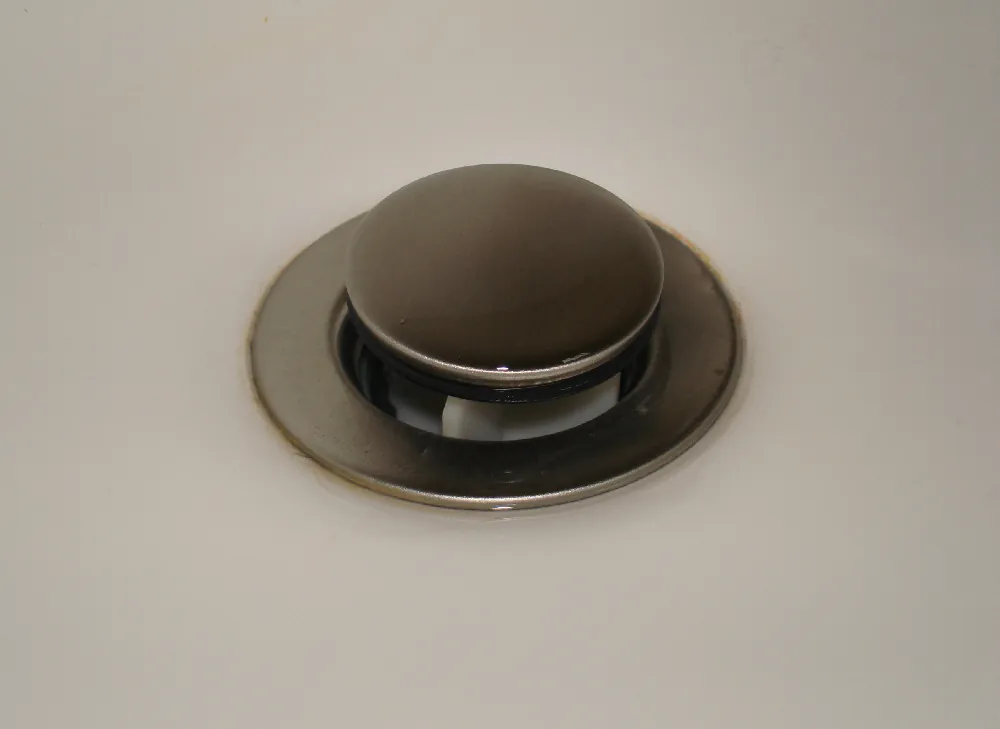
Bathroom Sink Draining Slowly? Fix It in 4 Steps (and Replace the Pop-Up)
A slow bathroom sink is usually clogged at the pop-up stopper or the P-trap. How to pull and clean the stopper, plunge the right way, clear the trap, and replace a worn pop-up drain.
-
 Drains & Clogs
Shower Drain Clogged but No Hair? 6 Other Causes and Fixes
No hair in the strainer but the shower still drains slowly? Soap curd, hard water scale, drain slime, grit and venting problems are the usual causes. How to find yours and clear it safely.