Shower Drain Clogged but No Hair? 6 Other Causes and Fixes
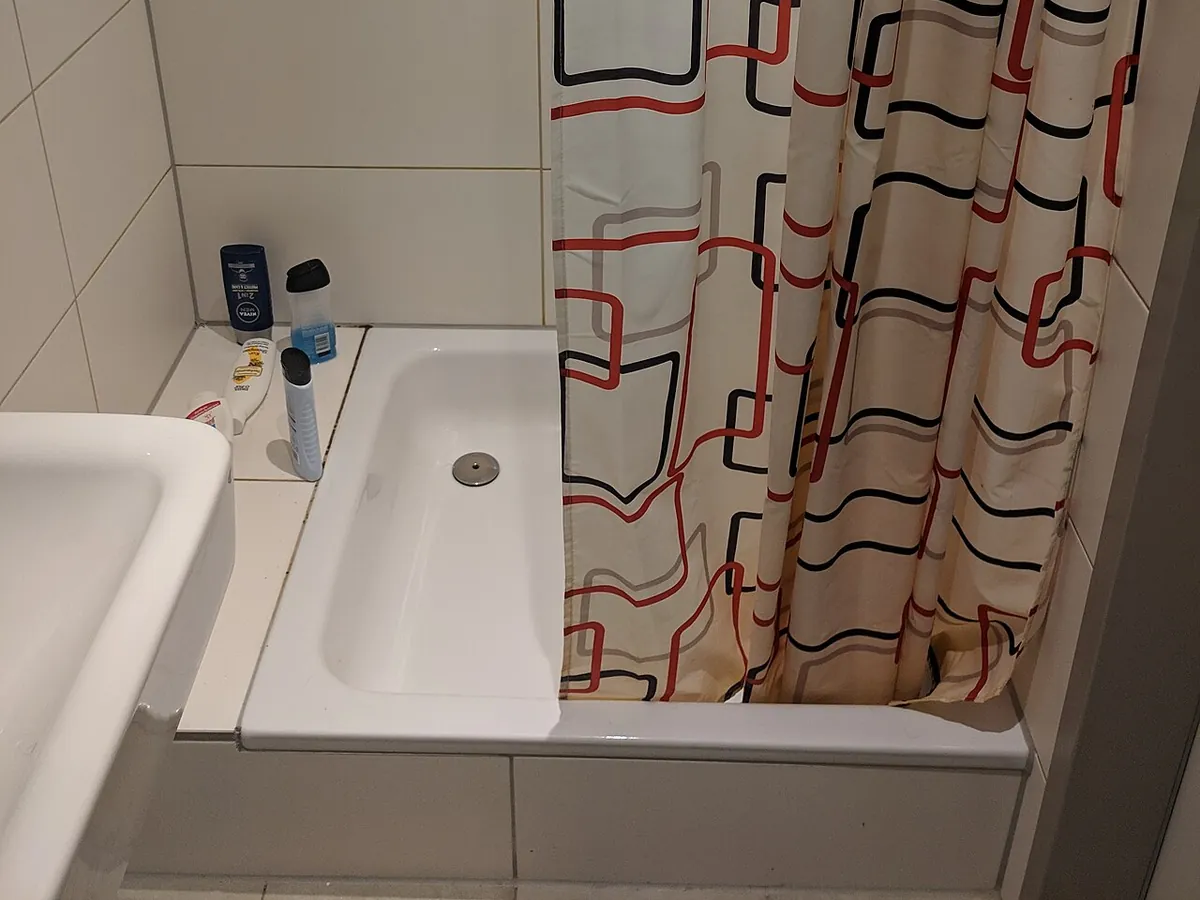
A shower drain can clog with no hair in sight because hair is only one ingredient. Soap and hard water minerals form a sticky film inside the pipe, slime grows on that film, and grit and small objects get stuck in it. Most of this sits out of view, under the strainer or down in the trap, so the top of the drain can look clean while the water still pools around your feet.

✓ Checked by a licensed plumber Kevin Orr, Texas Master Plumber License M-47441 (look it up)
Last reviewed
In this guide
- Match what you see to the cause
- 1. Soap curd from soap and hard water
- 2. Hard water scale
- 3. Slime inside the drain
- 4. Grit, sand and small objects
- 5. Hair you cannot see
- 6. A problem past the shower
- How to clear it, in order
- Go easy on chemical drain cleaners
- When to call a plumber
- Frequently asked questions
- Sources
The good news is that these clogs usually sit in the strainer, the pipe just below it or the trap, and you can reach them with a screwdriver, a stiff brush and a drain snake.
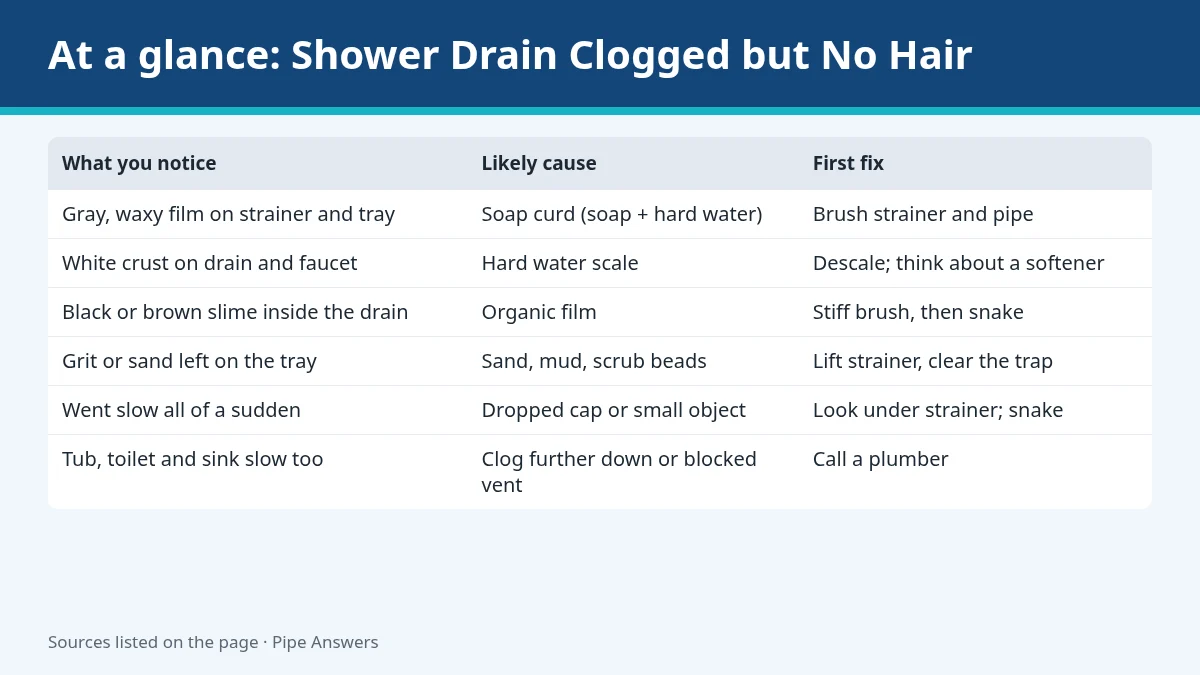 Graphic: summary of this guide, made by our team from the cited sources.
Match what you see to the cause
| What you notice | Likely cause | First fix |
|---|---|---|
| Gray, waxy film on the strainer and tub or tray | Soap curd from soap plus hard water | Brush the strainer and the pipe below it |
| White, crusty spots on the drain and faucet | Hard water scale | Scrub with a descaler; consider a water softener |
| Black or brown slime when you scrape inside the drain | Organic film (biofilm) | Stiff brush, then snake; enzyme cleaner after |
| Grit or sand on the tray floor after showers | Sand, mud or exfoliant beads | Remove the strainer and clear the trap |
| Drain went slow suddenly | A dropped cap, razor guard or similar object | Look under the strainer; snake or call a plumber |
| Shower, tub and toilet all slow, or gurgling | Clog further down the line or a blocked vent | Check other fixtures; call a plumber |
1. Soap curd from soap and hard water
This is the most common hidden cause. Hard water carries dissolved calcium and magnesium. University of Nebraska-Lincoln Extension says in its hard water guide that soap used in hard water combines with these minerals to form a sticky soap curd, and that the curd deposits on bathtubs, showers and all water and plumbing fixtures.
You will usually see the same gray film on the shower walls or glass. North Dakota State University Extension's page on hard water issues says hard water causes films on glass shower doors, walls and bathtubs, and that soap curds or soap scum form when regular soap combines with dissolved calcium and magnesium. If your shower walls have it, your drain pipe almost certainly does too.
Fix: remove the strainer, scrub its underside, and scrub as far into the pipe as a stiff bottle brush reaches. Then run hot water for a few minutes.
2. Hard water scale
Scale is the hard, white mineral crust that hard water leaves behind. UNL notes that heated hard water forms a scale of calcium and magnesium minerals. NDSU says scale deposits also corrode and plug plumbing fixtures, and UNL notes that pipes can become clogged with scale that reduces water flow. Scale alone rarely closes a shower drain, but it gives soap curd and grit a rough surface to grab.
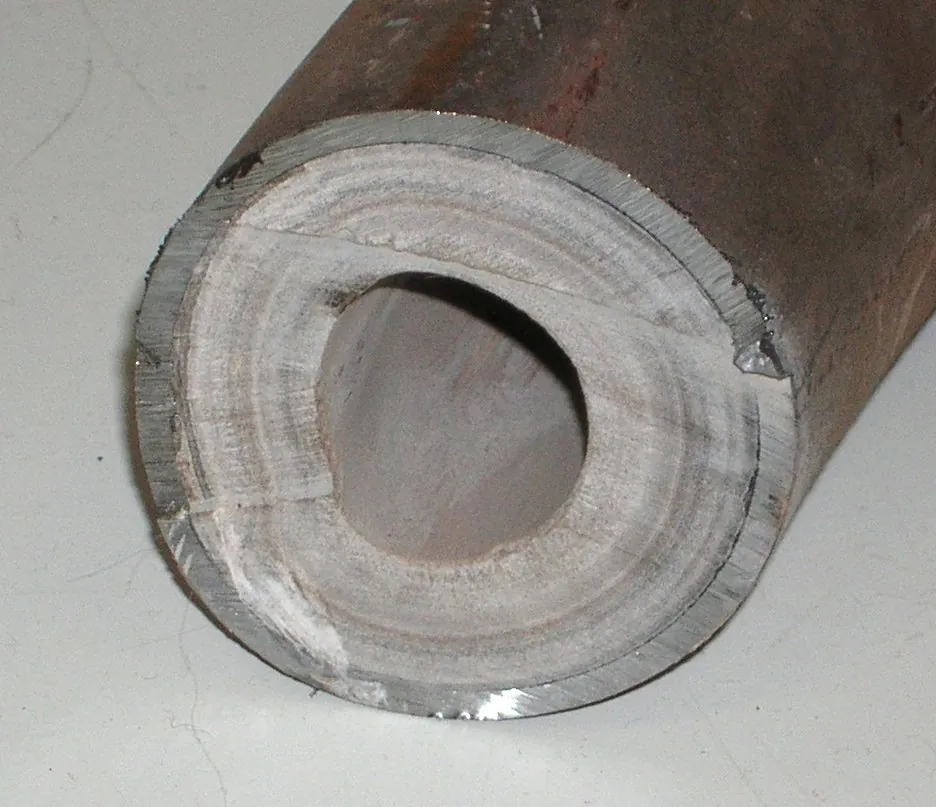
Not sure if your water is hard? UNL says public water systems must send customers an annual water quality report, called a consumer confidence report. The report may include the hardness of your water, or you can ask your water supplier for it.
3. Slime inside the drain
Soap film, skin oils and shampoo feed a layer of organic slime on the pipe walls. You can check for it the way the University of California IPM program describes on its moth and drain fly page: remove the drain plate and scrape the sides of the drain with a dull knife or similar tool. If it comes up black or brown and slimy, you have found part of your clog. Small flies with hairy, moth-like wings around the shower are another sign of the same film; UC IPM says bathroom drains are their most common breeding site in homes.
UC IPM makes a point most guides skip: pouring boiling water or bleach down the drain does not remove this organic film. It recommends scrubbing with a hard bristle brush used with a drain cleaner, and says drains may need to be snaked first to clear a blockage causing slow draining. It adds that regular use of an enzymatic drain cleaner may help prevent the buildup from coming back.
4. Grit, sand and small objects
Sand from the beach, mud from work boots, exfoliating scrubs and pet baths all leave grit that sinks into the trap instead of washing away. Small objects also slip past a strainer: shampoo caps, razor guards, earring backs. A drain that was fine yesterday and slow today often points to an object rather than buildup.
Shower drains usually have a removable strainer on top. Oatey's guide to all things drains shows shower drains sold with snap-in or screw-in strainers, including a universal 4-1/4 inch round snap-in strainer. Under the strainer, the drain connects to a P-trap. Oatey's No-Caulk shower drain instructions call for 2 inch Schedule 40 DWV pipe connected to the drain P-trap, so the trap sits just below the floor, within reach of a small drain snake.
5. Hair you cannot see
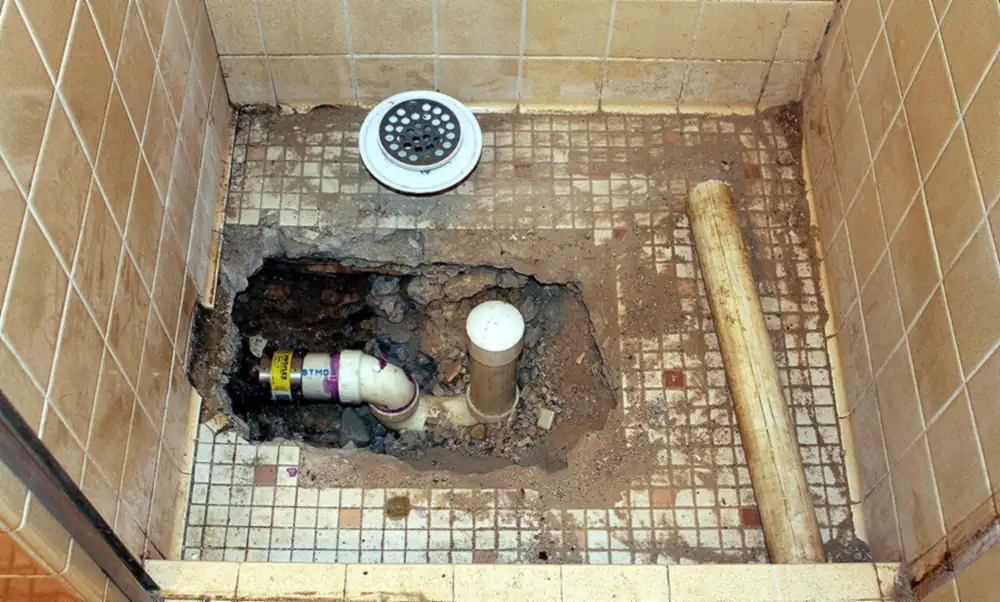
"No hair" usually means no hair on top. Hair that slipped past the strainer weeks ago wraps around anything in the pipe and holds soap curd like a net. Pull the strainer and look down with a flashlight before ruling it out. A plastic barbed drain stick or a small snake pulls it up.
6. A problem past the shower
If only the shower is slow, the clog is in the shower's own drain. If the tub, toilet and sink are slow too, or the toilet gurgles when the shower runs, the trouble is further down. The City of Minneapolis page on sewer problems in the home says slow drainage in toilets, showers and sinks is typically caused by clogs in the property's own plumbing. It also says to check that the stack vents on your roof are not blocked by leaves, snow or ice, and that if your neighbors are having similar problems, a city sewer line problem is possible, though rare.
How to clear it, in order
- Remove the strainer. Pry a snap-in strainer up from the edge with a flat screwdriver, or take out the screw (or screws) holding a screw-in one. Clean its underside.
- Look and scrape. Use a flashlight, then scrape the pipe walls to see what you are dealing with: hair, slime or grit.
- Brush. Run a stiff bottle brush or drain brush down the pipe as far as it goes, then flush with hot tap water.
- Snake the trap. Feed a small hand auger down the drain and through the trap. Turn it as you go, pull it back and clean it.
- Flush and test. Run the shower for a couple of minutes and watch the water level.
- Prevent it. A hair catcher, a monthly brush, and an enzymatic cleaner if slime keeps coming back.
The same steps apply to a tub drain, though the stopper has to come out first. If your shower drain smells as well as drains slowly, our guide to why a bathtub drain smells bad covers the odor side.
Go easy on chemical drain cleaners
Chemical cleaners are not the first step here. Poison Control's article on what is in drain cleaner explains that many contain concentrated acids or alkalis such as sulfuric acid or sodium hydroxide, and that some generate heat when poured down a drain. It warns that a cleaner can splash back if it is poured from too high or if too much is poured into a completely blocked drain. If you use one, wear goggles and rubber gloves and pour close to the drain. Never mix products, and never plunge or snake a drain that has chemical cleaner sitting in it.
Poison Control also says the baking soda and vinegar recipe makes carbon dioxide gas that escapes through the drain cover, and that the mix is unlikely to be strong enough to clear tough clogs from oil and grease. If someone is splashed or swallows drain cleaner, call Poison Control at 1-800-222-1222.
When to call a plumber
- The shower stays slow after you have cleaned the strainer, brushed the pipe and snaked the trap.
- More than one fixture is slow, or the toilet gurgles or bubbles when the shower drains.
- Water backs up into the tub or shower when you flush or run the washer.
- You dropped something solid into the drain and cannot reach it.
If the shower is just one of several drains that clog over and over, see why a drain keeps clogging for how to trace a repeat clog to its source.
Frequently asked questions
Can soap really clog a shower drain?
Yes, especially with hard water. University of Nebraska-Lincoln Extension says soap used in hard water combines with the minerals to form a sticky soap curd, and that soap curd deposits on bathtubs, showers and plumbing fixtures. That sticky layer also catches grit and anything else that washes down.
Will boiling water clear a slow shower drain?
Do not count on it. The University of California IPM program says pouring boiling water or bleach down a drain does not remove the organic film inside it. A stiff brush, a drain snake or taking the trap apart does.
Is baking soda and vinegar good for a slow shower drain?
Poison Control says the mix makes carbon dioxide gas that escapes through the drain cover and is unlikely to be strong enough for tough oil and grease clogs. It is safe to try, but expect a brush or snake to do the real work.
Why is my shower slow but the sink is fine?
Then the problem is almost always in the shower's own strainer, trap or short drain line, not the main sewer. When several fixtures are slow at once, look further down the line.
How do I get the cover off my shower drain?
Shower strainers are usually either snap-in or screw-in; Oatey sells both styles. A snap-in cover pries up from the edge with a flat screwdriver. A screw-in cover has a center screw or turns counterclockwise. Some older covers are held by two small screws.
Smell gas? Leave the building without switching anything on or off, then call your gas utility or 911 from outside.
Know your shutoff. Find your home’s main water shutoff before you need it. Most fixtures also have their own small valve.
Sources
- Hard Water Issues, North Dakota State University Extension (Water Quality)
- Drinking Water: Hard Water (Calcium and Magnesium), G1274, University of Nebraska-Lincoln Extension
- Moth or Drain Flies, UC Statewide IPM Program, University of California
- Oatey 101: All Things Drains, Oatey
- No-Caulk Shower Drain installation instructions (140 Series / 101 PNC Series), Oatey
- What's in drain cleaner and what happens if you drink it?, Poison Control (National Capital Poison Center)
- Sewer Problems in the Home, City of Minneapolis Public Works
Spotted an error? See our corrections policy or email contact@pipeanswers.com.

Pipe Answers Editorial Team
Our editors build each guide from the sources listed above and check every claim and number against them before publishing. How the team works
Kevin Orr
Expert Reviewer, Plumbing
Texas Master Plumber License, M-47441 · Verify license
Kevin Orr is a Texas Master Plumber, a U.S. Army veteran and the owner of a plumbing company. In his view, good plumbing is more than fixing pipes. It means showing up when you say you will, explaining what needs to…
Related guides
-
 Drains & Clogs
How to Tell If Your AC Condensate Drain Line Is Clogged
An AC that shuts off on a hot day, water in the drain pan, or a pipe dripping over a window are the main signs of a clogged condensate line. Checks from Trane, Carrier and Lennox.
-
 Drains & Clogs
Bathtub Stopper Not Working? Find Your Type and Fix It
Most tub stoppers fail from hair, a loose or worn seal, or linkage set at the wrong length. Identify your stopper type, then adjust or replace it using Kohler, Watco and Danco instructions.
-
 Drains & Clogs
How to Tell If Your Garbage Disposal Is Bad (or Just Jammed)
Humming, tripping, smells and most leaks are fixable. A disposal is bad when it leaks through the body or motor joint, or still won't run after a reset. Tests from InSinkErator, Waste King and Moen.
-
 Drains & Clogs
Bathroom Sink Draining Slowly? Fix It in 4 Steps (and Replace the Pop-Up)
A slow bathroom sink is usually clogged at the pop-up stopper or the P-trap. How to pull and clean the stopper, plunge the right way, clear the trap, and replace a worn pop-up drain.