Basement Floor Drain Smells Like Sewer? How to Fix It
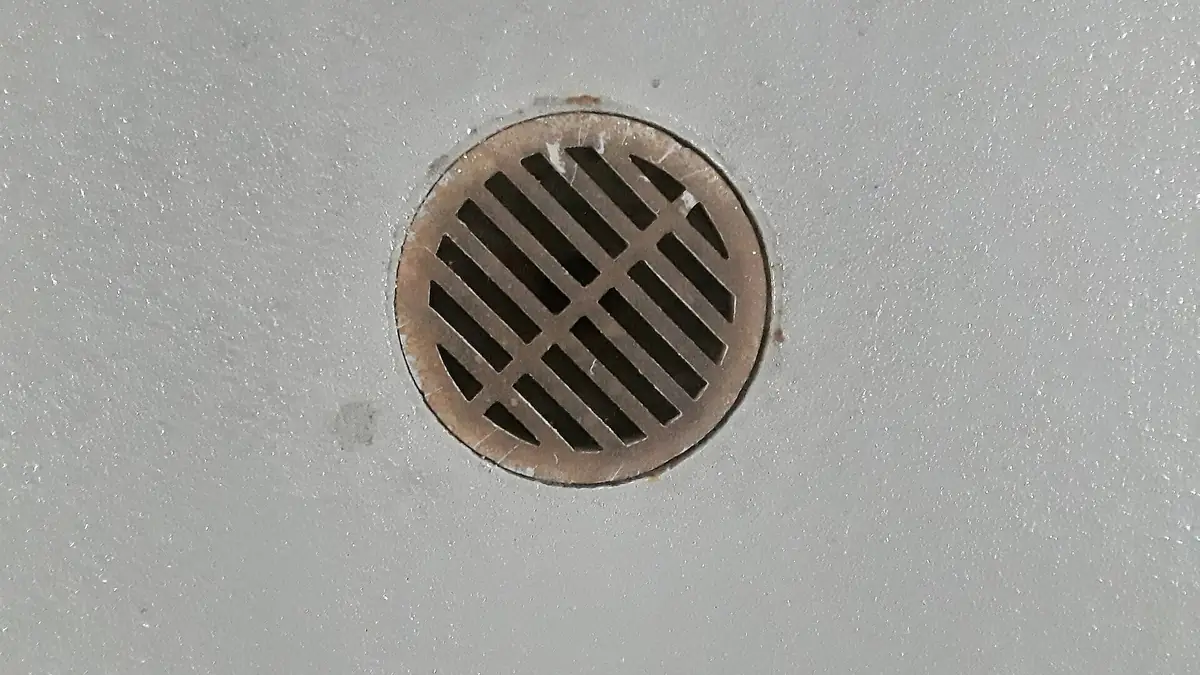
A basement floor drain that smells like sewer usually has a dry trap. The trap under the drain holds water that blocks sewer gas, and in a basement it can evaporate over weeks because the drain is rarely used. The City of Minneapolis says improperly maintained floor drains are the most common cause of a sewer-gas odor in basements, and recommends periodically pouring a bucket of water down each one (City of Minneapolis).

✓ Checked by a licensed plumber Kevin Orr, Texas Master Plumber License M-47441 (look it up)
Last reviewed
In this guide
Pour a gallon or two slowly into the drain now. If the smell is gone within an hour or so, that was it.
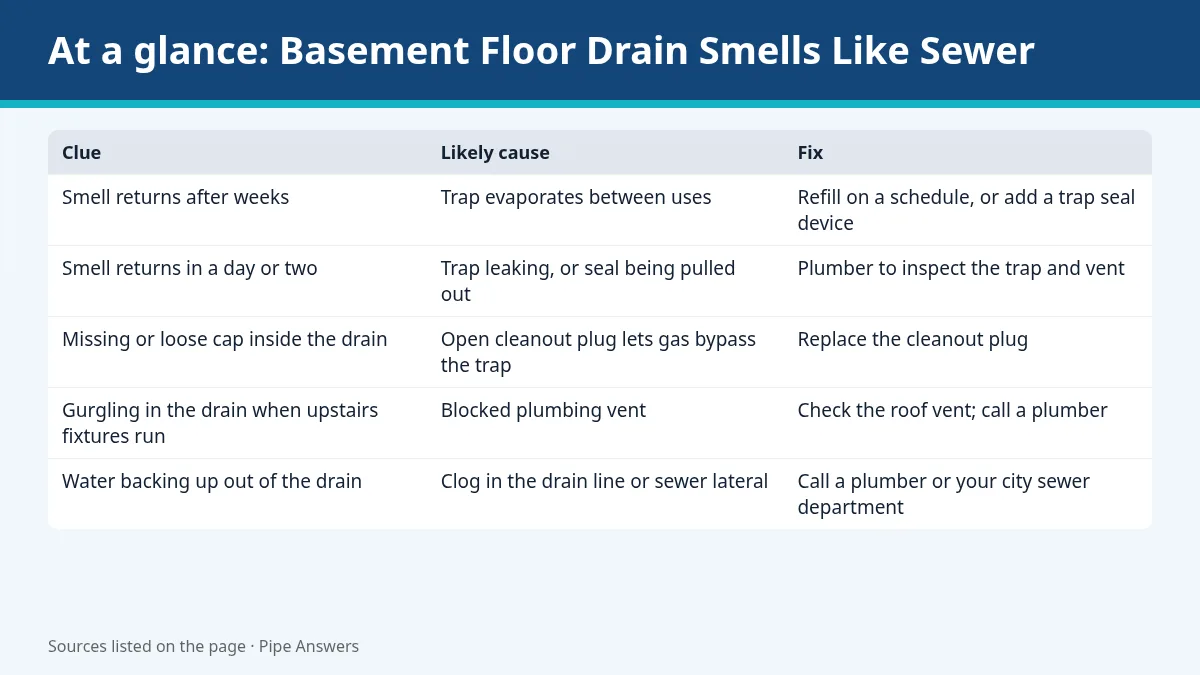 Graphic: summary of this guide, made by our team from the cited sources.
How to refill the trap the right way
- Find every drain in the basement. Floor drains, laundry or utility sinks, a shower or toilet in a basement bathroom, and any garage drain. Minneapolis says plumbing fixtures need regular use so water stays in their traps (City of Minneapolis).
- Pour slowly. A gallon of water is enough to fill a trap, according to North Royalton's wastewater department (North Royalton). Minneapolis suggests a bucket (City of Minneapolis). Pouring slowly lets the water settle into the trap instead of rushing past.
- Watch for backup. If water rises in the drain instead of going down, the drain line is clogged. Stop and see the backup section below.
- Set a reminder. Refill rarely used drains on a schedule. If the smell comes back sooner each time, something is pulling water out of the trap or bypassing it.
The water seal in a trap is not deep. Residential plumbing code requires a seal of at least 2 inches and no more than 4 inches (IRC P3201.2 via UpCodes). A few weeks of evaporation in a warm, dry basement can lower it enough to let gas through.
If the smell comes back
| Clue | Likely cause | Fix |
|---|---|---|
| Smell returns after weeks | Trap evaporates between uses | Refill on a schedule, or add a trap seal device |
| Smell returns in a day or two | Trap leaking, or seal being pulled out | Plumber to inspect the trap and vent |
| Missing or loose cap inside the drain | Open cleanout plug may let gas bypass the trap | Replace the cleanout plug |
| Gurgling in the drain when upstairs fixtures run | Blocked plumbing vent | Check the roof vent; call a plumber |
| Water backing up out of the drain | Clog in the drain line or sewer lateral | Call a plumber or your city sewer department |
Sources: dry traps and vents from City of Minneapolis and Wisconsin DHS; trap seal protection from IRC P3201.2 via UpCodes.
Look for a cleanout plug
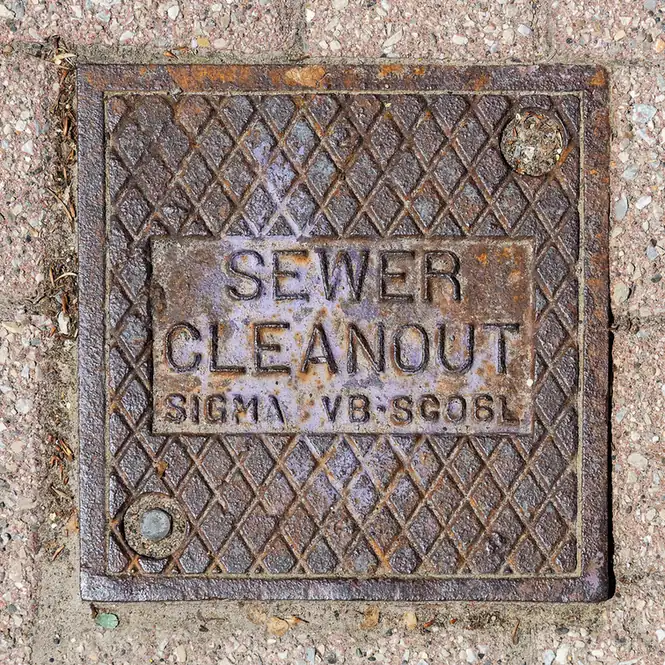
Some basement floor drains have a small cleanout opening inside the drain bowl, closed with a plug or cap. Shine a flashlight under the grate and check whether there is one. If a plug is missing, cracked or loose, sewer gas may be able to bypass the water in the trap. Bring the old plug or the measurement of the opening when you shop for a replacement, and ask a plumber to look if you are not sure what you are seeing.
Stop the trap from drying out
Building codes treat this as a known problem. The residential code requires floor drain traps to have a trap primer or a deep-seal design, says trap seal primer valves connect to the trap above the level of the seal, and recognizes barrier-type devices that protect a floor drain trap seal from evaporation (IRC P3201.2). For a homeowner, that means:
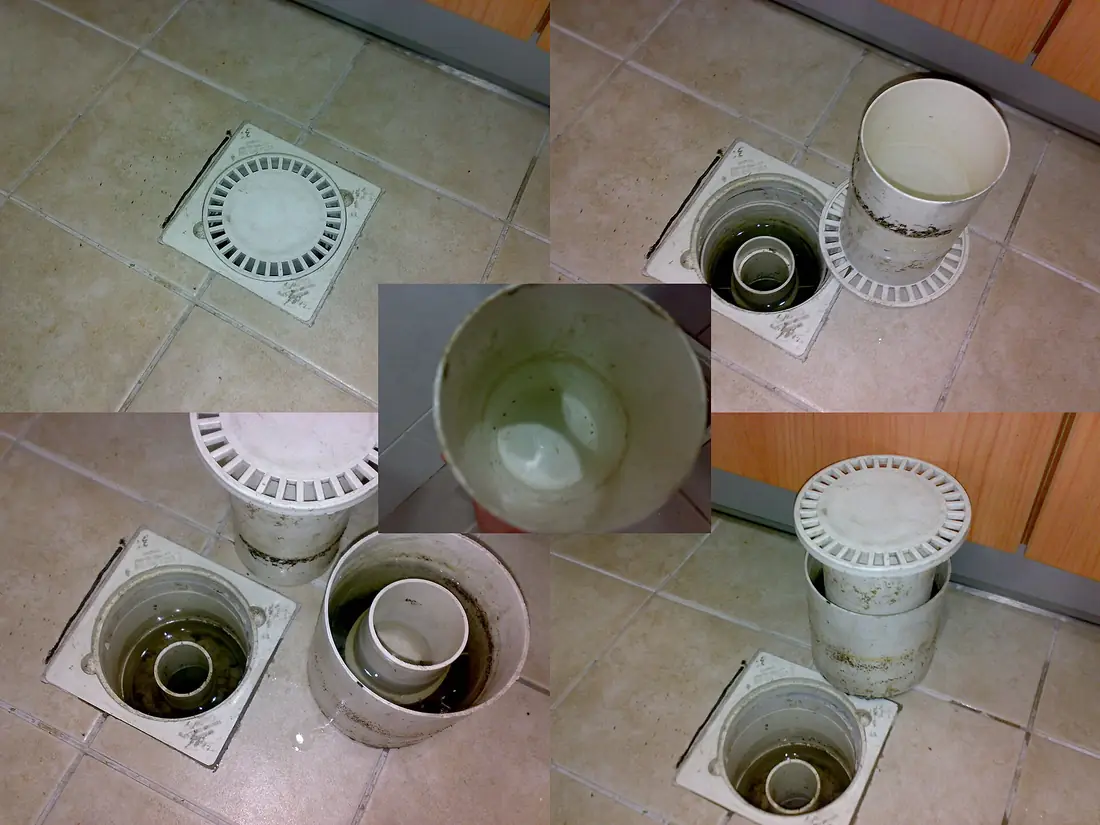
- Refill on a schedule. North Royalton says a gallon of water is enough to fill a trap and recommends running water through rarely used floor drains, garage drains and utility sinks (North Royalton).
- Add a barrier-type seal. These insert into the drain and help keep the trap seal from evaporating. Ask your plumber or local building department which devices are approved where you live.
- Ask a plumber about a trap primer if the drain is in a dry, warm area and dries out quickly.
What the code says about floor drains
The residential code treats floor drains as a known trouble spot. It says traps for floor drains must have a trap primer or be a deep-seal design (IRC P3201.2 via UpCodes). Many older homes have neither. If your drain dries out quickly, a plumber can tell you whether a primer, a deep-seal trap or a barrier insert fits your drain.
Is it sewer gas, or a different basement smell?
Not every basement odor comes from the drain. Use the smell itself as a clue:
| Smell | Likely source | What to do |
|---|---|---|
| Rotten eggs, strongest at the drain | Sewer gas through a dry trap or open cleanout | Refill the trap, check the plug |
| Rotten eggs through the house, not just at the drain | Possible gas through a blocked vent or foundation crack | Check the roof vent; call a plumber |
| Musty or earthy | Mold or dampness | Find the moisture source and dry it |
| Sewage smell plus water on the floor | Drain backup | Stop using water; call a plumber or the city |
Sources: sewer gas entry points from Wisconsin DHS; mold and moisture from EPA.
For musty smells, the EPA says to dry wet materials within 24 to 48 hours after a leak, and to keep indoor humidity below 60 percent, ideally between 30 and 50 percent (EPA). A humidity meter costs about $10 to $50 at hardware stores, according to the EPA (EPA). A dehumidifier helps in most basements.
If the drain backs up
A backup is a different problem from a smell. Minneapolis says most sewer backups happen when roots grow into a cracked or broken private sewer lateral. Pipes in poor condition, ground movement, heavy rain and misuse of the sewer can also cause them (City of Minneapolis).
What to do:
- Stop running water, washing laundry and flushing until the drain is clear.
- Call your city's sewer department. In Minneapolis, a crew checks whether the blockage is in the city sewer or your private line at no charge (City of Minneapolis). Many cities offer something similar.
- If the clog is in your private line, call a drain cleaning service.
- After a sewage backup, Minneapolis suggests a professional cleaning company to make sure no health hazards remain (City of Minneapolis).
Check the vent
The Wisconsin Department of Health Services says sewer gas can also enter through a leaking or blocked roof plumbing vent or through cracks in the foundation, and suggests occasionally checking the vent for debris like leaves or bird nests (Wisconsin DHS). Do that from the ground with binoculars, or have a plumber or roofer check it; don't climb onto the roof yourself.
If other drains smell too, the same causes apply; see why a bathtub drain smells for the water-heater and stopper causes.
When it's a safety issue
The Wisconsin Department of Health Services says sewer gas is a mix that can include hydrogen sulfide, ammonia and methane, and that hydrogen sulfide smells like rotten eggs. Headaches, dizziness, drowsiness and nausea can be signs of exposure, and you should see a doctor if you have them and suspect a leak. If you believe sewer gas levels are high in an enclosed space, leave the building, call the fire department, and avoid sparks or flames (Wisconsin DHS).
Frequently asked questions
How much water should I pour into a floor drain?
The City of North Royalton says a gallon is enough to fill a trap; the City of Minneapolis suggests a bucket. Pour it slowly so it fills the trap rather than splashing.
How often do I need to refill a floor drain trap?
There is no fixed interval; it depends on how warm and dry the basement is. Refill it whenever you notice the smell. If it comes back within days, consider a trap seal device or ask a plumber about a trap primer.
What is a trap primer?
A valve that adds a small amount of water to a floor drain trap automatically so it doesn't dry out. The residential plumbing code requires floor drain traps to have a trap primer or a deep-seal design, and it also recognizes barrier-type devices that protect a floor drain trap seal from evaporation.
Is sewer gas from a floor drain dangerous?
At high levels, yes. The Wisconsin Department of Health Services says hydrogen sulfide can cause headaches, dizziness and nausea, and very high levels can be deadly. Leave and call the fire department if the smell is strong in an enclosed space.
Smell gas? Leave the building without switching anything on or off, then call your gas utility or 911 from outside.
Know your shutoff. Find your home’s main water shutoff before you need it. Most fixtures also have their own small valve.
Sources
- Sewer Problems in the Home, City of Minneapolis
- Air: Sewer Gas, Wisconsin Department of Health Services
- Tips for Reducing Household Sewer Odor, City of North Royalton Wastewater Department
- Trap Seals and Trap Seal Protection (IRC P3201.2), UpCodes
- A Brief Guide to Mold, Moisture and Your Home, US EPA
Spotted an error? See our corrections policy or email contact@pipeanswers.com.

Pipe Answers Editorial Team
Our editors build each guide from the sources listed above and check every claim and number against them before publishing. How the team works
Kevin Orr
Expert Reviewer, Plumbing
Texas Master Plumber License, M-47441 · Verify license
Kevin Orr is a Texas Master Plumber, a U.S. Army veteran and the owner of a plumbing company. In his view, good plumbing is more than fixing pipes. It means showing up when you say you will, explaining what needs to…
Related guides
-
 Drains & Clogs
Why Does My Washing Machine Drain Into My Kitchen Sink?
Washer water coming up in the kitchen sink means the two share a drain that is clogged past where they join. Why it happens, what to check, when to call a plumber.
-
 Drains & Clogs
Why Are Both Sides of My Kitchen Sink Draining Slowly?
When both bowls of a double kitchen sink drain slowly, the clog is usually past the point where the two drains join, in the trap or the pipe in the wall. How to find it and clear it.
-
 Drains & Clogs
Why Does My Drain Keep Clogging? How to Find the Real Cause
A drain that keeps clogging usually was never fully cleared, or the clog is past the plunger's reach. How to tell a fixture clog from a main line problem.
-
 Toilets
Why Does My Toilet Fill So Slowly? How to Speed It Up
A toilet tank that takes minutes to refill usually has a partly closed supply valve, a kinked or clogged supply line, or a fill valve clogged with sediment. How to find which and fix it.