How Do I Know If I Have a Tankless Water Heater?
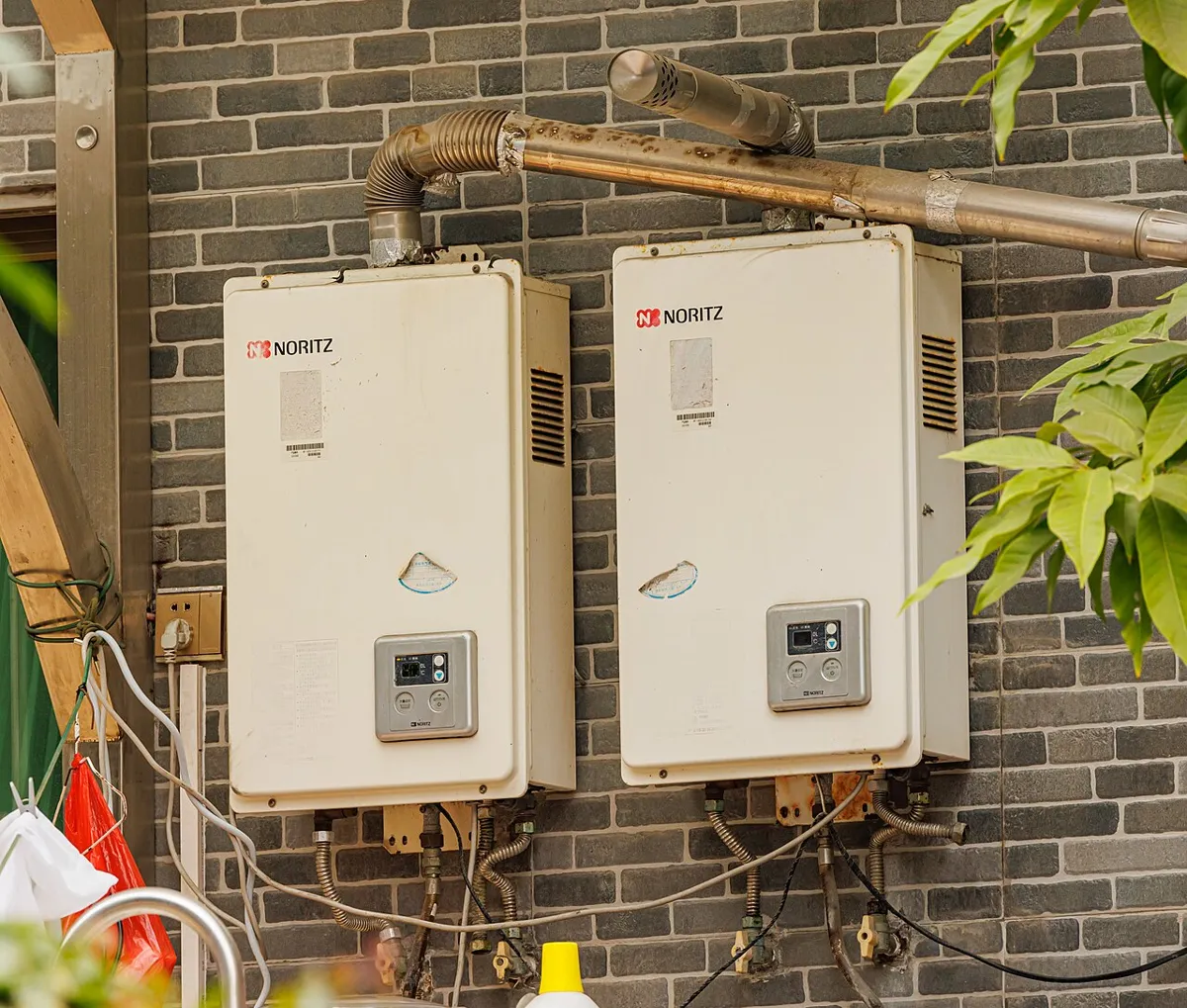
You have a tankless water heater if your water heater is a flat box mounted on a wall, roughly the size of a carry-on suitcase, rather than a tall round tank standing on the floor. Rinnai describes its tankless units as about the size of a carry-on suitcase, small enough for closets, cabinets and mud rooms (Rinnai). A storage tank model typically holds 20 to 80 gallons, so it is hard to miss (Building America Solution Center). If the size is not obvious, the label, the vent and how your hot water behaves will settle it.

✓ Checked by a licensed plumber Kevin Orr, Texas Master Plumber License M-47441 (look it up)
Last reviewed
In this guide
- Tank or tankless: the quick comparison
- Check 1: Size, shape and where it hangs
- Check 2: Read the yellow EnergyGuide label
- Check 3: Look at the vent
- Check 4: Watch what happens when you turn on the hot water
- Check 5: No water heater at all? Look at the boiler
- Why it matters which one you have
- Frequently asked questions
- Sources
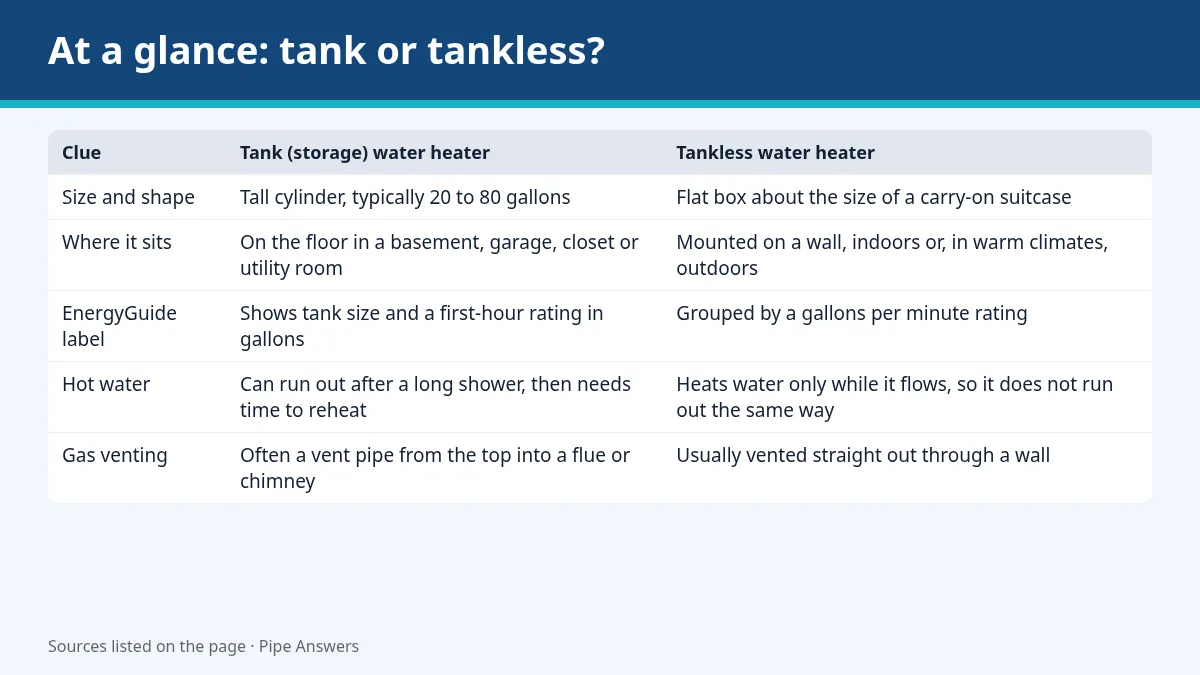 Graphic: summary of this guide, made by our team from the cited sources.
Tank or tankless: the quick comparison
| Clue | Tank (storage) water heater | Tankless water heater |
|---|---|---|
| Size and shape | Tall cylinder, typically 20 to 80 gallons | Flat box about the size of a carry-on suitcase |
| Where it sits | On the floor in a basement, garage, closet or utility room | Mounted on a wall, indoors or, in warm climates, outdoors |
| EnergyGuide label | Shows tank size and a first-hour rating in gallons | Grouped by a gallons per minute rating |
| Hot water | Can run out after a long shower, then needs time to reheat | Heats water only while it flows, so it does not run out the same way |
| Gas venting | Often a vent pipe from the top into a flue or chimney | Usually vented straight out through a wall |
Check 1: Size, shape and where it hangs
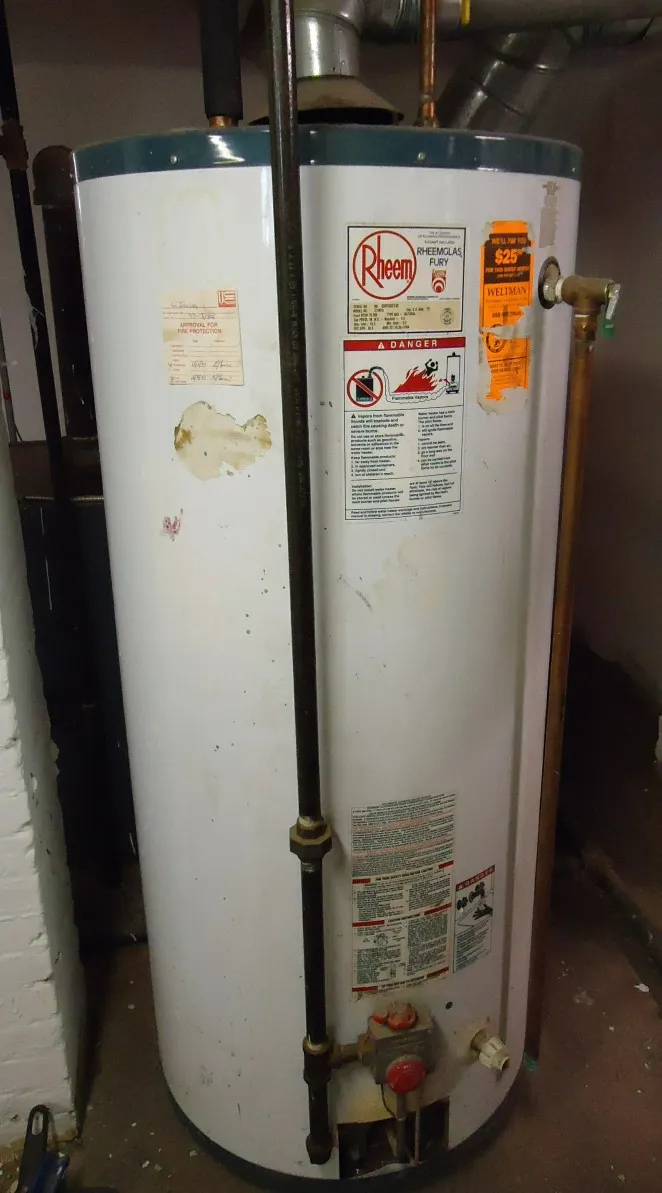
Go to where your water heater should be: basement, garage, utility closet, attic or an outside wall. A tank model is a large cylinder standing on the floor. A tankless model hangs on the wall, with water pipes, a gas line or electrical connection underneath and a vent at the top or side.
Some tankless units are outside. The Building America Solution Center says outdoor installation is typically only suitable in warm climates (climate zones 1 and 2) where the water lines will not freeze, and that manufacturer guidelines should be followed. If you live somewhere warm and find no water heater inside, walk around the outside walls.
Check 2: Read the yellow EnergyGuide label
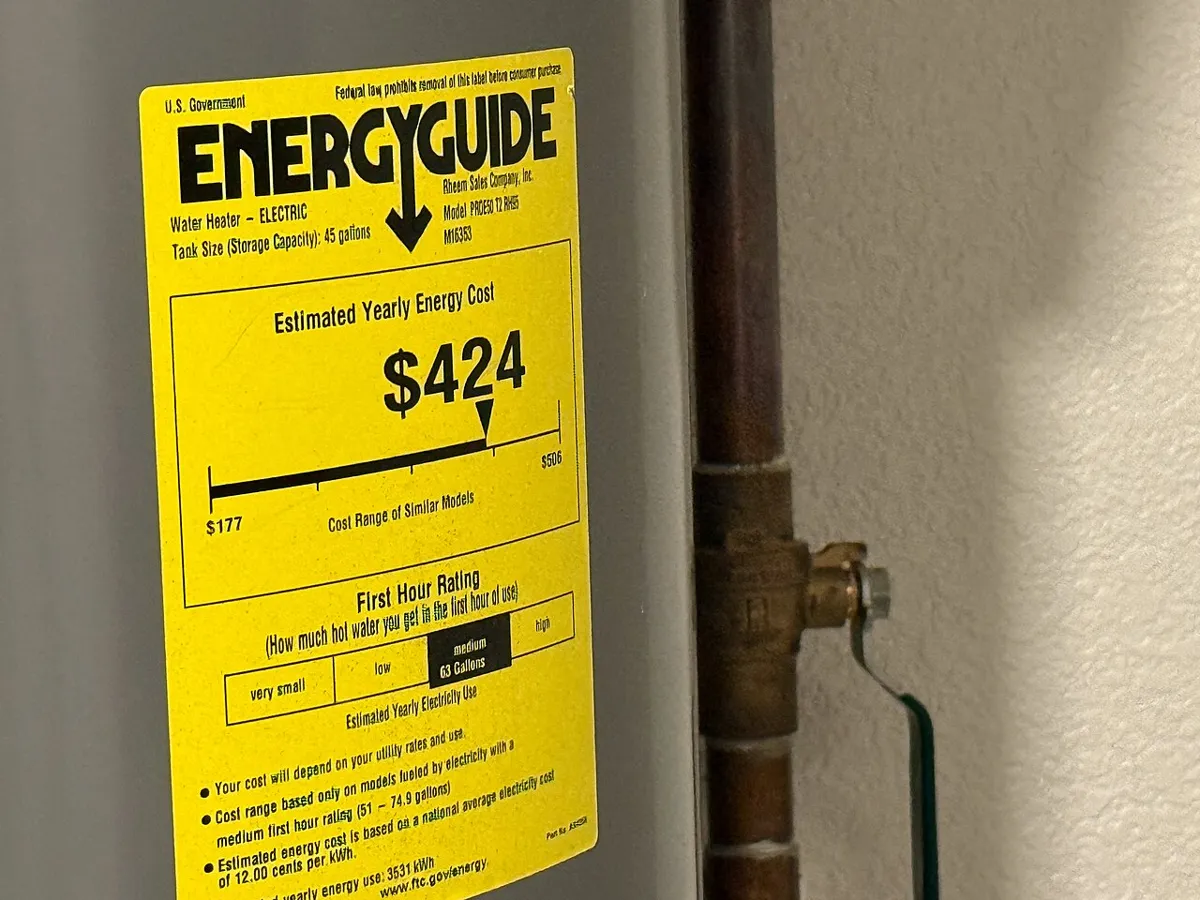
If the original yellow EnergyGuide label is still on the unit, it answers the question. Under the Federal Trade Commission's labeling rule, a storage water heater's label must show its capacity as both tank size (storage capacity) and first hour rating. The label for an instantaneous (tankless) model instead compares it with other models by its gallons per minute rating (16 CFR 305.17).
So if you see "Tank Size" and "First Hour Rating" in gallons, you have a tank. If you see a gallons per minute rating, you have a tankless unit.
The rule sorts tankless models into four flow groups for cost comparison, and sorts tank models into four first-hour groups:
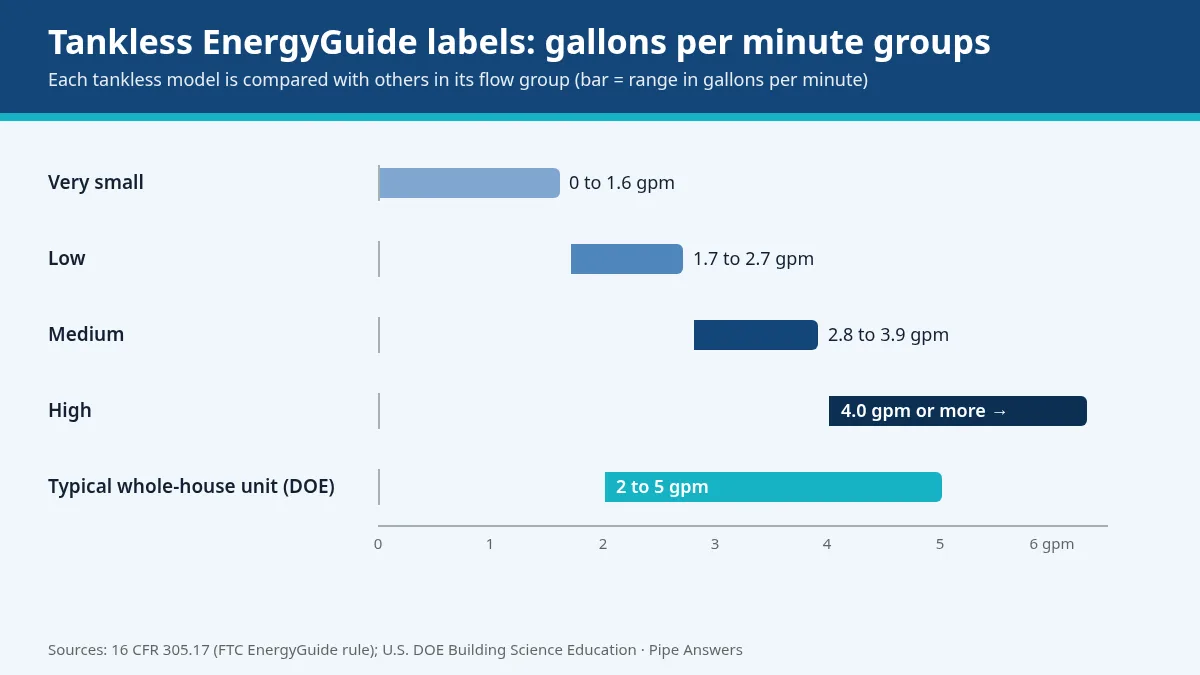 Graphic: made by our team from 16 CFR 305.17 and U.S. Department of Energy material.
| EnergyGuide group | Tankless: gallons per minute | Tank: first hour rating |
|---|---|---|
| Very small | 0 to 1.6 | Fewer than 18 gallons |
| Low | 1.7 to 2.7 | 18 to 50.9 gallons |
| Medium | 2.8 to 3.9 | 51 to 74.9 gallons |
| High | 4.0 or more | 75 gallons or more |
No label? Look for the manufacturer's rating plate and search the model number on the brand's website.
Check 3: Look at the vent
Gas water heaters have to vent exhaust. The Building America Solution Center says most fuel-fired tankless water heaters are direct vent and blow exhaust out through a vent in the wall, not up a flue or chimney. Condensing gas tankless models are typically vented through a sidewall, and the Solution Center shows one with PVC vent pipes. Rinnai notes that non-condensing tankless models need a metal-based exhaust vent system.
A tank-type gas heater in an older home often vents up into a chimney; the Solution Center mentions this as something that has to be dealt with when switching to tankless. One caution: white PVC pipes on their own do not prove you have a tankless unit, because high-efficiency furnaces use them too. Follow the pipe to the appliance it comes from.
Check 4: Watch what happens when you turn on the hot water
A tankless heater only works while water is flowing. U.S. Department of Energy material explains that a sensor detects the water flow and turns on the burner or heating element, which shuts off when the flow stops (Building Science Education, DOE). If you turn on a hot tap and hear a fan start or see the unit's display change, it is probably tankless.
A tank heater behaves differently. After a large draw such as a long shower, the burner fires to heat the whole tank back up, and hot water may not be available until it recovers. If your hot water runs out and takes a while to come back, that points to a tank. (If yours turns cold after a few minutes for other reasons, see why your shower turns cold after 5 minutes.)
Check 5: No water heater at all? Look at the boiler
Some homes heated by a boiler have no separate water heater. Vermont Energy Saver explains that tankless systems can be "coil" or "no coil" types, and that a tankless coil heats water inside the boiler. It also calls tankless coils one of the least efficient ways to heat domestic hot water (Vermont Energy Saver). If you have a boiler and cannot find a tank or a wall unit anywhere, ask a plumber or heating technician whether a coil supplies your hot water.
Why it matters which one you have
- Lifespan. The Building America Solution Center says tankless water heaters are generally considered to last up to 20 years, compared with 10 to 15 years for tank-type models.
- Flow limits. Whole-house tankless units often deliver 2 to 5 gallons per minute, according to DOE material, and Vermont Energy Saver notes that a shower and a dishwasher at the same time can stretch one to its limit. The Solution Center adds that not every tankless unit can deliver very low flows below 0.5 gallons per minute, which matters for hand washing.
- Service and replacement. Troubleshooting, parts and maintenance differ between the two types, so knowing which one you have makes any call to a plumber faster.
Frequently asked questions
What does a tankless water heater look like?
A flat box mounted on a wall, about the size of a carry-on suitcase according to Rinnai, with water and gas lines underneath and a vent going out through the wall. A tank water heater is a tall cylinder standing on the floor.
Can a tankless water heater be outside?
Yes, in warm climates. The Building America Solution Center says tankless units should typically only be installed outdoors in climate zones 1 and 2, where water lines are not at risk of freezing, and to follow the manufacturer's guidelines.
How many gallons is a tankless water heater?
None. A tankless unit does not store water; it is rated in gallons per minute. U.S. Department of Energy material says whole-house models often provide 2 to 5 gallons per minute. Tank models typically hold 20 to 80 gallons.
I can't find any water heater. What do I have?
If your home has a boiler, your hot water may come from a coil inside the boiler. Vermont Energy Saver describes these tankless coil systems. A plumber or heating technician can confirm it.
Do tankless water heaters last longer?
The Building America Solution Center says tankless water heaters are generally considered to last up to 20 years, compared with 10 to 15 years for tank-type models.
Smell gas? Leave the building without switching anything on or off, then call your gas utility or 911 from outside.
Know your shutoff. Find your home’s main water shutoff before you need it. Most fixtures also have their own small valve.
Sources
- Gas-Fired Tankless Water Heaters, Building America Solution Center (PNNL, U.S. DOE)
- Water Heaters Gas Fired Tankless, Building Science Education (U.S. DOE)
- 16 CFR 305.17 Label content for water heaters, eCFR
- Tankless 101, Rinnai
- Tankless Water Heaters, Vermont Energy Saver (Vermont Department of Public Service)
Spotted an error? See our corrections policy or email contact@pipeanswers.com.

Pipe Answers Editorial Team
Our editors build each guide from the sources listed above and check every claim and number against them before publishing. How the team works
Kevin Orr
Expert Reviewer, Plumbing
Texas Master Plumber License, M-47441 · Verify license
Kevin Orr is a Texas Master Plumber, a U.S. Army veteran and the owner of a plumbing company. In his view, good plumbing is more than fixing pipes. It means showing up when you say you will, explaining what needs to…
Related guides
-
 Water Heaters
Water Heater Relief Valve Dripping? What It Means and How to Fix It
A dripping T&P relief valve means pressure, temperature or a worn valve. Learn the thermal expansion test, the code pressure limits, the fixes, and why you never cap the pipe.
-
 Water Heaters
Why Does My Shower Turn Cold After 5 Minutes?
Hot water that runs out after a few minutes usually means a failed lower element or dip tube in a tank heater, too much demand, or, with tankless, flow dropping below the burner's minimum. How to narrow it down.
-
 Water Heaters
Why Does My Water Heater Keep Tripping the Breaker? Causes and What to Do
An electric water heater that keeps tripping its breaker usually has a shorted heating element, a wiring fault or a failing breaker. What to check safely.
-
 Drains & Clogs
How to Tell If Your AC Condensate Drain Line Is Clogged
An AC that shuts off on a hot day, water in the drain pan, or a pipe dripping over a window are the main signs of a clogged condensate line. Checks from Trane, Carrier and Lennox.