Water Heater Relief Valve Dripping? What It Means and How to Fix It
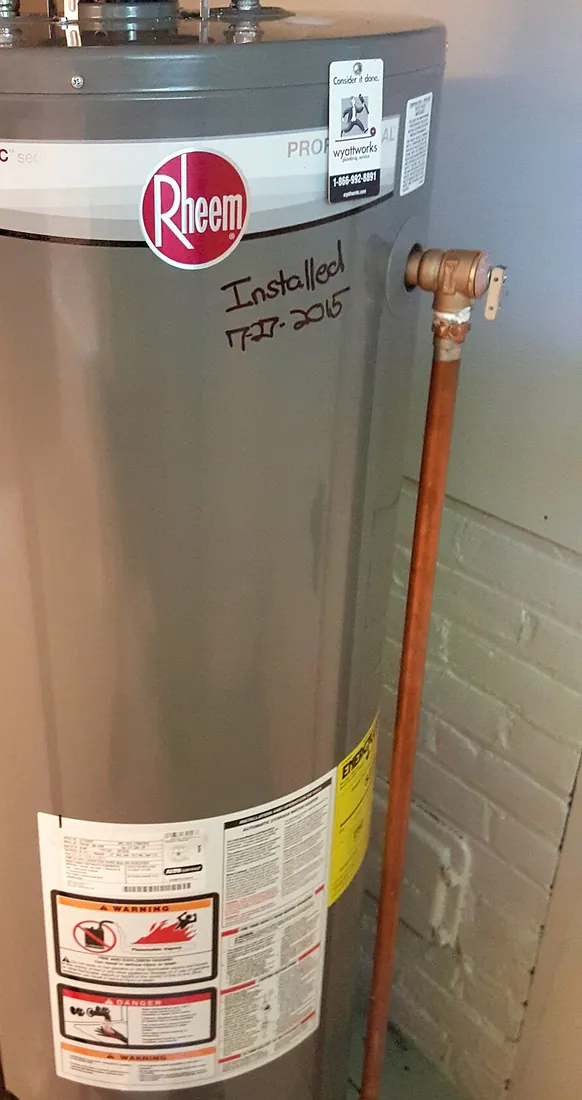
A dripping temperature and pressure (T&P) relief valve is a warning, not a nuisance. The valve opens when the tank pressure or temperature gets too high, so a drip means one of three things: pressure in the tank is climbing too high (usually thermal expansion or high street pressure), the water is getting too hot, or the valve itself is worn. The ICC CodeNotes on water heater safety puts it plainly: with a working heater, pressure within code and a sound valve, there should not be any water discharge from the relief valve.

✓ Checked by a licensed plumber Kevin Orr, Texas Master Plumber License M-47441 (look it up)
Last reviewed
In this guide
- What the relief valve does
- What the drip pattern tells you
- Cause 1: Thermal expansion in a closed system
- Cause 2: Water pressure too high
- Cause 3: Overheating
- Cause 4: A worn or stuck valve
- A simple test for thermal expansion
- The discharge pipe rules
- Safety first
- When to call a plumber
- Frequently asked questions
- Sources
Never cap, plug or remove the valve to stop the drip. That is the one fix that turns a small leak into a safety hazard.
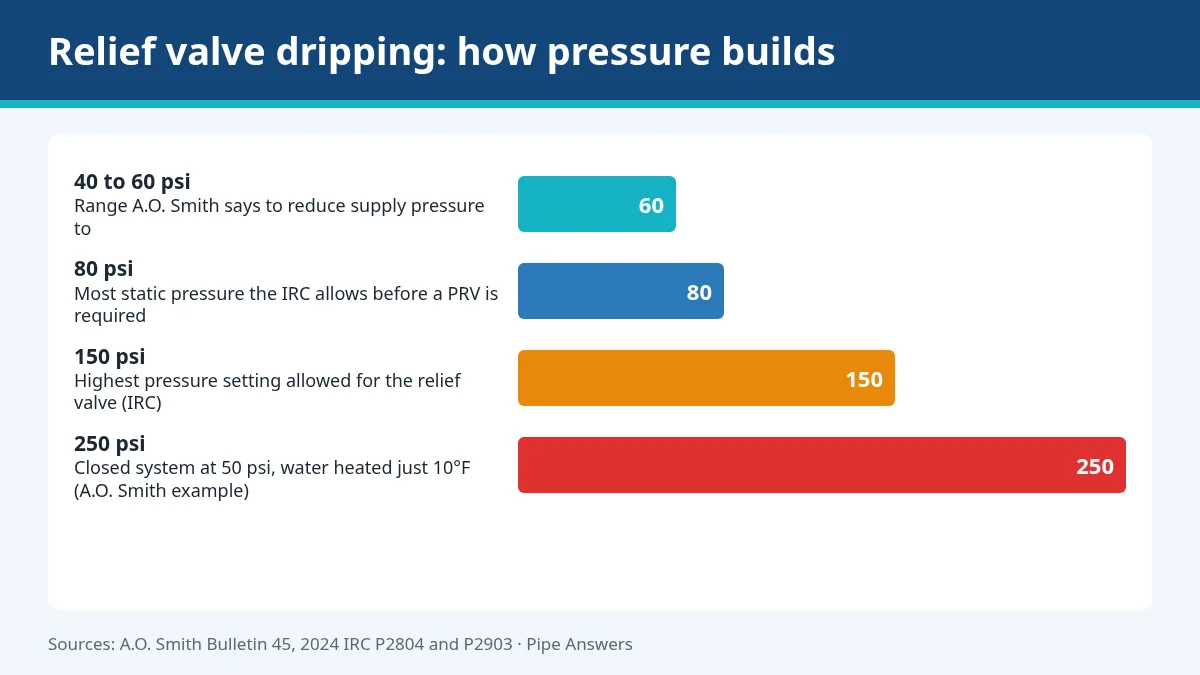 Graphic: summary of this guide, made by our team from the cited sources.
What the relief valve does
The T&P valve sits on the top or upper side of the tank with a pipe running down toward the floor. It is the heater's emergency release. Under the 2024 IRC water heater rules in Chapter 28, the pressure setting must be at least 25 psi above the system pressure and no more than 150 psi (P2804.3), and the temperature setting no more than 210°F (P2804.4). A.O. Smith's Bulletin 45 notes that the makers of T&P valves designed them as an emergency relief device only, not as a way to handle everyday pressure swings.
What the drip pattern tells you
| What you notice | Most likely cause | Source |
|---|---|---|
| Drips while the heater is heating, when no water is being used | Thermal expansion in a closed system | A.O. Smith Bulletin 45 |
| Pipes creak, faucets drip, water surges when a tap opens | Thermal expansion | A.O. Smith Bulletin 45 |
| Drips no matter when the heater runs, high pressure at every tap | Excessive street water pressure | A.O. Smith manual troubleshooting table |
| Water much hotter than the setting, or valve discharging hot water hard | Thermostat not working | A.O. Smith manual troubleshooting table |
| Keeps dribbling after you test it and let it snap shut | Valve not reseating, worn valve | A.O. Smith manual |
Cause 1: Thermal expansion in a closed system
Water expands when it is heated. In an open system, the extra volume pushes back into the city main. Many homes now have a check valve at the meter, a pressure-reducing valve (PRV) or a water softener that stops that backflow. A.O. Smith's Technical Bulletin 45 on thermal expansion calls this a closed system and says these devices protect the public water supply, so "Do not remove them!"
The pressure jump is bigger than most people expect. Bulletin 45 states that water in a closed tank at 50 psi, heated just 10 degrees, will reach a pressure of 250 psi. The relief valve opens long before that (at 150 psi or less under the IRC), which is exactly why it drips during every heating cycle.
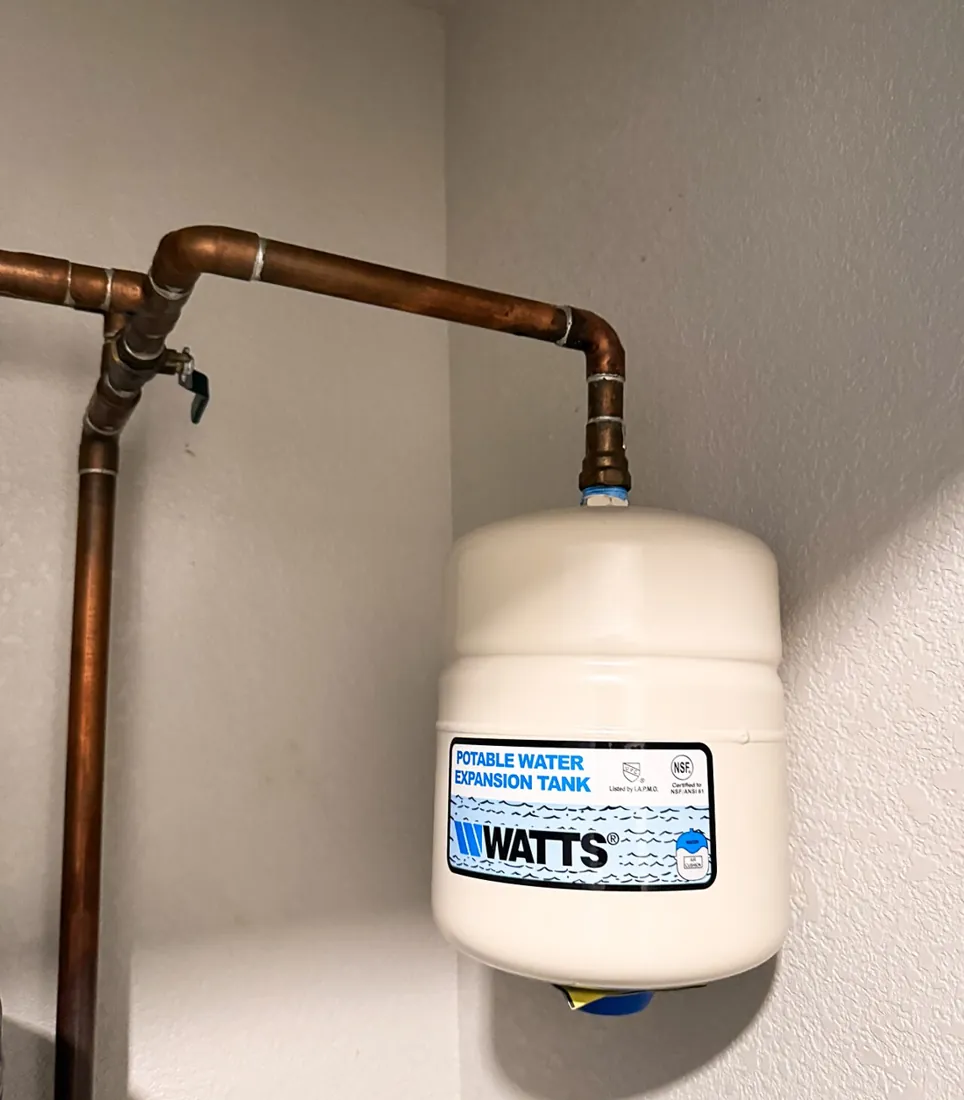
The code agrees. The 2024 IRC water supply rules in Chapter 29 (P2903.4) require a means of controlling pressure from thermal expansion where a check valve or backflow preventer is installed and heating raises the pressure, and where thermal expansion pushes pressure past a PRV's setting. In most homes that device is an expansion tank. If you already have one and the valve still drips, the tank may have lost its air charge, and a plumber can check it.
Cause 2: Water pressure too high
High street pressure keeps the tank close to the valve's limit all the time. The 2024 IRC (P2903.3.2) caps static water pressure at 80 psi and requires an approved PRV where the main runs higher. A.O. Smith's Bulletin 45 recommends a PRV if supply pressure is above 60 to 70 psi and says the PRV reduces supply pressures to 40 to 60 psi. Remember that a PRV also closes the system, so it needs an expansion tank with it; Bulletin 45 says the tank goes between the PRV and the water heater.
You can check house pressure with an inexpensive gauge that screws onto a hose bib or the heater's drain valve. If the reading is near 80 psi or above, start there. If only one fixture has low pressure instead, that is a different problem; see our guide to low water pressure at one faucet.
Cause 3: Overheating
The A.O. Smith manual's troubleshooting table lists non-functioning thermostats as one of three causes of a drip from the relief valve, with the remedy "replace thermostats". Water at the tap that is far hotter than usual, or a valve that releases hot water hard rather than a slow drip, points this way. Turn the heater off using the shutdown steps on its label and call a licensed pro. Do not keep using a heater that is overheating.
Cause 4: A worn or stuck valve
Valves wear, and debris can stop the seat closing fully. The A.O. Smith instruction manual for its small residential electric heater says the valve must be manually operated at least once a year, with no one in front of the outlet because the water may be extremely hot. If the valve fails to completely reset after you operate it and keeps releasing water, the manual says to close the cold water inlet, drain the heater and replace the valve with a new one.
A simple test for thermal expansion
Bulletin 45 describes a check you can do with a pressure gauge on the heater's drain valve:
- Turn the thermostat down and attach the gauge to the drain valve.
- Run hot water until about 15 to 20 percent of the tank volume has been used.
- Close all fixtures and note the pressure.
- Turn the thermostat back up and watch the gauge while the heater runs.
If pressure climbs steadily and rapidly while the heater heats, the system is closed and you need thermal expansion control. If you are not comfortable working at a heater with hot water and gas or electrical parts, call a licensed pro.
The discharge pipe rules
Even a healthy valve may one day open, so the pipe must be ready. The 2024 IRC (P2804.6.1) says the discharge pipe must not connect directly to the drainage system, must discharge through an air gap in the same room, must flow by gravity and must not be trapped. It must end no more than 6 inches and no less than two pipe diameters above the floor or a waste receptor, and it cannot have a threaded end, valves or tee fittings. P2804.6 also bans any check or shutoff valve between the relief valve and the tank.
That rules out the quick fixes people try: a cap on the end, a valve on the line, or a hose run off to somewhere out of sight. A.O. Smith's manual says it directly: do not plug or remove the temperature-pressure relief valve.
Safety first
- Relief valve water can be scalding. Keep hands and faces away from the discharge pipe.
- Never cap, plug, valve off or remove the relief valve or its pipe.
- Do not raise the thermostat to fix other hot water complaints until the drip is solved. If your shower runs cold fast instead, see why a shower turns cold after 5 minutes.
- If water from the valve has reached an electric heater's wiring, see why a water heater keeps tripping the breaker.
- Replacing a T&P valve means draining a hot tank and working on a safety device on a gas or electric appliance. Call a licensed pro.
When to call a plumber
- The valve discharges hot water hard, or the tap water is much hotter than normal.
- The valve keeps dripping after a manual test.
- House pressure is above 80 psi, or you need a PRV or expansion tank added.
- The discharge pipe is missing, capped, valved or piped into a drain.
- The valve or tank is rusted, or the tank itself is leaking.
Frequently asked questions
Is it normal for a water heater relief valve to drip?
No. The International Code Council says that when the heater, the supply pressure and the valve are all working properly, there should be no discharge from the relief valve. Any discharge points to a water system problem, a water heater problem or a faulty valve.
Can I cap or plug the relief valve discharge pipe to stop the drip?
Never. A.O. Smith says do not plug or remove the temperature-pressure relief valve, and the 2024 IRC bans valves, threaded ends and tee fittings on the discharge pipe. Capping it removes the tank's last protection against too much pressure or heat.
Why does my relief valve drip only after hot water is used?
A.O. Smith Bulletin 45 lists a relief valve that drips during the heating cycle, when no water is being used, as a sign of thermal expansion. Heated water expands, and in a closed system with a check valve, PRV or meter check valve, it has nowhere to go but out of the relief valve.
What water pressure is too high for a water heater?
The 2024 IRC limits static water pressure in a home to 80 psi and requires a pressure-reducing valve above that. A.O. Smith says a PRV is needed when supply pressure is above 60 to 70 psi and that it reduces pressure to 40 to 60 psi.
Can I replace a relief valve myself?
A.O. Smith's manual says a valve that will not reset after manual operation must be replaced, after shutting the cold water inlet and draining the heater. Because the valve protects against a tank explosion and the water can be scalding, we recommend a licensed plumber for the swap.
Smell gas? Leave the building without switching anything on or off, then call your gas utility or 911 from outside.
Know your shutoff. Find your home’s main water shutoff before you need it. Most fixtures also have their own small valve.
Sources
- Technical Bulletin 45: Thermal Expansion, A.O. Smith
- Instruction Manual, Residential Electric 2.5 Gallon 120 Volt Water Heater, A.O. Smith
- CodeNotes: Water Heater Safety in the I-Codes, International Code Council
- 2024 International Residential Code, Chapter 28 Water Heaters (Mississippi adoption, UpCodes)
- 2024 International Residential Code, Chapter 29 Water Supply and Distribution (Mississippi adoption, UpCodes)
Spotted an error? See our corrections policy or email contact@pipeanswers.com.

Pipe Answers Editorial Team
Our editors build each guide from the sources listed above and check every claim and number against them before publishing. How the team works
Kevin Orr
Expert Reviewer, Plumbing
Texas Master Plumber License, M-47441 · Verify license
Kevin Orr is a Texas Master Plumber, a U.S. Army veteran and the owner of a plumbing company. In his view, good plumbing is more than fixing pipes. It means showing up when you say you will, explaining what needs to…
Related guides
-
 Water Heaters
How Do I Know If I Have a Tankless Water Heater?
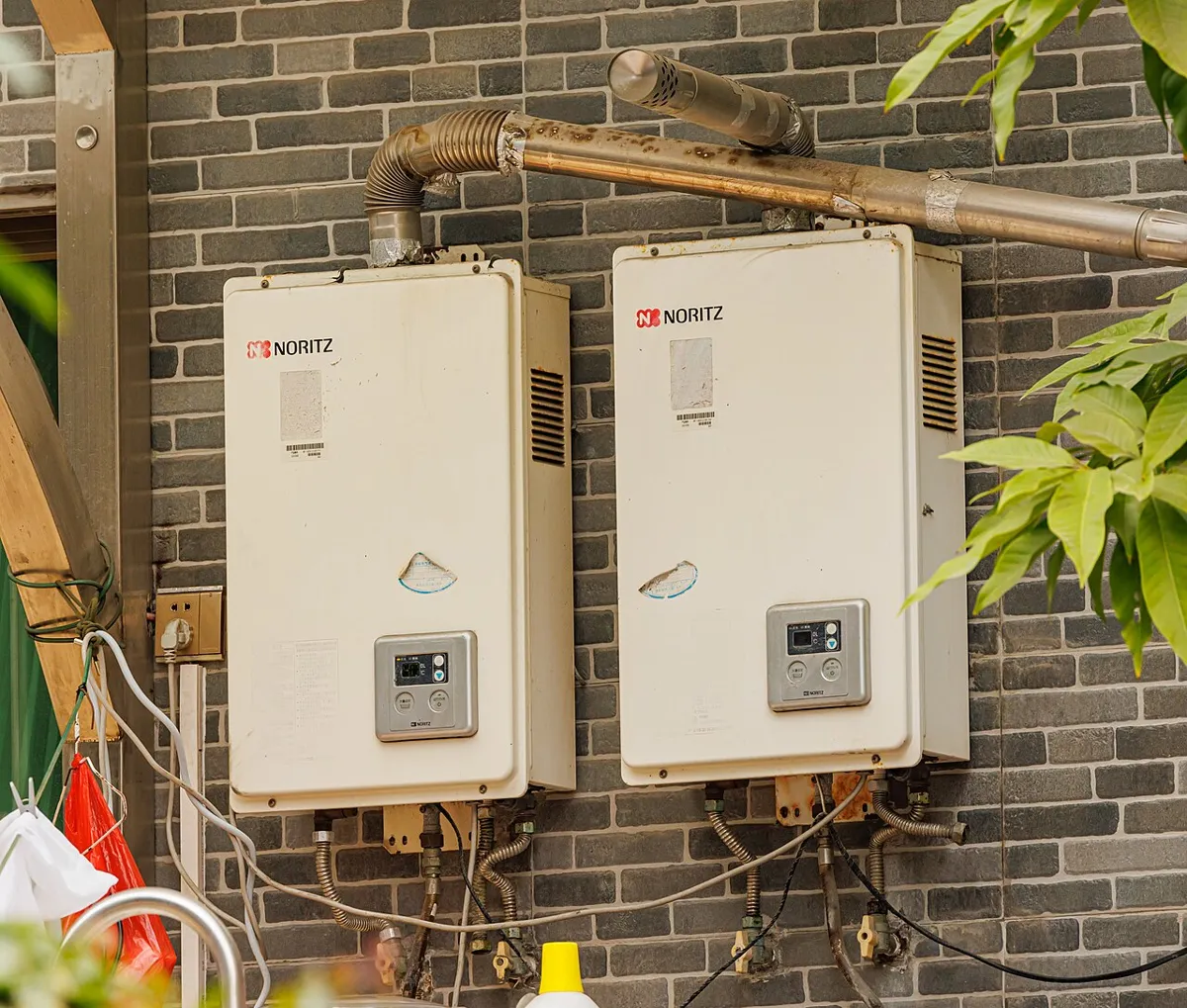
A tankless water heater is a box about the size of a carry-on suitcase mounted on a wall, not a tall tank on the floor. Five checks, including how to read the EnergyGuide label.
-
 Water Heaters
Why Does My Shower Turn Cold After 5 Minutes?
Hot water that runs out after a few minutes usually means a failed lower element or dip tube in a tank heater, too much demand, or, with tankless, flow dropping below the burner's minimum. How to narrow it down.
-
 Water Heaters
Why Does My Water Heater Keep Tripping the Breaker? Causes and What to Do
An electric water heater that keeps tripping its breaker usually has a shorted heating element, a wiring fault or a failing breaker. What to check safely.
-
 Drains & Clogs
How to Tell If Your AC Condensate Drain Line Is Clogged
An AC that shuts off on a hot day, water in the drain pan, or a pipe dripping over a window are the main signs of a clogged condensate line. Checks from Trane, Carrier and Lennox.