Why Is My Tankless Water Heater Running Out of Hot Water?
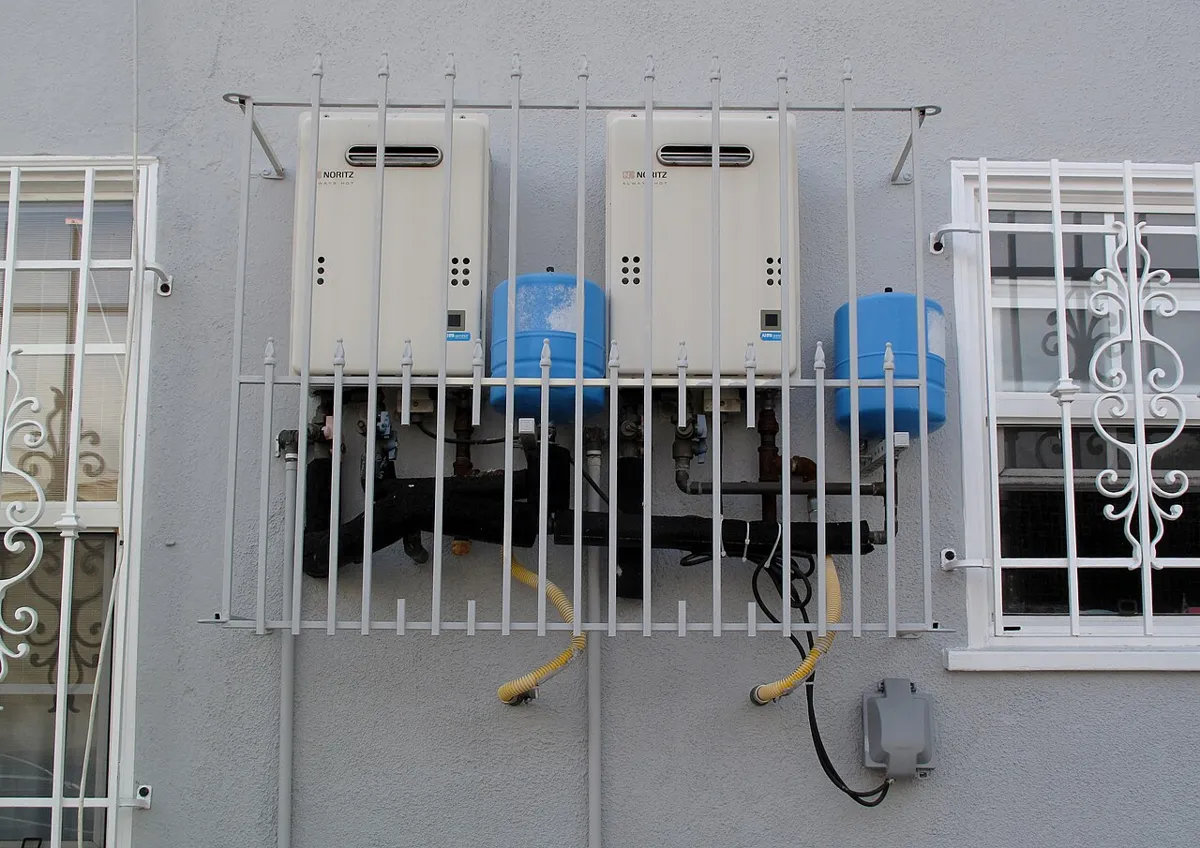
A tankless water heater has no stored hot water to use up, so when it "runs out" it is really falling behind. Either the house is pulling more gallons per minute than the burner can heat, the incoming water is colder than the unit was sized for, or something (a clogged inlet filter, scale in the heat exchanger, a gas line that is too small) is cutting its output. U.S. DOE guidance sizes these units on two numbers, the most hot water needed at one time and the temperature rise from the winter cold water to the setpoint (Building Science Education). When either number gets bigger than the unit can handle, the shower turns lukewarm. Work through the causes below from cheapest to most expensive.

✓ Checked by a licensed plumber Kevin Orr, Texas Master Plumber License M-47441 (look it up)
Last reviewed
In this guide
- Match what you notice to the likely cause
- It is a flow limit, not an empty tank
- Add up what is running at the same time
- Clean the cold water inlet filter
- Scale in the heat exchanger
- A gas supply that cannot keep up
- Hot and cold crossing over
- Too little flow, or a brief cold burst
- Check the setpoint last
- When the unit is simply too small
- Frequently asked questions
- Sources
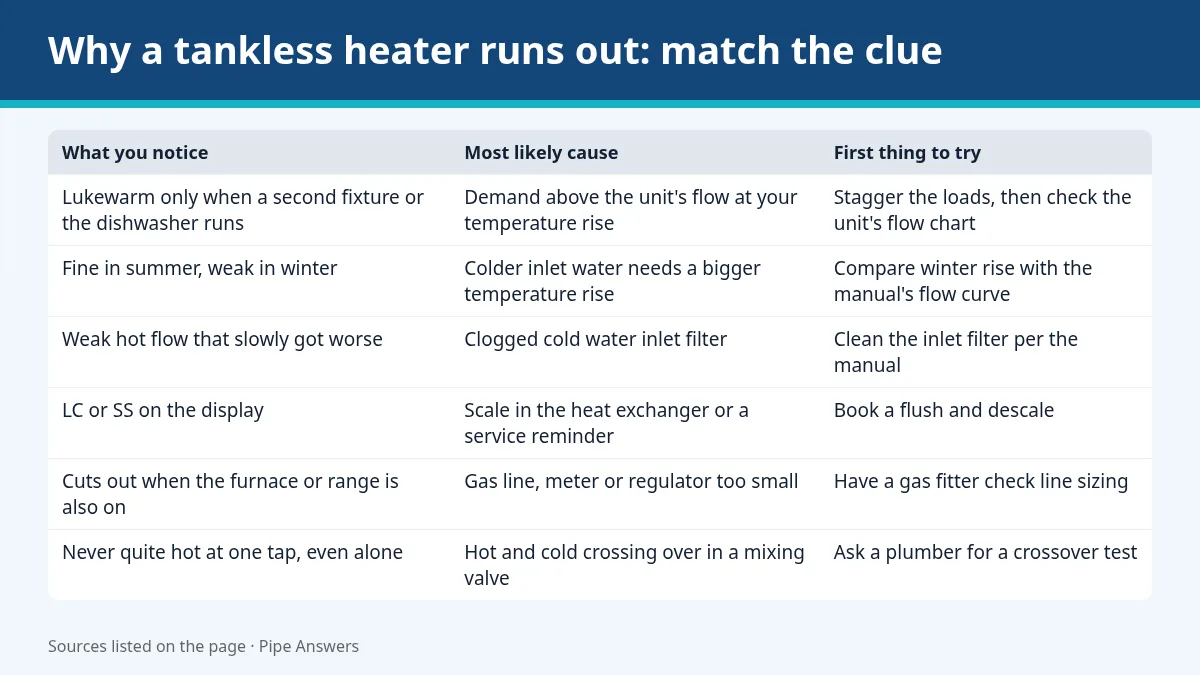 Graphic: summary of this guide, made by our team from the cited sources.
Match what you notice to the likely cause
| What you notice | Most likely cause | First thing to try |
|---|---|---|
| Lukewarm only when a second fixture or the dishwasher runs | Demand above the unit's flow at your temperature rise | Stagger the loads, then check the unit's flow chart |
| Fine in summer, weak in winter | Colder inlet water needs a bigger temperature rise | Compare winter rise with the manual's flow curve |
| Weak hot flow that slowly got worse | Clogged cold water inlet filter | Clean the inlet filter per the manual |
| LC or SS on the display | Scale in the heat exchanger or a service reminder | Book a flush and descale |
| Cuts out when the furnace or range is also on | Gas line, meter or regulator too small | Have a gas fitter check line sizing |
| Never quite hot at one tap, even alone | Hot and cold crossing over in a mixing valve | Ask a plumber for a crossover test |
| Cold burst for a few seconds, then hot again | Cold water sandwich, not a capacity problem | Usually normal; see below |
It is a flow limit, not an empty tank
A tankless heater is rated in gallons per minute, not in gallons, and that rating moves with the weather. ENERGY STAR's demand water heater bulletin says output capacity is partly determined by groundwater temperature, so colder climates generally need higher-capacity units (ENERGY STAR).
The math is simple once you see it. The Building America Solution Center gives a Seattle example: groundwater averages about 52°F, so reaching 120°F takes a 68°F rise, and that household needs a model that can supply at least 4.5 gallons per minute at that rise (Building America Solution Center). A DOE Building America guide uses a milder case, 65°F water heated to 105°F for a 2.0 gallon per minute shower, which needs a 40°F rise at 2.0 gpm (DOE measure guideline). The same burner that comfortably handles the second case in September can fall short in February.
Your manual shows exactly where your unit sits. Rinnai's RE series manual lists a maximum flow of 5.3 gpm for the RE140 and 9.8 gpm for the RE199, but those maximums apply at small temperature rises; its water flow curve shows the deliverable flow dropping as the rise increases (Rinnai RE manual). Read the curve at your winter rise, not the headline number on the box. Our tankless water heater size calculator does the temperature-rise arithmetic for you.
Add up what is running at the same time
Often the "running out" moment lines up with two or three fixtures running at once. The Solution Center's sizing tool lists ASHRAE mixed flow rates: showers 0.8 to 2.5 gpm, dishwasher fill 1.0 to 3.0 gpm, bathtub fill 1.0 to 6.0 gpm and clothes washer fill 1.0 to 6.0 gpm (BASC sizing tool). The same table puts a typical whole-house recurring peak at 3.0 to 4.0 gpm and a severe peak at 6.0 to 8.0 gpm. Building Science Education says high-efficiency tankless units often provide 2 to 5 gpm (Building Science Education, gas-fired tankless).
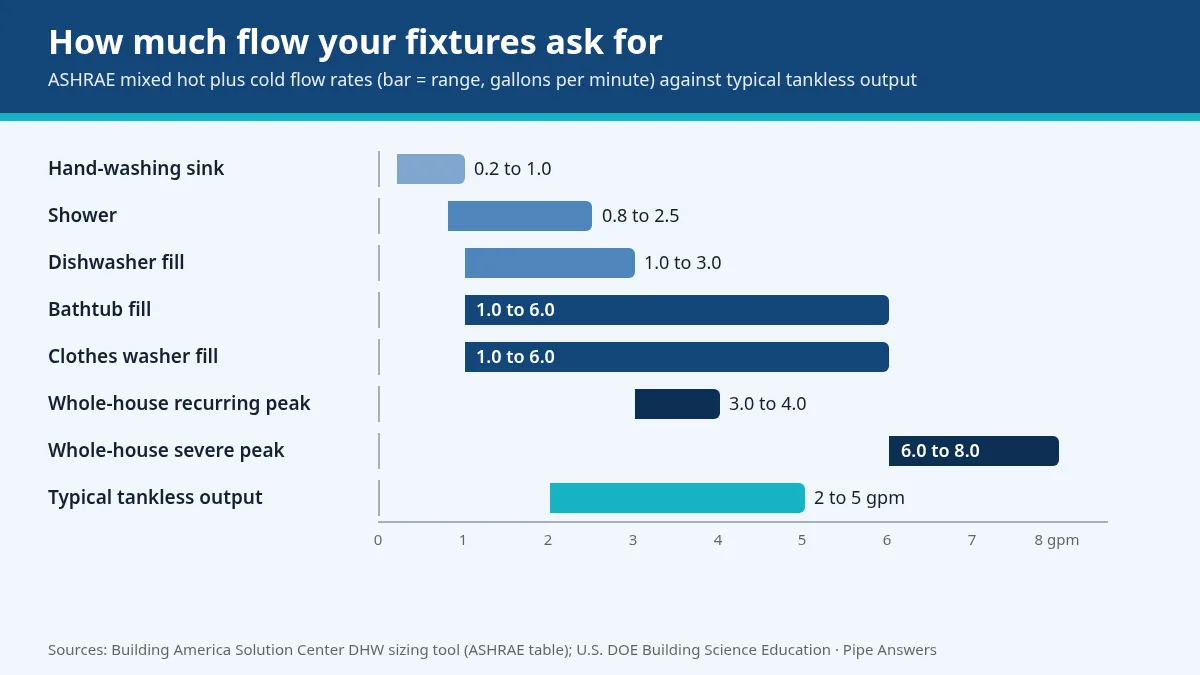 Graphic: made by our team from the Building America Solution Center ASHRAE flow table and DOE Building Science Education.
Those figures are mixed flows, hot plus cold. Only the hot share passes through the heater; the Solution Center's own sample home assumes 1.5 gpm of roughly 120°F water per shower, mixed down with cold. That is why one shower on its own usually sits inside a whole-house unit's range, while a shower plus a dishwasher fill plus a tub filling can.
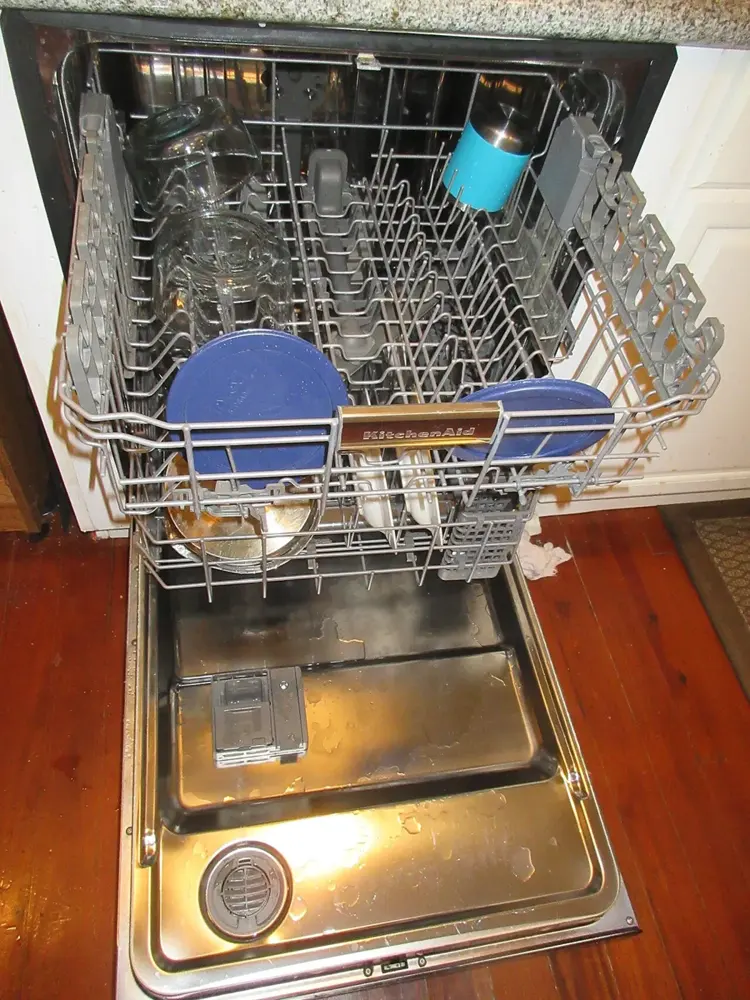
A quick test tells you whether this is your problem. Run one shower alone for ten minutes. If it stays hot, then start the dishwasher or open a second shower and watch what happens. Hot alone and lukewarm together points at capacity, not a fault. Fixes, from free to costly: run the dishwasher and laundry outside shower time, fit lower-flow showerheads, add a small point-of-use heater near a far-flung fixture (ENERGY STAR's bulletin describes these), or have the unit resized.
Clean the cold water inlet filter
Gas tankless units such as Rinnai and Navien models have a filter screen where the cold water enters, and sand or scale flakes collect there. Navien's NPE-2 user manual lists a dirty cold water inlet filter as the first check when the water "turns cold and stays cold," next to making sure the tap draws at least 0.5 gallons per minute (Navien NPE-2 manual). Rinnai's manual puts the same filter at the top of its list when nothing happens with water flowing, and again under code 63, recirculation low flow.
Navien's procedure is short: turn the unit off, close the water supply valve on its inlet, open the hot taps and drain the heater into a bucket, then remove the filter, rinse it under clean cold running water and scrub it with a brush if needed. Follow the steps for your own model, because filter locations and valves vary. If the screen is packed with white grit, that grit came from somewhere, which leads to the next cause.
Scale in the heat exchanger
Hard water leaves mineral scale on the hot surfaces inside the heat exchanger. The Solution Center says scale reduces capacity and efficiency and in extreme cases can cause complete water heater failure, and that many manufacturers recommend yearly professional cleaning with a mild acid. Rinnai's manual adds two details owners rarely hear: scale build-up is accelerated when the heater is set at a high temperature, and damage caused by lime build-up is not covered by its warranty.
Watch the display. On Rinnai units, LC means scale in the heat exchanger that needs flushing to prevent damage, and SS (Service Soon) is a reminder the installer can set to come up when it is time to flush and service the unit. Rinnai's flushing procedure pumps four gallons of undiluted food-grade white vinegar through the heat exchanger for at least an hour, connected through isolation valves on the hot and cold lines, and Rinnai strongly recommends having those valves installed. If your unit has no service valves, a plumber should fit them first.
A gas supply that cannot keep up
Gas tankless units burn a lot of fuel in short bursts. The Solution Center compares a tankless model that might need 199,900 Btu with a typical tank heater at 40,000 Btu, and says a tankless unit might need 3/4-inch branch lines where many tank heaters get by on 1/2-inch piping. The DOE measure guideline says the in-house gas line serving the unit will need to be 3/4 inch in most cases, and the gas line to the meter may also need upsizing.
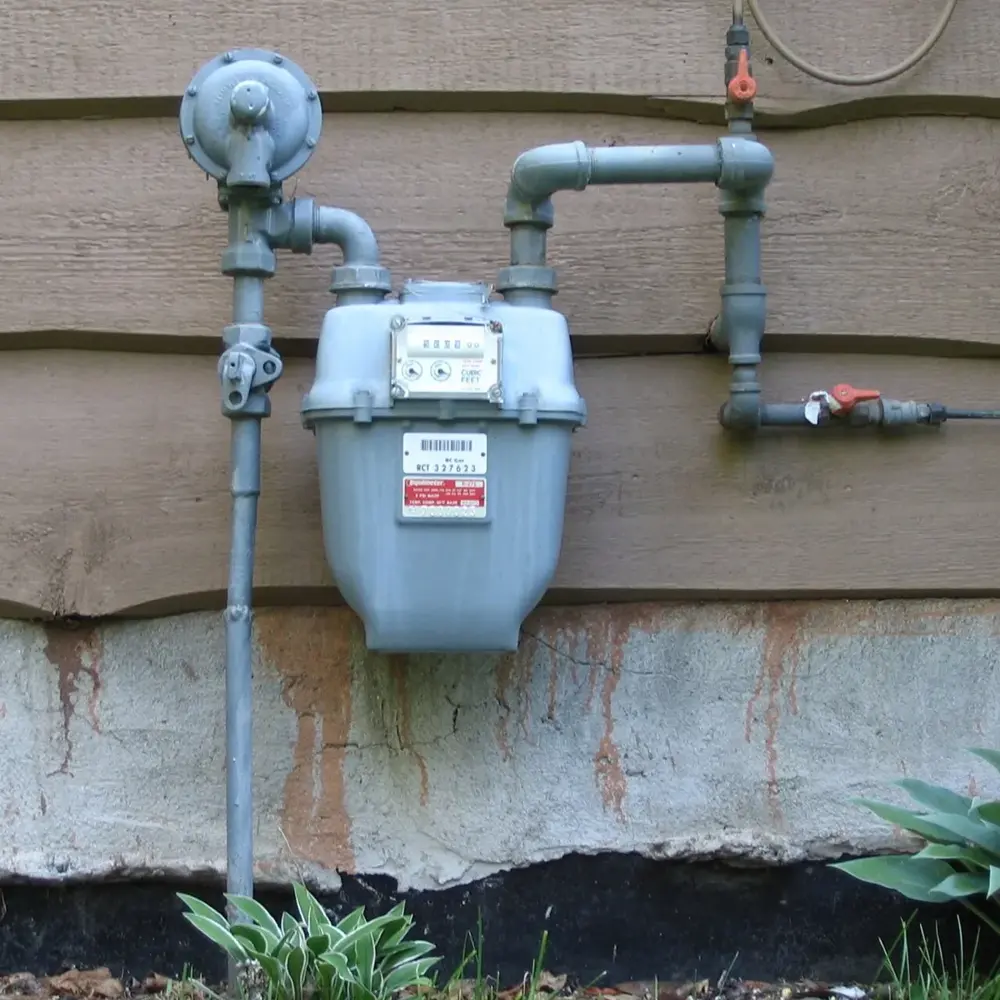
Signs of a starved burner: hot water drops off when the furnace, a gas dryer or the range turns on, or the unit throws ignition or flame codes. Rinnai's troubleshooting for code 11 (no ignition) and code 12 (no flame) includes making sure the gas line, meter and regulator are sized properly and, on propane, that there is gas in the tank. Gas piping is a licensed trade job, so this is a call for a plumber or gas fitter with a manometer, not a DIY fix.
Hot and cold crossing over
If one tap never gets fully hot even when nothing else is running, cold water may be leaking into the hot side through a faulty single-handle mixing valve or a misplumbed fixture. Navien lists cross plumbing between the cold and hot lines as a cause of water that is not hot enough. Rinnai describes a crossover test: with the cold supply to the heater shut off, open the pressure relief valve, and if water keeps flowing, there is bleed-over in the plumbing. The same manual warns that testing the relief valve should only be done by a trained professional because the discharge can scald, so leave this test to a plumber.
Recirculation systems are a related trap. Navien's checklist for water that turns cold asks whether an external recirculation system has a check valve on its return line.
Too little flow, or a brief cold burst
Sometimes the problem is not too much demand but too little. Each tankless unit has a minimum flow that starts the burner, 0.4 to 0.9 gpm according to the DOE measure guideline, and a trickle from a faucet may not fire it at all. Rinnai lists 0.4 gpm for most RE models and 0.26 gpm for the RE199 and RE180. If the water goes cold when you turn the shower down, our guide to a shower that goes cold after 5 minutes covers low-flow showerheads and mixing valves in detail.
A short cold slug in the middle of hot water is different again. DOE calls it the cold water sandwich effect: during frequent on and off use, occupants may notice a sudden temperature drop for a few seconds, because safety standards require a delay in the ignition sequence. Most units stay ready to fire for about the first minute after flow stops and relight within 1 to 2 seconds. It is a comfort issue, not a sign the unit is too small.
Check the setpoint last
A low setpoint can feel like running out, especially in winter. Navien ships NPE units at 120°F and lists "is the set temperature too low?" as the first question when the water is not hot enough. Turning the dial far higher is not a free fix, though: a higher setpoint means a bigger temperature rise, which lowers the flow the unit can deliver, and Rinnai notes that high settings speed up scale. If you have a recirculation pump, ENERGY STAR advises against continuous circulating systems because they keep the heater firing, and recommends a push-button demand pump with a temperature-sensing shutoff instead.
When the unit is simply too small
If the inlet filter is clean, there is no scale code, the gas supply checks out and the unit still fades with your normal morning routine, it is undersized for your house at your winter inlet temperature. The options are a larger unit, a second unit, or a point-of-use heater for the farthest bathroom. Before you buy, it is worth knowing how to tell if you have a tankless water heater and what kind, and running your fixture list through the calculator so the replacement is sized on the real peak, not a guess.
Frequently asked questions
Why does my tankless water heater work in summer but not in winter?
Winter supply water arrives colder, so the burner has to add more degrees to every gallon. U.S. DOE guidance says tankless sizing depends on the winter cold water temperature, and ENERGY STAR notes that output capacity is partly set by groundwater temperature. The same unit gives fewer hot gallons per minute in January.
Can two people shower at once on one tankless water heater?
Often yes, but it depends on the model and your inlet temperature. Check the flow-versus-temperature-rise chart in your unit's manual at your winter temperature rise, then add up the hot water each shower actually draws. If the total is above what the chart shows, the unit will run lukewarm.
Will turning up the temperature setting fix it?
Only if the setting is the problem. A higher setpoint asks for more temperature rise, which lowers the flow the unit can deliver, and Rinnai notes that scale forms faster at high settings. Navien ships its NPE units at 120 degrees F and lists a low set temperature as one cause of water that is not hot enough.
My tankless unit shows LC. Is that why the water is lukewarm?
It can be. On Rinnai units, LC means scale is building up in the heat exchanger and it needs to be flushed. The Building America Solution Center says scale reduces capacity and efficiency.
Is a cold blast in the middle of a shower the same as running out?
No. A few seconds of cold water after someone turns the tap off and on again is the cold water sandwich effect described by U.S. DOE. Running out is a steady fade that lasts as long as the demand continues.
Smell gas? Leave the building without switching anything on or off, then call your gas utility or 911 from outside.
Know your shutoff. Find your home’s main water shutoff before you need it. Most fixtures also have their own small valve.
Sources
- Measure Guideline: Transitioning to a Tankless Water Heater, U.S. DOE Building America (IBACOS, 2012)
- Gas-Fired Tankless Water Heaters, Building America Solution Center (PNNL, U.S. DOE)
- DHW Instantaneous Sizing tool, Building America Solution Center (ASHRAE flow rate table)
- Tankless WHs Gas Fired, Building Science Education (U.S. DOE)
- Water Heaters Gas Fired Tankless, Building Science Education (U.S. DOE)
- Technical Bulletin: ENERGY STAR Demand Water Heaters, ENERGY STAR (U.S. EPA)
- RE Series Installation and Operation Manual, Rinnai
- NPE-2 User's Information Manual, Navien
Spotted an error? See our corrections policy or email contact@pipeanswers.com.

Pipe Answers Editorial Team
Our editors build each guide from the sources listed above and check every claim and number against them before publishing. How the team works
Kevin Orr
Expert Reviewer, Plumbing
Texas Master Plumber License, M-47441 · Verify license
Kevin Orr is a Texas Master Plumber, a U.S. Army veteran and the owner of a plumbing company. In his view, good plumbing is more than fixing pipes. It means showing up when you say you will, explaining what needs to…
Related guides
-
 Water Heaters
How to Tell If a Tankless Water Heater Is Bad
Leaks inside the cabinet, ignition or overheat codes that keep coming back, and a unit near 20 years old point to a failing tankless heater. What each sign means and when to replace.
-
 Water Heaters
How Do I Know If I Have a Tankless Water Heater?
A tankless water heater is a box about the size of a carry-on suitcase mounted on a wall, not a tall tank on the floor. Five checks, including how to read the EnergyGuide label.
-
 Water Heaters
Water Heater Relief Valve Dripping? What It Means and How to Fix It
A dripping T&P relief valve means pressure, temperature or a worn valve. Learn the thermal expansion test, the code pressure limits, the fixes, and why you never cap the pipe.
-
 Water Heaters
Why Does My Shower Turn Cold After 5 Minutes?
Hot water that runs out after a few minutes usually means a failed lower element or dip tube in a tank heater, too much demand, or, with tankless, flow dropping below the burner's minimum. How to narrow it down.