Why Is My Water Bill So High All of a Sudden? Check the Bill, Then the Meter
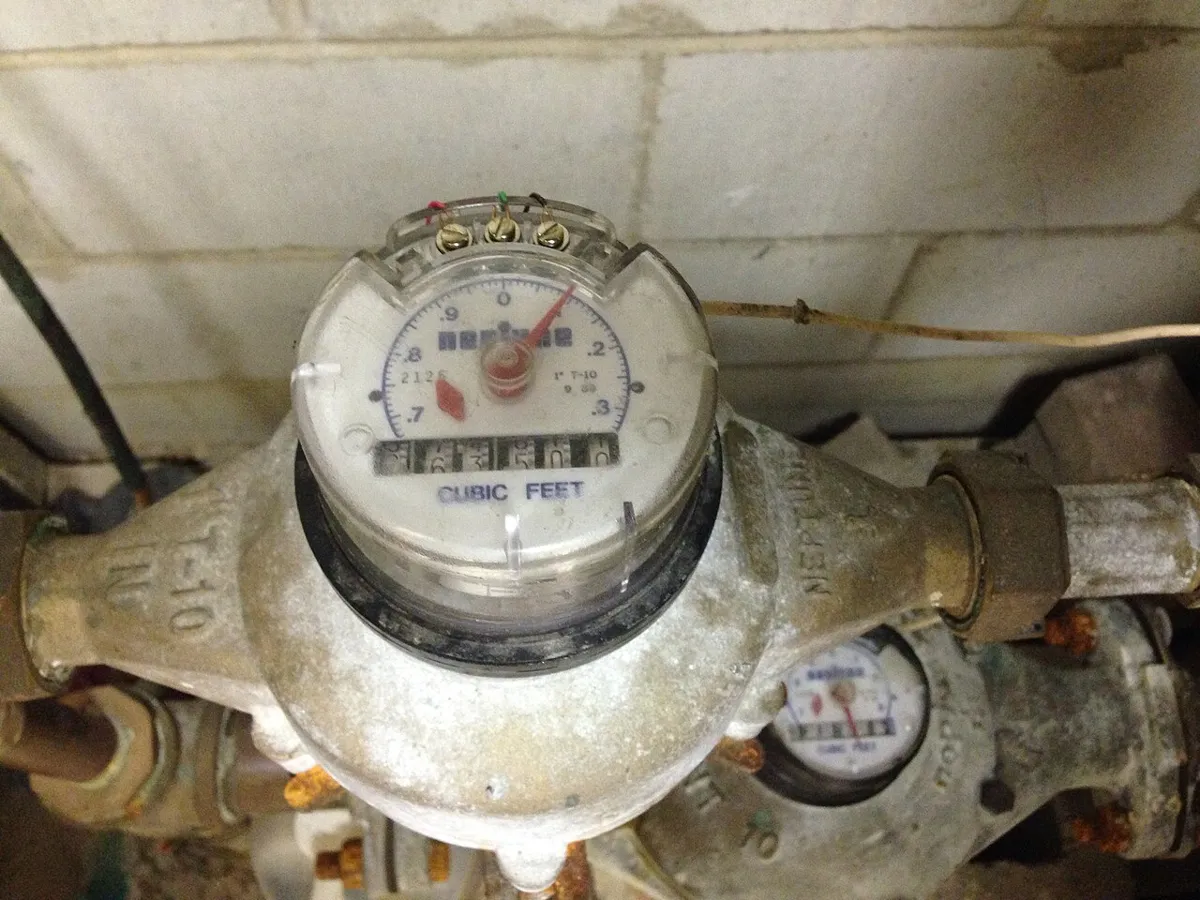
A water bill that jumps out of nowhere has one of three causes: the reading or billing period changed, your household used more water than you realize, or water is escaping through a leak. The meter can tell you which in about half an hour. But spend five minutes with the bill first, because a catch-up charge after estimated reads looks exactly like a leak on paper and needs no plumber.

✓ Checked by a licensed plumber Kevin Orr, Texas Master Plumber License M-47441 (look it up)
Last reviewed
In this guide
- Sort the cause before you start hunting
- Step 1: read the bill like an auditor
- Step 2: be honest about usage
- Step 3: the meter test
- Step 4: inside, outside, or underground?
- The usual suspects inside the house
- Outside: irrigation and the service line
- How much a small leak can cost
- Who pays, and what to ask the utility
- When to call a plumber
- Frequently asked questions
- Sources
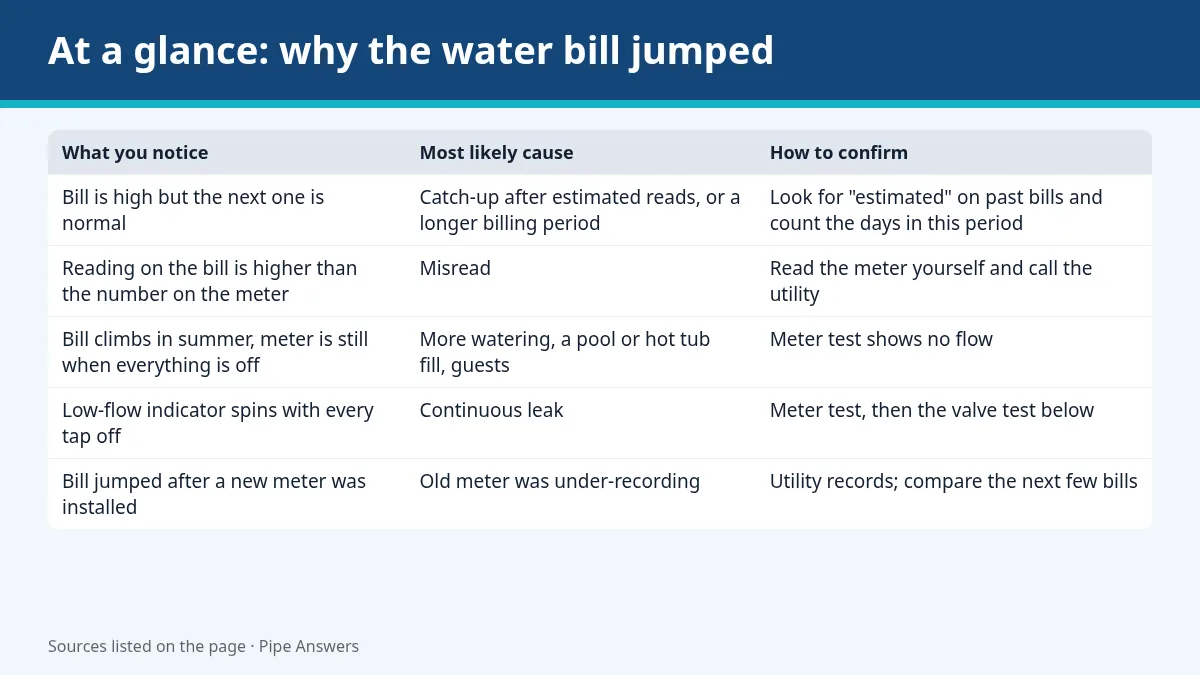 Graphic: summary of this guide, made by our team from the cited sources.
Sort the cause before you start hunting
| What you notice | Most likely cause | How to confirm |
|---|---|---|
| Bill is high but the next one is normal | Catch-up after estimated reads, or a longer billing period | Look for "estimated" on past bills and count the days in this period |
| Reading on the bill is higher than the number on the meter | Misread | Read the meter yourself and call the utility |
| Bill climbs in summer, meter is still when everything is off | More watering, a pool or hot tub fill, guests | Meter test shows no flow |
| Low-flow indicator spins with every tap off | Continuous leak | Meter test, then the valve test below |
| Bill jumped after a new meter was installed | Old meter was under-recording | Utility records; compare the next few bills |
Step 1: read the bill like an auditor
Find the usage figure, not just the dollar total. Many utilities bill in CCF, which is 100 cubic feet; EPA's guide to reading a water bill calls it the most common unit and puts one CCF at 748 gallons, so a jump of 10 CCF is about 7,500 extra gallons. EPA also gives a yardstick: the average American uses around 82 gallons a day, so a family of four uses roughly 10,000 gallons in a 30-day period. Usage swings a lot with climate, so your own history is the better comparison. Line this bill up with the same month last year.
Then check three things on the bill itself.
- Was the last read estimated? The Eugene Water & Electric Board's self-assessment tells customers to ask whether a high bill is a "true-up" after estimated readings. If the utility guessed low for a few months, the first real read bills all the water at once.
- Does the read match the meter? The Suburban Water Systems high-bill FAQ says a reading on the bill that is greater than the number on the meter points to a reading error, which the utility corrects. Also confirm the meter number on the bill matches the meter you are looking at.
- Did the rate or rate tier change? EPA explains that some utilities charge a higher price per unit once use passes a tier. A modest rise in gallons can push part of the bill into a pricier block. Sewer often moves too: EPA notes many utilities have only one meter and charge sewer on the water entering the house.
Suburban also points out that meters wear in a way that records less water, not more. If your bill rose right after a meter replacement, the new meter is likely counting water the old one missed.
Step 2: be honest about usage
Before blaming the plumbing, list what changed. EWEB's checklist asks whether a sprinkler timer was switched on, a pool was filled, a new lawn went in, or you had a houseful of guests. Calgary's high water consumption checklist adds new water-using appliances such as a humidifier. Suburban says outdoor irrigation can account for 50 to 70 percent of monthly use in its California service area, and that automatic systems often run at night, when nobody is watching how long they run.
Another surprise is a toilet flapper that stuck open for a day and then reseated on the next flush, which Calgary lists as one reason a high bill can appear even when today's meter test is clean.
Step 3: the meter test
This is the test that settles it. You are checking whether water moves through the meter when nothing in the house should be using any.
- Stop all water use. Inside and out. Hold off on flushing, laundry and the dishwasher, and switch off the refrigerator ice maker, which EWEB specifically reminds customers about. Turn off the irrigation controller.
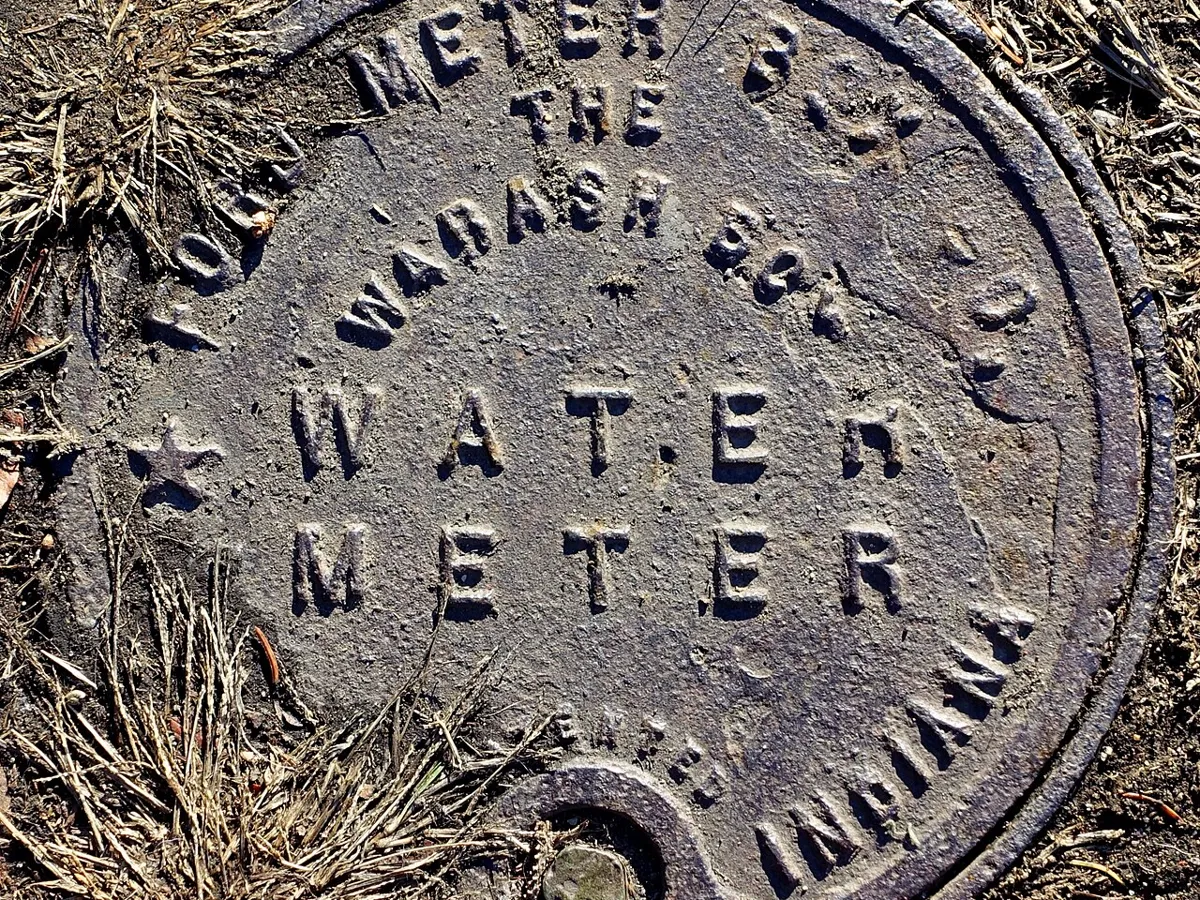
- Find the meter. EWEB and Saving Water Partnership both say it is usually in a box near the street, sidewalk or parking strip. In Calgary, the city notes it is most often in the basement, where the service pipe enters.
- Watch the low-flow indicator. The Saving Water Partnership's meter guide explains that most meters have a low-flow indicator, a small dial that spins when even a small amount of water passes. Calgary describes it as looking like a triangle, gear or needle. If it is not moving, you do not have a continuous leak. If it is moving, you do.
- Do a timed read for slow leaks. Write down every digit on the register, wait, and read again. EPA's Fix a Leak Week page uses a two-hour window with no water used. If the number changes at all, you probably have a leak.
How fast the indicator turns is a clue in itself. Calgary's checklist says a slow turn suggests a dripping tap or a malfunctioning humidifier, while a fast turn suggests a toilet tank overfilling, a flapper that isn't closing, or an irrigation leak.
One limit worth knowing: Saving Water Partnership warns that leaks which start and stop, such as a toilet that refills every so often, may not show if they are not running when you look. If the bill is high and the meter is quiet, test again at a different time, and do the toilet dye test anyway.
Step 4: inside, outside, or underground?
If the indicator moves, close valves one zone at a time and watch the meter after each one. The Saving Water Partnership sequence works like this:
- Close the main shutoff to the house. It is usually in a basement, crawl space or garage. Open an indoor faucet to confirm the water is off. If the meter stops, the leak is inside the house, and a toilet is the first suspect.
- If the meter still moves, shut off the irrigation supply. If that stops it, the leak is in the sprinkler system.
- If it keeps moving with both closed, the leak is in the service line between the meter and your shutoff.
The usual suspects inside the house
Toilets first. Calgary calls toilet leaks the number one source of household leaks. EPA's test: put a few drops of food coloring in the tank and wait. Color in the bowl after 10 minutes means a leak; flush afterward so the dye does not stain. A worn flapper is the common cause, and EPA advises checking it periodically and replacing it at least every five years. If yours refills on its own, our guide to a toilet that runs every few minutes walks through flapper and fill valve fixes, and a bowl that slowly loses water is covered in why the toilet water level drops.
Faucets and showerheads. EPA says a showerhead leaking at 10 drips per minute wastes more than 500 gallons a year. Small, but they add up across a house.
Appliances people forget. Calgary's list includes the water softener, air conditioner, hot water tank, humidifier, dishwasher, refrigerator and ice maker. A water heater relief valve that drips into a floor drain can waste water without anyone noticing; see why a water heater relief valve drips.
Hidden pipe leaks. Suburban lists the signs: wet or moldy drywall, damp cabinets and floors, muddy spots in a crawl space. If you find water in the sink base but no obvious drip, our guide to water under the sink with no visible leak helps trace it.
Outside: irrigation and the service line
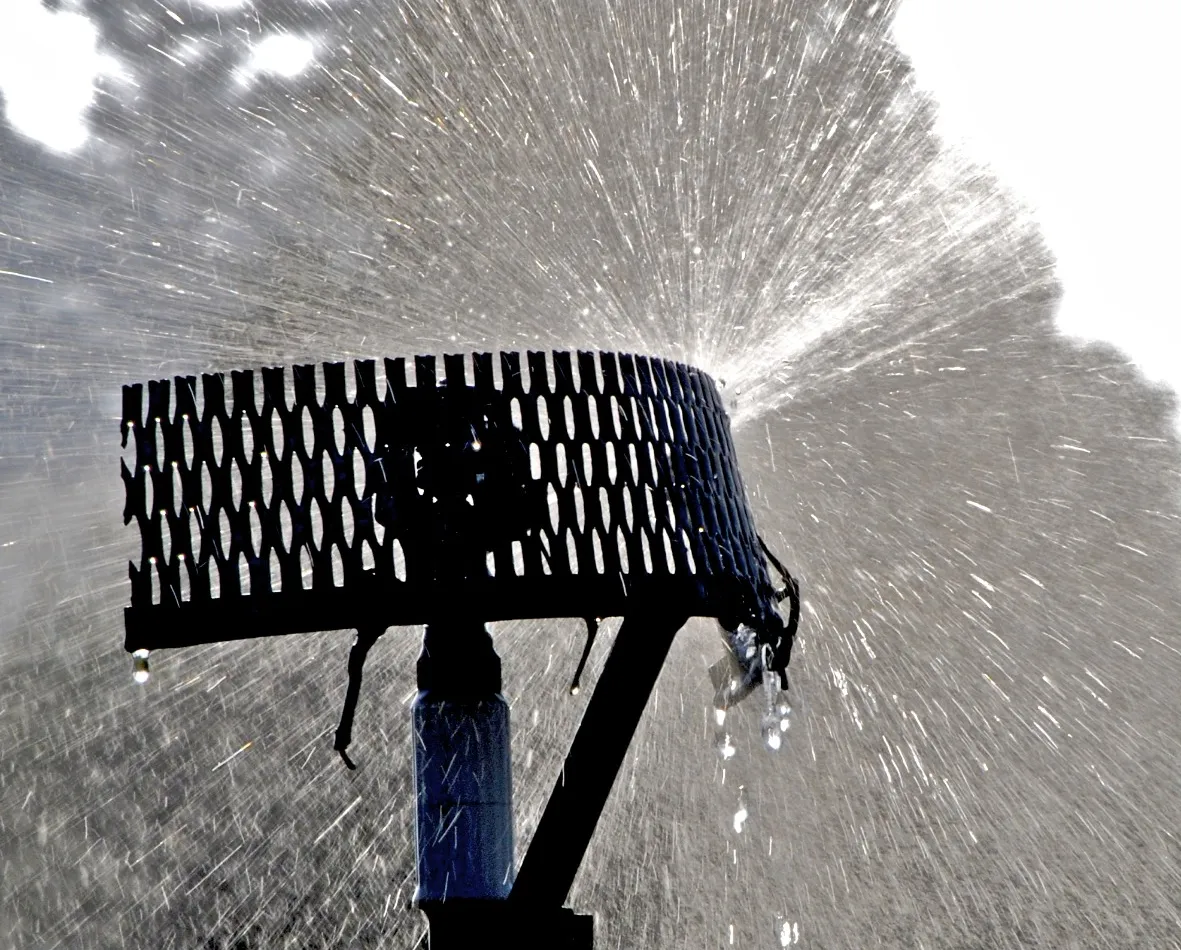
Suburban notes that a leaking zone valve can let water out even when the system is off, usually through the lowest sprinkler head in that zone. EPA adds that an irrigation leak 1/32 of an inch in diameter, about the thickness of a dime, can waste about 6,300 gallons a month, and recommends checking the system each spring for freeze damage. Run each zone separately and walk it, looking for water bubbling from the ground or spurting from a head, as EWEB suggests.
For the service line, look between the meter and the house. Suburban describes the signs as muddy areas or puddles, sometimes a strip of greener or longer grass, and notes that many older homes have galvanized house lines that corrode and start leaking. EWEB adds a patch of concrete that stays darker than the rest.
How much a small leak can cost
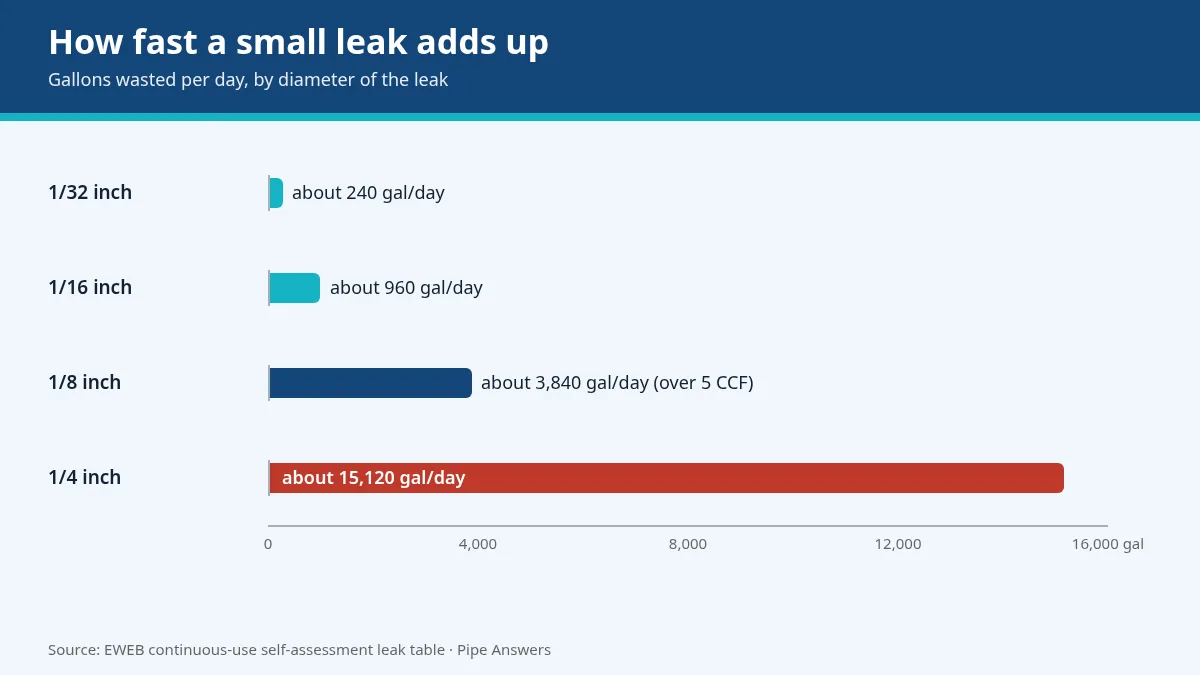
EWEB's self-assessment includes a table that shows why "it's only a little leak" is a costly assumption. A hole 1/32 of an inch across wastes about 240 gallons a day. Double the diameter and the loss roughly quadruples.
 Graphic: made by our team from the leak-size table in EWEB's self-assessment (linked above).
At 1/8 of an inch, that is 3,840 gallons a day, more than five CCF every 24 hours by EPA's conversion. EWEB's own price estimates are local, so multiply the gallons by your utility's rate instead.
Who pays, and what to ask the utility
Suburban states plainly that the customer is responsible for leaks downstream of the meter, including the house line, internal plumbing and fixtures, and pays for all water that passes through the meter. It also offers a one-time leak adjustment for part of the water used above typical use, once the leak is repaired and the customer provides receipts. Policies differ between utilities, so:
- Fix the leak first, and keep every receipt and invoice.
- Take a photo of the meter register after the repair. Calgary asks customers to submit a reading once the leak is fixed.
- Ask the utility whether it offers a leak adjustment, what proof it needs, and how long you have to apply.
- If you need the water shut off and your own valve is missing or stuck, call the utility. Suburban asks customers not to operate the utility's valve ahead of the meter, which can break.
When to call a plumber
- The meter test shows a leak and you cannot isolate it with the house and irrigation valves.
- The leak is in the service line, or you see a wet strip in the yard between the meter and the house.
- You find damp drywall, a wet slab or a musty cabinet with no obvious source.
- Your house has no main shutoff valve. Saving Water Partnership suggests having one installed, and you will want it the next time something fails.
Frequently asked questions
Can a water meter be wrong and cause a high bill?
It is uncommon. Suburban Water Systems notes that meters wear in a way that records less water, not more. The more likely billing errors are a misread (the reading on the bill is higher than the number on the meter) or a catch-up bill after months of estimated reads. Compare the numbers yourself before you call.
Do I have to pay for water lost to a leak?
Usually, yes. Water that passes through the meter is billed, and pipes on your side of the meter are your responsibility. Many utilities offer a one-time adjustment for part of the excess once the leak is repaired, and they typically ask for plumbing receipts. Ask your utility what its policy is before you pay.
My meter shows a leak but I can't see water anywhere. Where is it going?
Most often down a drain. A toilet with a leaking flapper sends water straight into the sewer, so nothing shows. The other hidden spots are an underground service line or an irrigation line, which you can separate with the valve test in this guide.
Why did my sewer charge go up too?
EPA explains that many utilities have only one meter and bill sewer from the water that enters the house. When a leak raises water use, the sewer line on the bill rises with it, even if the leaked water never reached a drain.
Smell gas? Leave the building without switching anything on or off, then call your gas utility or 911 from outside.
Know your shutoff. Find your home’s main water shutoff before you need it. Most fixtures also have their own small valve.
Sources
- Understanding Your Water Bill, U.S. EPA WaterSense
- Fix a Leak Week, U.S. EPA WaterSense
- Have Continuous or High Water Usage? Now What? Eugene Water & Electric Board (PDF)
- High Water Consumption Investigation Checklist, City of Calgary (PDF)
- Use Your Water Meter to Check for Leaks, Saving Water Partnership
- High Bill FAQ, Suburban Water Systems
Spotted an error? See our corrections policy or email contact@pipeanswers.com.

Pipe Answers Editorial Team
Our editors build each guide from the sources listed above and check every claim and number against them before publishing. How the team works
Kevin Orr
Expert Reviewer, Plumbing
Texas Master Plumber License, M-47441 · Verify license
Kevin Orr is a Texas Master Plumber, a U.S. Army veteran and the owner of a plumbing company. In his view, good plumbing is more than fixing pipes. It means showing up when you say you will, explaining what needs to…
Related guides
-
 Leaks & Pipes
Why Are My PEX Connections Leaking? Diagnose It by Fitting Type
A leaking PEX joint almost always traces back to how it was made: ring position, tool calibration, cut, insertion depth or the wrong part. How to tell which, by fitting type.
-
 Leaks & Pipes
Why Do My Pipes Bang When I Turn Off the Water? Water Hammer Explained
A single bang the instant a faucet or washer shuts off is water hammer. How to confirm it, check your water pressure, and choose the right ASSE 1010 arrestor.
-
 Leaks & Pipes
Water Under the Kitchen Sink but No Leak? Find the Source by Timing
Water in the sink cabinet with no drip in sight? When the puddle appears tells you the source: supply line, sprayer hose, drain, dishwasher hose, sink seam or sweating pipes.
-
 Water Heaters
Why Is My Tankless Water Heater Running Out of Hot Water?
A tankless heater has no tank to empty. Hot water fades when demand beats its gallons per minute, winter inlet water is colder, or a filter, scale or gas line is choking it.